

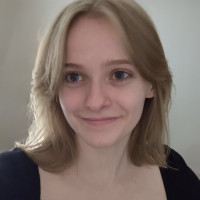
New Literary Agent Listing: Rebekah Winslow
firstwriter.com – Friday January 9, 2026
Looking for fantasy, science-fiction, historical fiction, mysteries, upmarket fiction, and speculative fiction. She does not represent children's, YA, non-fiction, or erotic romance.

A Long Game by Elizabeth McCracken review – here’s how to really write your novel
theguardian.com – Thursday January 8, 2026
The novelist and writing tutor delivers bracing advice that demolishes familiar ‘stick to what you know’ nostrums
Trope, POV, backstory, character arc. In the 30 years since I was a student of that benign, pipe-smoking, elbow-patched man of letters Malcolm Bradbury, the private language of creative writing workshops has taken over the world.
What writers used to say to small circles of students in an attempt to help them improve their storytelling technique has become a familiar way, often parodic and self-knowing, of interpreting the grand and not-so‑grand narratives of our time. “Don’t worry about Liz Truss’s YouTube series – she’s just having a main character moment.”
The most intense distillation of this system of thought (if you can even call it that) has always been the craft book, the writing manual. These are sometimes written by the most successful in the profession (like Ursula K Le Guin’s Steering the Craft) or the most successful at advising the profession (Robert McKee’s Story) but most often they are put together by novelists and screenwriters towards the close of their academic careers as creative writing tutors. John Gardner’s The Art of Fiction is the grandaddy of this subgenre.

Half of UK Novelists Believe AI Is Likely to Replace Their Work Entirely
goodmenproject.com – Thursday January 8, 2026
Just over half (51%) of published novelists in the UK say that artificial intelligence is likely to end up entirely replacing their work as fiction writers, a new report from the University of Cambridge has found.
A new report involving hundreds of literary creatives from across the UK fiction publishing industry reveals widespread fears over copyright violation, lost income, and the future of the art form, as generative AI tools and LLM-authored books flood the market.
Just over half (51%) of published novelists in the UK say that artificial intelligence is likely to end up entirely replacing their work as fiction writers, a new report from the University of Cambridge has found.
Close to two-thirds (59%) of novelists say they know their work has been used to train AI Large Language Models (LLMs) without permission or payment.
Over a third (39%) of novelists say their income has already taken a hit from generative AI, for example due to loss of other work that facilitates novel writing. Most (85%) novelists expect their future income to be driven down by AI.

What is next for kids' books in 2026?
thebookseller.com – Wednesday January 7, 2026
As we look ahead to 2026, we find the world in a state of instability. Yet within that uncertainty there is comfort in how we have adapted to finding a way forward, no matter what lies ahead.
In the creative realm, we are witnessing a shift towards nostalgia, traditional, comfortable and analogue. There is an increasing desire among audiences to buy work that feels safe, familiar and wholesome. A demand for stories that are uplifting, spiritual, with a deeper meaning; dreamy and full of hope. Alongside this sits fantasy, escapism and educational progress.
The key themes I see emerging are bravery, hope, comfort and meaning.
Visual shifts: a return to the hand-drawn
Visually, at a time when digital imagery and AI make everything look the same, we are seeing a rise in hand-drawn, imperfect work. There is also a resurgence of heritage brands with traditional settings. This is an exciting time for illustrators and authors, as many of these brands are being reinvented, updated or extended with careful approvals and estate collaborations.
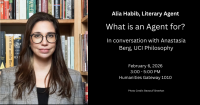
Literary agent Alia Habib on "What is an Agent For?"
humanities.uci.edu – Wednesday January 7, 2026
Literary agent Alia Habib on publishing non-fiction trade books
You have an idea for a book or you're curious about the route to publication outside of academia, but don't know where to begin. How do you go about finding an agent and what role will they play in the process? What kind of materials do you need before you query agents and what should that query include? And what will the process of publishing a trade book—from proposal writing to editing to publication--look like for an author?
The Humanities Center invites you to hear from literary agent Alia Hanna Habib and her client Anastasia Berg , UCI Assistant Professor of Philosophy, as they share insights from both sides of the publishing relationship and process.
New SFF Award Announced for 2026 Times/Chicken House Competition
firstwriter.com – Tuesday January 6, 2026
A major expansion is coming to one of the UK’s most prominent competitions for emerging children’s writers. Chicken House has revealed that its long‑running Times/Chicken House Children’s Fiction Competition will introduce a dedicated science fiction and fantasy award in 2026, created in partnership with specialist bookseller The Broken Binding.
The new category, titled The Broken Binding Prize, is designed exclusively for YA authors working in fantasy, sci‑fi, and speculative storytelling. Its winner will secure a £10,000 publishing contract with Chicken House, along with a conversation about literary representation with Stevie Finegan of the Zeno Agency.
New Literary Agent Listing: Mia Dakin
firstwriter.com – Tuesday January 6, 2026
Handles fiction, nonfiction and translation across genres, with interest in stories centred on family dynamics, coming‑of‑age, multigenerational narratives, friendship over time, romance with strong supporting casts, and fiction with a speculative twist. Also seeks narrative and memoir‑driven nonfiction with a fresh angle, reinterpretations of familiar subjects, works exploring the future through lessons from the past, and cookery projects with strong platform potential and long‑term career scope.
New Publisher Listing: Guillemot Press
firstwriter.com – Monday January 5, 2026
Independent publisher specialising in short forms, producing poetry, non‑fiction and occasional short fiction in pamphlets and other small formats, with a strong emphasis on high‑quality, sustainable materials and collaborations with artists and illustrators.

Dreaming of writing your novel this year? Rip up all the rules!
theguardian.com – Saturday January 3, 2026
After 35 years of teaching fiction writing, the prize-winning author shares her wisdom. First tip? Don’t write what you know…
Beginning
I don’t think it’s a bad thing to want to write a first sentence so idiosyncratic, so indelible, so entirely your own that it makes people sit up or reach for a pen or say to a beloved: “Listen to this.” A first line needn’t be ornate or long. It needn’t grab you by the lapels and give you what for. A first line is only a demand for further attention, an invitation to the rest of the book. Whisper or bellow, a polite request or a monologue meant to repel interruption. I believe a first line should deliver some sort of pleasure by being beautiful or mysterious or funny or blunt or cryptic. Why would anyone start a novel, “It was June, and the sun was out,” which could be the first line of any novel or story? It tells you nothing. It asks nothing of you.
Not everyone agrees with me, nor do all great novels have memorable first lines. Pull books from your shelf and you’ll find plenty that start with a month or day of the week plus the weather. Maybe there’s a good argument: if you orient your reader on some level immediately, they will be ready for disorientation on others. Flatness can be a screen upon which brightness may be projected. Disorientation is one of the duties of fiction.
No, I insist. A generic first line is a failure of nerve.
Predictions: what lies ahead for the book trade in 2026?
thebookseller.com – Monday December 29, 2025
As we enter 2026, it is clearer than ever that the way audiences discover and consume content is rapidly evolving, and our priority must be to evolve with them – not just maintaining our existing readership but actively reaching and building future audiences.
There are huge opportunities if we are smart about how we reach readers. At HarperCollins we are seeing global success with responsive, reader-driven publishing, subscription boxes and TikTok Shop and – crucially – developing strategies that are founded on a comprehensive understanding of the reader.
AI enables us to dramatically change the way we interact with and grow audiences. The opportunities are genuinely exciting – finding new ways to help readers discover books they will love, innovating in the ways we market and reach audiences, building new channels and adapting to new methods of consuming content.
Get the free newsletter | Submit a news item or article | Get Writers' News for your website