



New Publisher Listing: Broken Sleep Books
firstwriter.com – Saturday May 17, 2025
A working-class, small, innovative press, who publish a range of poetry and prose, from a range of writers. Our primary focus is in increasing access to the arts, in ensuring more people are able to engage with creativity regardless of their socioeconomic status. We particularly wish to dismantle the gentrification of creative arts, and we encourage more working-class, LGBTQ+, and POC writers to submit. Politically we are left wing, and have no interest in misogynists, racist, sexists, or the alt-right. Submissions accepted during specific windows only (see website for details).
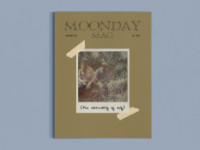
New Magazine Listing: Moonday Mag
firstwriter.com – Saturday May 17, 2025
A quarterly speculative art and literary magazine founded in 2023, dedicated to celebrating all things fantastic and fantastically strange. Born in the place that rests between here and the uncanny valley, it wonders what else might be out there, beyond the veil. From sci-fi to fantasy, to the horrors only a quiet mind can imagine, to the witching hour caught on camera in 35mm, it wants it all and welcomes all.

What Happens When a Journalist and a Psychotherapist Write a Mystery Together?
crimereads.com – Thursday May 15, 2025
Kate Hilton, a practicing psychotherapist, and Elizabeth Renzetti, a career journalist, are the authors of the Quill & Packet mystery series. The first book, Bury the Lead, became a bestseller in Canada when it was published in early 2024. On May 1, Widows and Orphans continues the adventures of Cat Conway, a journalist for a cottage-country newspaper, as she investigates the murder of a wellness influencer and dodges attacks by misinformation-sowing locals.
On the eve of publication, the authors sat down for a conversation about their writing collaboration.
KH: It’s so great to be at a point where we’re launching the second book in the Quill & Packet series and writing the third one! It still feels kind of surreal to me.
ER: Especially as the world catches up to our fiction. In an earlier century we might have been burned as witches, because the mystery in Widows and Orphans is so timely: We’ve got the wellness industry, anti-vaccine protests, and a disinformation dumpster fire. As a journalist I’m used to being treated like a witch, though.
KH: I know what you mean. There’s some of that in the therapy room, too. One thing I love about this book is how we’ve captured some of the malign effects of living in an era of massive stress and uncertainty. People want to feel better; they want more control over their lives and more answers. It makes them vulnerable to bad actors selling snake oil – whether that’s in the form of products or “information”.

Little Door Books: the Scottish independent publisher looks to new horizons
thebookseller.com – Friday May 9, 2025
Alan Windram was a part-time theatre nurse with a passion for musical theatre when he began working with a children’s theatre company travelling to nurseries and schools in Scotland and the north of England. “I’d never worked with kids before, so it was scary times,” he jokes. However, he “loved it” and when it wound down, he decided to turn to writing for children himself, self-publishing a series called Mac and Bob. After he reached out to children’s author and lecturer Vivian French to find an illustrator, the two became friendly and French was so impressed by the production quality of his books that she decided to publish her next title with him. So began Little Door Books.
French’s picture book, Captain Crankie and Seadog Steve, illustrated by Alison Bartlett, was published in 2016. Following advice from literary agents, Alan and his wife Susan decided to continue working with established writers. “We were really keen to bring new illustrators into the publishing world, so we went round degree shows, we found people online and at Bologna on the illustrators’ wall, and built up a database of these amazing illustrators that we wanted to bring up by putting them with known authors,” says Alan. He continues: “It’s finding the right person for the right story, and it’s worked really well.”
Emerald Publishing acquires now publishers
researchinformation.info – Wednesday May 7, 2025
Academic publisher Emerald Publishing has acquired now publishers.
Founded in 2004, now publishers is a source of academic content, publishing research monographs, journals and Foundations and Trends, with strengths in the areas of business, economics, computer science and engineering.
The sale comprises over 50 books, 14 peer-reviewed journals and 28 Foundations and Trends serials. The Foundations and Trends collection includes some of the top-ranked journals in their respective fields including FnT Machine Learning (the top-ranked journal in computer science in Scimago). The research journal collection complements Emerald’s existing journals collection in business and economics.
Zac Rolnik, President and CEO, now publishers, said: “We started now publishers with the intention of creating a unique publishing concept focusing on quality and author service. I believe we have lived up to that goal. But with time and changing technology, we saw the need to be part of a larger organisation to deal with the myriads of changes in the marketplace.

US fiction writing school launches US$100k prize
booksandpublishing.com.au – Monday May 5, 2025
New York-based online fiction writing school The Novelry has launched a US$100,000 (A$155,276) competition, called The Next Big Story.
Open to unrepresented adult writers residing in the United States, United Kingdom, Canada and Australia, the competition is calling for submissions of the opening three pages (1500 words) of an unpublished English-language novel-length fiction project, which may be targeted at audiences of any age.
A judging panel comprised of Tayari Jones, Emma Roberts, Julia Quinn, Zosia Mamet, Zibby Owens, Kimmy Nwokorie, Jackie Oshry, Yann Martel, Brady Lockerby and Carley Fortune will review the shortlist and select a winner, guided by a public vote that will run from 28 September through to 5 October 2025. Shortlisted writers will receive a place in the organisation’s Finished Novel Course.

Richard Benson to edit new literary magazine for working-class writers
thebookseller.com – Monday May 5, 2025
Richard Benson, the former editor of the Face magazine, has been announced as the editor of a new literary magazine and platform for working-class writers, titled the Bee.
Supported by Faber and actor Michael Sheen, the Bee aims to "fight the increasing marginalisation of working-class writers, and of working-class people in publishing".
Its channels include a website, a podcast and a literary magazine publishing both fiction and non-fiction. The organisers will also run an outreach programme, seeking out new writers from working class backgrounds and supporting their professional development.
"Justice and fairness demands that people from the less well-off sections of society have the chance to tell their stories, and to get them heard," Benson said. "But it’s also about common sense. Much of the important writing being done today, and so many of the best-loved stories come from ordinary working people. So often, it’s stories from the working classes that express what’s really happening in the world."

Do we really need more male novelists?
theguardian.com – Sunday May 4, 2025
There may not be obvious successors to the likes of Martin Amis and Salman Rushdie among today’s hotshot young writers. But is a new publisher dedicated to ‘overlooked’ male voices necessary?
"Where have all the literary blokes gone?" is a question that has popped up in bookish discussions and op-eds from time to time in recent years. Who are this generation’s hotshot young male novelists, the modern incarnations of the Amis/McEwan/Rushdie crew of the 80s?
The question flared again this week as writer Jude Cook launched a new press, Conduit Books, which plans to focus, at least initially, on publishing male authors.
Cook says the publishing landscape has changed “dramatically” over the last 15 years as a reaction to the “toxic male-dominated” scene of the 80s, 90s and 00s. Now, excitement in publishing circles centres on a “new breed of young female authors, spearheaded by Sally Rooney et al”. While this is “only right as a timely corrective”, the side-effect is that male authors are “often overlooked”, their voices deemed problematic.
Are male novelists actually in decline? Some metrics certainly say so: of all the writers to appear on the weekly Sunday Times bestseller lists for fiction hardbacks so far this year, just a third are men.

New book prize to award aspiring writer £75,000 for first three pages of novel
theguardian.com – Thursday May 1, 2025
The Next Big Story competition, run by writing school The Novelry, is encouraging entries from would-be authors ‘historically overlooked by the publishing industry’
A new competition is offering £75,000 to an aspiring writer based on just three pages of their novel.
Actor Emma Roberts, Bridgerton author Julia Quinn and Booker-winning Life of Pi author Yann Martel are among the judges for The Next Big Story competition, run by online fiction writing school The Novelry.
Roberts, who co-founded the book club Belletrist, said: “There’s nothing more euphoric than being immersed in the world of a good book and to get lost in the words of a brilliant author. This is a groundbreaking new writing prize and I’m thrilled to be included on this panel of esteemed luminaries.”
Martel said: “We all need stories to make the world new, and I’m looking forward to seeing what’s out there.”
Along with the cash prize, The Novelry will support the winner for a year to develop their idea into a full book. The competition is open to “all aspiring writers”, including “occasional readers who need encouragement to begin, individuals with limited time or financial means, and those who have been historically overlooked by the publishing industry”, said the organisers.

5 Ways You Can Get Paid To Write Online
forbes.com – Wednesday April 30, 2025
If you have a knack for stringing words together in a way that’s coherent, adds value, and strongly appeals to your target audience, you can make money online. It won’t be easy initially, but as you build up your reputation, proof of your work, and the results you deliver, your writing will pay off more than you’d ever imagine.
Freelance writing has strong appeal in the side hustle and freelance world because it is so easy and inexpensive to start. Getting paid to write online is so ridiculously simple to set up that this appears frequently in write-ups about side hustle ideas and ways to make money online. All you need is your laptop and a stable internet connection, which means you don’t need any investment or capital to begin making profits.
Because there are low barriers to entry for you to making money online with writing, you can literally begin writing online today and start earning within a week, depending on your current audience or following, how well you market yourself, and a range of other factors.
Get the free newsletter | Submit a news item or article | Get Writers' News for your website