

How to Write (and Direct) a Contained Story
nofilmschool.com – Wednesday May 20, 2026
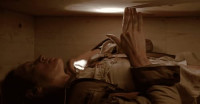
Low-budget and accessible—but how do you start?
I'm on a contained story kick right now. My creative partner and I are fresh off a short film shoot and want to make something else, but we want to make it as easy on ourselves as possible in terms of production, and cheap. So, of course, my mind went straight to single-location, contained ideas.
While contained stories are easier to produce and one of the most practical formats for emerging filmmakers, they're also one of the hardest to pull off well at the writing stage. You have to have characters that are interesting enough to carry 90 minutes, as well as a plot compelling enough to keep the audience hooked.
So I was excited to find StudioBinder's breakdown today. It's a good excuse to go through the core mechanics, from the page to the set.

From counterculture to pop culture: The story of indie publisher Headpress Books
mancunion.com – Monday May 18, 2026
It all started with “quite an outrageous horror film,” says David Kerekes, one of the three original founders and head of Headpress. I am on a zoom call with him and the other core member of the team, press officer Jen Wallis, to discuss the company’s story and its upcoming anniversary.
The film David refers to is Jörg Buttgereit’s Der Todesking, the follow up to the German director’s cult horror Nekromantik. Headpress was founded to release Der Todesking in 1991 and the money it made was put into Headpress magazine. David explains that many horror-film-related things emerged from the video’s nasty furor, including a number of magazines. The founders of Headpress were interested in that progression and keen on anti-censorship. Each of them learnt to write on the job.
The counterculture tone of the magazine steadily established itself, its masthead being ‘sex religion death’. David highlights “the circle of interest was really very strong,” especially pre-internet. “It was a touchstone for a lot of people.”

Is ChatGPT a good writer?
the-berliner.com – Sunday May 17, 2026
In the summer of 2022, I met the founder of a Berlin publishing company that used early AI-writing tools like Rytr to write novels. They were quickly going out of business. The writing made absolutely no sense and took too long to edit. Later that year, OpenAI launched ChatGPT, gaining over one million users in less than five days, and AI writing has only grown more sophisticated since. I don’t know if that company is still in business, but if it is, it isn’t alone, because using AI to write a novel is no longer the novelty it once was.
AI is all over publishing. According to a BookBub survey, 45% of authors use it. Penguin Random House recently filed a lawsuit against OpenAI, alleging that ChatGPT mimicked and sold a popular German children’s book series, Ingo Siegner’s Coconut the Little Dragon. Last year, the AI firm Anthropic agreed to pay $1.5 billion to settle a class-action lawsuit filed by authors who claimed the company stole their work to train its AI models.
That’s not to mention the Shy Girl drama.

'I'm a literary agent - here's what makes me sign a writer instantly and what most authors actually earn'
news.sky.com – Monday May 11, 2026
Want to make it as an author? Or to choose their fate? The Money team spoke with an agent about what makes a good literary submission, the pitching mistake many authors make, and what she finds "offensive" about the industry for our regular careers feature.
If you've ever spent your morning commute daydreaming about starting afresh with your career, this feature is for you. Each week, we speak to someone from a different profession to discover what it's really like. Today we speak to literary agent Maddalena Cavaciuti, from David Higham Associates (DHA)...
A literary agent might start on a salary... between £30,000 and £40,000 if they're building a list from scratch. As agents build a successful and reliable client list that could comfortably rise to a six-figure salary, including bonuses and/or commission. It's worth noting, though, that some agencies don't pay salaries at all - some agents are paid on a commission share only.
How to Publish a Book With the Big 5: 6 Experts Weigh in
pen.org – Friday May 8, 2026
Daunted by the publishing world and how to navigate it? You’ve come to the right blog post.
To unravel insider secrets on how to be published with the Big Five, PEN America hosted a panel discussion where award-winning author Susan Shapiro spoke with six industry experts. Audience members heard helpful tidbits from Johanna V. Castillo, a literary agent at Writers House, Eamon Dolan, an author and editor at Simon & Schuster, Deborah Garrison, a poet and editor at Penguin Random House, Clarence A. Haynes, an author and freelance editor, Emi Ikkanda, an author and editor at Penguin Random House, and Kevin Nguyen, an author and editor at The Verge.
If you couldn’t make the event, hosted at the family-owned independent bookstore P&T Knitwear, here are five takeaways:
Consider starting small.
To kick off the conversation, Shapiro shared one of the lines she frequently tells her students looking to publish books in any genre: “Three pages can change your life.” “Say somebody has an idea, even for a book, I always think it’s a million times easier to write a great three pages and publish that than 300,” she said.
Back when Garrison worked at The New Yorker, the pieces she pulled from the slush pile — written by authors whom “nobody had ever heard of” — would become projects that would be nominated for prizes like National Book Award, she said.
Why Writing Stories For Children is So Much Harder Than Writing Stories For Adults
lithub.com – Thursday May 7, 2026
A few years ago, my longtime children’s book editor rejected my idea for a new middle grade novel. The rejection hit me hard – the story, of the daughter of a celebrity chef who moves to a small town after being adopted by her older brother, was really tugging at my heartstrings. But the editor’s rejection was swift and brutal; there was no version of this manuscript she was going to accept.
Some stories plant deep in your creative brain and come out through songs heard on the radio and random daydreams in the shower. They will not, simply, leave you alone. It occurred to me that the story would actually be much more interesting from the perspectives of the daughter’s brother and one of the elderly women who lived in the town. I wrote the first chapter longhand on a boat and dashed it off to my agent, who confidently told me he could sell it. He did, and so began a brand-new chapter of my career.
Since the publication of that book (The Funeral Ladies of Ellerie County), I’ve written another novel for adults (The Supper Club Saints) and a handful of additional middle grade novels. I’ve continued to carve out a career path in both age groups by the skin of my teeth, somehow finding myself writing for two very different audiences.

Why this group of writer friends decided to launch a literary magazine in Toronto
streetsoftoronto.com – Wednesday May 6, 2026
One spring evening last year, Tia Glista hosted a dinner party for a few friends; she has the very good habit of connecting people from disparate parts of her life together. Not long before the dinner party, Glista, Winnie Wang, Adrianna Michell and Emma Cohen had discussed their struggles writing freelance and had tossed around the idea of starting a literary magazine. After dinner, Michell remembers sitting on the floor of Glista’s apartment, looking around the room at her friends, and pointing out their complementary strengths could make such a concept truly possible.
Toronto Review, the aptly named literary magazine borne out of that fateful dinner party, officially launched on April 27, featuring works from Haley Mlotek, Zak Jones, Furquan Mohamed and Claire Foster, among others.
“An exciting idea that everyone had been ruminating on began to feel possible when we noticed that we were a resourced group of people in terms of the gifts that we could offer one another and the complementarity of those strengths, but also literally our resources beyond the initial group,” says Abby Lacelle, who rounds out the editorial team alongside Glista, Wang, Cohen and Michell, with Sonja Katanic helming the visual design. With one new piece online every week, Toronto Review operates without a paywall to ensure the accessibility of their work.

Some students believe they can be writers without reading. This raises many questions
irishtimes.com – Monday May 4, 2026
Wanting to write without wanting to read is, at best, trying to skip the first stage of an artistic apprenticeship
I read recently, in the context of an essay on expertise in making sushi, about the three stages of Japanese craftsmanship: learning to follow the rules; understanding when and how to break the rules; commanding expertise that rises above the rules.
I’m always suspicious of European summaries of Japanese thinking. A great deal is lost in translation, and the cultural contexts are so different that even an accurate translation might be hard to recognise. Even so, the idea of these stages felt recognisable to me.
I’ve been writing fiction and teaching creative writing for many years. Sometimes I encounter students who believe they can be writers without reading, or without being serious or enthusiastic readers. This raises many questions for me: why would you want to write if you don’t love to read? How do you imagine you will learn to write better if not by reading other writers’ better writing? Where, exactly, do you think writing comes from?
Some people want to “be writers” without wanting to work on writing. The writers they want to be seem to achieve fame and fortune – neither likely outcomes of a life devoted to literature – fuelled by “inspiration” that descends from the heavens with no effort required. They sometimes claim that reading would pollute this inspiration, exerting unwelcome influence on their pure voices.
Quills at the ready: Five steps to writing a poem
news.fiu.edu – Tuesday April 28, 2026
"Hope" is the thing with feathers –
That perches in the soul –
And sings the tune without the words –
And never stops – at all –
– Emily Dickinson
Poems are powerful, magical and mysterious. They show us life in novel ways.
“A poem is an offering,” says poet and professor Julie Marie Wade. It can sneak up on readers to show them something familiar in an unfamiliar manner. “It might be different for everybody in the room,” Wade explains, “but there’s something to take from [a poem] as a reader and appreciator of our shared world.”
Psychology professor Shannon Pruden also praises poetry’s ability to present various points of view, thereby engendering empathy: “I think reading and writing poetry allows you to understand the perspective of other people, which ultimately leads to a much more complex understanding of emotions and emotional development. Poetry allows you to make that leap.”
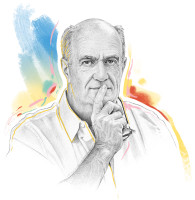
Colm Tóibín explores the art of short story writing
spectator.com – Sunday April 26, 2026
When I was 20 and tentatively trying to write, every single person I knew read Ian McEwan’s First Love, Last Rites (1975). It not only gave the short story a good name, but it also gave writing a good name. It was like a punk moment converted into fiction. People used the word “macabre,” but there was a sort of excitement about the characters, the strangeness of the stories, the shortness of some of the stories and just how much contemporary urban life was in them.
Often people suggest I investigate a writer. I was in Toronto about 20 years ago when someone told me about the extraordinary Canadian writer Alistair MacLeod. He had written two books of short stories which were republished in 2000 in one volume called Island: The Collected Stories. The 16 short stories are exceptional in the way they are constructed. They deal with the very fierce, rugged landscape of Nova Scotia and Newfoundland. A lot of people living in very isolated ways, where the possibility of love or community is narrowed. It’s almost like having a book of poetry that you can keep to hand and reread.
Get the free newsletter | Submit a news item or article | Get Writers' News for your website