


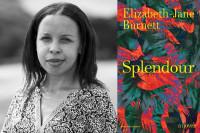
You Have Permission: Elizabeth-Jane Burnett on Creating Space for Experimental Writing
womensprize.com – Thursday June 18, 2026
Through my career of teaching and sharing writing, the response I have heard most is “I didn’t know you could do that.” Too often, even without realising it, we restrict ourselves into categories, genres, forms, sometimes even thoughts, that were not of our own making. We have shrunk our writing even before picking up a pen or starting to type.
It’s an internal shrinkage that’s somewhat different to imposter syndrome, where we may know what we’re striving for but aren’t sure we have the right tools or accomplishments to achieve it. It is a diminishing that comes from not realising that alternative options even exist. If imposter syndrome is a hesitation to move forwards, then permission-giving is someone taking off the blinkers so that we can see, and move, in all directions.
One of my biggest early permission-givers was a literary scene rather than a person – in the transatlantic US and UK experimental poetry communities of the 1960s, I found a freedom in form and in the means of production that gave me a pathway – and permission – for expression that felt more fluid than more mainstream modes of writing. In the UK, a wide range of styles, including visual and sound poetries, were involved in what US poet Eric Mottram called the British Poetry Revival. A lot of this writing was distributed by way of the “mimeo revolution” that saw poets taking control of their own publishing.
How to write like a Booker-nominated author
thebookerprizes.com – Tuesday June 16, 2026
Behind every Booker Prize novel are routines and rituals that define the work. Here, 12 authors and translators reveal how they shape a story from beginning to end
‘A good writer needs a good rubbish bin,’ said Richard Flanagan, speaking backstage at London’s Guildhall after winning the Booker Prize in 2014. ‘I don’t think I’m much of a writer, but I’m a better re-writer,’ he added wryly.
Jokes aside, Flanagan’s sentiment captures something essential about writing life: it is rarely straightforward, but shaped by habit and a constant urge to improve.
Perhaps you are working on your own book and looking for inspiration, or simply curious about how real writers get words on the page. So, if you’ve ever wanted to get inside the mind of a Booker or International Booker Prize-nominated author, you’re in the right place. From silence and structure to cats, coffee, and carefully built routines, we’ve gathered 12 pieces of advice from fiction’s most acclaimed writers.

In Conversation With Literary Agent Renée Zuckerbrot: An Insider’s Perspective on the Industry
pen.org – Wednesday June 10, 2026
The Pulitzer Prize. The Booker Prize. The National Book Award. The MacArthur Fellowship. The Dublin Literary Award. The PEN/Jean Stein Book Award. The New York Public Library Young Lions Award. The Thurber Prize for American Humor. The Shirley Jackson Award. These are just some of the awards that authors represented by Renée Zuckerbrot, an agent at Massie McQuilkin & Altman, have been nominated for or won.
But literary prowess aside, the authors have little in common: Zuckerbrot represents writers at all stages of their careers, from debut to well-established, as well as those working in a wide array of genres, including commercial and literary fiction as well as nonfiction.
In conversation with Abhigna Mooraka, coordinator for membership and national engagement, for this Member Spotlight, Zuckerbrot discusses what draws her to a manuscript, the effects of the industry’s financial challenges on agents and editors today, and the joy of literary community.

One Way to Tell If a Publisher Actually Has Distribution
janefriedman.com – Wednesday June 10, 2026
If you spend enough time talking to publishers, you will hear the same phrase repeated again and again: “We have distribution.” Sometimes that statement is accurate. More often, it is used loosely enough that it becomes difficult for authors to evaluate what it really means.
The challenge is that distribution has become one of the least clearly defined terms in publishing. When authors rely on the term alone, rather than understanding the underlying systems, they often make decisions based on potentially misleading language instead of reality. In practice, distribution requires infrastructure.
A more useful approach, then, is to ask a different question: What systems are actually supporting the book once it is in the market, and will you have visibility into them?

What’s in a Book’s Name? One Writer’s Journey to Finding the Perfect Title
lithub.com – Tuesday June 9, 2026
For me, coming up with titles is always a team effort. Titling my first book, a quirky history of people who look for the Garden of Eden on Earth, had me stumped, until my friend the writer Josh Garrett-Davis suggested “Paradise Lust.” True, there were other books by that title, but you can’t copyright a title, and besides, no one was likely to confuse my book with softcore romantasy set in Thailand. Paradise Lust (Grove Press, 2011) said a lot about the attitude the book took towards its history: cheeky, but also accurate—the book was literally about people “lusting” after paradise. So when it came time to title my second book, a one-volume history of religion in the United States from “first contact” through the Trump era which Grove had commissioned in 2016, I knew I would need some help—I just had no idea how much.
For nine years, the book lived in my head and my computer as “God and Country.” I thought the title did the same thing as Paradise Lust had: cheekily twisted a commonly known phrase while retaining its accuracy. Sure, I always got puzzled looks when I told anybody I was writing something called “God and Country”—one friend indignantly told me that phrase was the motto of both the Marines and Yale—but I was in denial.
In mid-June 2024, my editor gently broke it to me that “God and Country” would not fly; it was far too common a phrase in the titles of other books about religion, making mine impossible to distinguish with a quick web search; a death knell for booksellers and marketers. Still: I loved my title and had no idea what could replace it. Thus ensued a monthlong title quest. It took place in an email thread with my agent and two Grove editors; in an epic Facebook thread with 80 of my oldest friends; across all the evening conversations on my weeklong family vacation.
Script Essentials 2026 Summary Notes - Session 3: Story and Structure with Simon Nelson
bbc.co.uk – Monday June 8, 2026
Our third session in our 2026 Script Essentials webinar series was hosted by Simon Nelson (Development Executive, BBC Writers) who broke down the importance of structure, as well as how to use structure to improve your TV writing.
You can watch the full recording of our session on the Script Essentials page, accessible by clicking this link here. Or, you can read the summary notes below to get some key takeaways from Simon's session!
What is the purpose of TV Drama Structure
This session began by reframing what structure means for early TV writers, within a UK drama context. Structure is not a set of rigid rules or a formula designed to make scripts feel generic. Instead, it is best understood as the craft of managing the audience’s attention and emotional engagement over time.
Viewers do not consciously track acts, beats, or turning points, but they instinctively feel when a story is carrying them forward or when it has stalled. Effective structure ensures that an episode feels purposeful from beginning to end, even when the storytelling is quiet, character-led, or emotionally restrained. In UK television drama, where subtlety and realism are often prized, structure operates beneath the surface, shaping the experience without drawing attention to itself.

AI and the Future of Writing
yalereview.org – Monday June 8, 2026
A roundtable of authors discuss the ramifications for art—and life.
ON APRIL 8, at Yale University, Ayad Akhtar, Daniel Kehlmann and Meghan O’Rourke, three writers at the vanguard of creative engagement with AI, gathered with James Surowiecki, a journalist and senior editor at The Yale Review, to talk about AI and the future of the humanities. The following conversation ranged across the social ramifications of the LLM era, from changes in our cognition to shifting notions about the nature of language itself. The transcript has been edited and condensed for clarity and concision.
JAMES SUROWIECKI I want to start with a really big question, but Meghan suggested that might not be the best way in. So I’ll start by easing in. Can you describe your relationship to AI at the moment?
MEGHAN O’ROURKE That is not a small question.
DANIEL KEHLMANN It’s a great question, and it’s very hard to answer. It’s not a stable relationship, because I’m still in the process of finding out what AI is and what it can do. It can be extremely helpful and utterly amazing. And, at the same time, most of us will agree that it is very dangerous. It’s very hard to have a stable inner relationship to something like that.
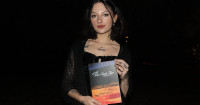
"The power of the internet:" How a Chicago writer founded an international literary magazine from her bedroom
cbsnews.com – Friday June 5, 2026
Saber-toothed tigers have been extinct for millennia, but for one Chicago writer, the name is alive with meaning.
Sabr Tooth Tiger Magazine is a new Chicago-based publication with, as founder Madeline Blair describes it, "claws, teeth, and heart."
The name has a dual meaning. "The Arabic word 'sabr' means steadfastness, resilience, and patience," Blair said, which she learned as she began to explore Islam.
The 2023 University of Illinois creative writing graduate wanted the name to carry the magazine's mission.
"Saber-toothed tigers used to be a huge pinnacle of strength and ferocity, so I want that to exhibit our strength in writing," she said.
But strength and resilience aren't just themes in her magazine. They're a part of her own life. Blair had lived with long COVID for nearly a year after her first infection in 2022.
She described "strange" health issues: lung problems, blood vessel complications, "bruising so severe my arm would turn purple after blood draws," Blair said. "Doctors noted hazy opacities on my lungs, but couldn't fully explain."

Whisper it: becoming a mum can make you a more productive writer
theguardian.com – Friday May 29, 2026
Before having a child, I had endless days to think about writing. Now, half an hour can suddenly become a window of creativity
Becoming a parent is hard. Eight to 12 hours a day are spent breastfeeding or preparing formula milk and washing bottles. In addition, there is carrying, singing, soothing, putting to sleep, trying to sleep yourself and waking up to repeat this several times a night. So many new activities that before were unknown, filling up every day.
This is time that was once completely at your own discretion, and the new constriction is a shock.
But – after the necessary physical and mental healing – it is also what can make parents become creative about their use of time: being a parent can make you more productive by using the gaps in the daily routine. While enhancing productivity is a trope of self-optimisation content, this is not a capitalistic productivity. Caring for a baby can feel like a remove from the self previously constructed. To me, writing felt like an alleviation of this loss of self. Simply draft a paragraph, a few sentences, get on with a text as a means to stimulate the insufficiently challenged mind.
Laura B. McGrath on Middlemen
press.princeton.edu – Sunday May 24, 2026
Middlemen rewrites literary history from the perspective of one of its most important but least visible figures: the literary agent. Chronicling the story of agents in the United States from the 1950s to today, Laura B. McGrath uncovers their critical role in the making of American literature. From the famed three-martini lunch to the Frankfurt Book Fair, Middlemen takes readers behind the scenes to show how agents influence what we read. Along the way, it explains why many debut novelists never publish another book, why agents champion short story collections even though they sell poorly, how agents advocate for writers of color in a system that values whiteness, and why there are so many New York novels.
What do literary agents do?
Laura B. McGrath: Literary agents represent authors in every aspect of a book deal: they receive manuscripts, submit them to the appropriate editors, and handle every aspect of the sale. This may seem cut-and-dried, but agents exert a great deal of influence over books! After the receive a manuscript, they work with an author to revise it—and they won’t send it to editors until they believe it’s ready. They work behind-the-scenes to make sure that editors are excited about a manuscript, primed to read it favorably and buy it for as high a price as possible. They serve as confidantes and advisers to authors throughout the entire publication process, educating them about the process and advocating for them when necessary. And, in an ideal world, an agent represents an author over many years and many books, helping them strategize about their long-term career prospects. Their influence may happen behind-the-scenes and it may be challenging to quantify, but it is, nevertheless, incredibly powerful in shaping the books that we read.
Get the free newsletter | Submit a news item or article | Get Writers' News for your website