



Travel, photography and music didn’t stop for these creative writing students
news.northeastern.edu – Thursday July 16, 2026
After Petrina Danardatu graduated from Northeastern University’s Boston campus in 2025, she found herself being pulled in two opposite directions.
The dual journalism and English major already had dreams of writing a novel, but was torn between investing time pursuing a career in creative writing or going back to Indonesia, where her family is from, and traveling with friends.
Danardatu found a third option – the Northeastern London virtual graduate degree in creative writing.
“I was like: ‘I can do both of these things at once,’” said Danardatu. “I can be traveling and having these new cultural experiences while also getting my master’s degree and developing my creative practice.”
Danardatu is not alone. In recent decades, postgraduate creative writing degrees have established themselves as a key route into a fiercely competitive industry, allowing would-be authors, poets and nonfiction writers to experiment in varied forms of self-expression with expert guidance.
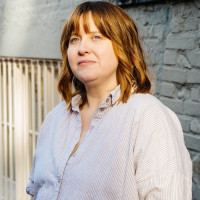
How I Write: Laura Evans
thegloss.ie – Thursday July 9, 2026
Getting into the writing process …
Laura Evans was born in Burnley and grew up in the Midlands in the UK. She completed Anglo-Saxon, Norse and Celtic studies at university before a career as a magazine editor, with a particular interest in travel and nature. A graduate of Curtis Brown Creative’s novel-writing course, she lives with her family in Norwich. Her debut novel, Little Wild (Mantle Debut), a story of class tensions, secrets and first love set in Suffolk in the 1930s, is out now.
My daily writing routine is not as routine as I’d like it to be. When I’m mid-story I could happily do nothing else for days, but like most parents who write I’ve had to adjust, and largely I think that’s a good thing. I write (around other work) when the children are at school; if I’m not too tired, in the evening; sometimes a little on a weekend. There’s a lot to be said for the advice to produce something daily, however small – but if hours are limited I’d prioritise reading every time. Writing isn’t just the act of putting words on the page; reading fuels the thinking, and thinking fuels the work.
My writing spot is currently a box room overlooking our street. Because it’s so small, the furniture has to be slightly miniature: a chaise longue in front of the window even I, at 5’3”, can’t fully lie on; a compact desk. (Facing the wall, because given any distraction I will daydream for hours.) Over the years I’ve written in coffee shops, libraries, on the kitchen table surrounded by children’s art – and sometimes I still do, but it’s such a gift to have the choice.
My favourite part of the writing process isn’t a stage per se, but the almost physical sensation of things clicking into place. Sometimes it’s a detail uncovered in research that perfectly connects two plot points; sometimes it’s just the sense of capturing something human and universal. If I had to boil down why I write to a single reason, that’s what it would be: those tiny moments of ‘yes’.

How AI is changing language
theguardian.com – Sunday July 5, 2026
As allegations of LLM use rock the literary and media worlds, linguists explain what really distinguishes human and machine writing, while novelists including Jennifer Egan and Jeanette Winterson reflect on the future of fiction in an age of ChatGPT
Three paragraphs, from three different hotel reviews. Can you tell which, if any, were AI‑generated?
“The hotel is in a great location for everything. Lots of places to eat and drink. The hotel itself is always abuzz. The tavern located on the ground floor is definitely a must. Food, service, prices and atmosphere were great.”
“A good hotel, though the room had the proportions of a well-appointed lift. Slept well, shower was excellent, staff were friendly. Breakfast was busy but competent. Would return, though probably not with a very large suitcase.”
“Excellent base for a London trip. The room was quiet, the bed comfortable, and everything worked exactly as it should. Staff were helpful without hovering. A smooth, unfussy stay from start to finish.”
How do you reckon you did? Most people, says Claire Hardaker, a professor of forensic linguistics at the University of Lancaster, get this kind of judgment right only about 60% of the time. Her online test, Bot or Not, asks users to identify the fakes in a series of 15 reviews. The middling success rate might come as a surprise to those convinced they can spot AI writing at 50 paces. When doubts were raised in May about the authenticity of a prizewinning short story by Jamir Nazir, social media users were lightning-quick in their condemnation. “If you know, you know,” commented one. Nazir later told The Atlantic that he didn’t use AI.

Why AI fiction still feels flat: New test shows characters lack mystery and complexity
techxplore.com – Friday July 3, 2026
Researchers at the University of North Carolina at Chapel Hill have found that while artificial intelligence can spin increasingly convincing stories, its characters may still lack one of the qualities that make human-written fiction memorable: mystery.
As AI writing tools become more common in publishing and entertainment, Carolina researchers wanted to understand whether the characters created by these systems are as varied and nuanced as those crafted by human authors. Their findings suggest that, despite advances in technology, AI still tends to rely on familiar patterns.
The study examined how characters in stories generated by AI compare with those written by people. Drawing on ideas from literary theory, the researchers analyzed eight different aspects of character portrayal, including whether characters seem realistic or exaggerated, whether they evolve over time, and whether they remain mysterious or fully understood by the end of a story.
To do this, the team developed CASPER, an automated framework that evaluated thousands of stories and measured character traits in ways that had never before been systematically applied to AI-generated fiction.
How to Research for Narrative Storytelling: 5 Takeaways from ‘You Are A Writer’
pen.org – Wednesday June 24, 2026
For emerging writers, the research process can be riddled with questions. Where do you begin? How do you know which facts deserve a place in your story and which should be discarded? And at what point do you simply have to force yourself to put down the books you’re reading, pick up a pen, and start writing?
The first workshop in PEN America’s 2026 You Are A Writer series brought together three accomplished writers — moderator John Manuel Arias (Crocodopolis) and speakers Charmaine Craig (My Nemesis) and Judy Batalion (The Last Woman of Warsaw) — who provided guidance to early career writers on how to conduct research for narrative storytelling. If you missed the session, check out five takeaways below and make sure to register for the upcoming sessions.
1. Consider the variety of forms research can take.
Research often involves digging deep into the archive, but that’s not all it can be. Over the course of Batalion’s career, she’s also conducted plenty of interviews and on-the-ground research. For her nonfiction work The Light of Days, which provides accounts of young, Jewish women who resisted Nazism, she traveled to Będzin — and, upon her arrival, learned that the whole Polish city sat atop a hill.
“No one mentioned that [in books], because that wasn’t an important part of the World War II testimony,” Batalion said. “But when you’re writing descriptively about a place and trying to understand someone’s hiding, or their journey, or their dangerous risk-tasking effort, you need to know that.” She acknowledged that financially or otherwise, traveling to the places you’re writing about isn’t always a possibility, but said her senses aid her greatly when she can put them to use.

Australia is publishing books too quickly – and everyone is losing out
theguardian.com – Monday June 22, 2026
Thanks to rushed deadlines, financial pressure and overworked staff, titles are going to market before they’re ready – and then sliding from view immediately
A Sydney author – I’ll call her Rebecca – vowed never to write another book after the deranging experience of publishing her first. She’s using a pseudonym because one day she might change her mind; the notoriously small Australian publishing industry does not tend to look with favour on authors who complain.
When Rebecca was proofing her debut – a work of nonfiction published by one of the big five – she discovered that a pivotal chapter had been cut. “I thought it was a mistake, that it had somehow been left out of the papers they’d sent,” she says. “Turns out they’d deliberately excised it and thought I wouldn’t notice.”
The proposed cover art for the book, which was set in one country, featured an animal native to another – and when the book went to a copy editor, the questions Rebecca got back were “absolutely out of touch”. References to hunting were queried on the basis they might offend vegetarians. Big mistakes slipped through the first print run and needed to be corrected in the second, including the name of a major character, which changed suddenly halfway through. “I’d assumed the publisher would take care of these things,” Rebecca says. “It felt like they were trying to shove me out the door and get the book out.”

Independent Creative Magazines Are Making a Comeback (And Here’s Why That Matters)
fluxmagazine.com – Monday June 22, 2026
The mid-2000s through the early 2010s saw print titles fold one after another, casualties of a digital transition that nobody had quite figured out how to navigate. The ones that survived did so by chasing clicks, flattening their editorial voice, and optimizing for search engines rather than readers. The result was a decade of arts coverage that felt somehow both everywhere and nowhere, present in volume but absent in perspective.
Something has shifted. Not dramatically, not with any particular announcement, but steadily and in ways that are hard to ignore if you spend time in creative communities online. Independent digital arts publications with genuine editorial identities are finding audiences again. Not massive ones, not in the way that lifestyle content farms measure traffic, but loyal ones. Readers who come back. Readers who share because they actually want to, not because an algorithm served something in front of them.
What Killed the First Wave
The first generation of digital arts publishing made a fundamental mistake: it tried to replicate print on screen. Longer issues, PDF downloads, subscription paywalls that made sense in 1995 and almost none in 2010. The audience wasn’t there for that model and the economics were brutal. It didn’t take long to realize that flipping through a PDF version of an actual magazine is annoying.
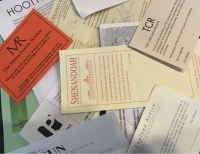
A Writer's Guide to Rejection Letters
poetry.arizona.edu – Friday June 19, 2026
The reality of submitting poetry to literary journals is that there are so many incredible poets doing it, and editors only have so much room in their magazines. All of us are inevitably going to face rejection in the writing world, and if we’re equipped to hit it head-on, we won’t be beaten down when we get that first “thanks but no thanks” letter. And bracing ourselves for rejection, or reframing it as proof of effort, makes us better writers in the long run.
Magazines typically accept less than 1% of the submissions they receive. In Submittable (as of March 2026), my rate of acceptance versus rejections is 174/1801, making my acceptance rate about 10%. I find that knowing this motivates me to submit more—for about every 10 pieces I send in, one will probably be accepted.
Editors are looking at thousands of submissions and can’t always provide feedback or respond personally to submissions. You’ll often see editors acknowledge this in a rejection letter. But if you volunteer to work on a literary magazine (which I highly recommend), you’ll quickly come to understand their perspective. I have read for a few magazines and contests, and when I have, I notice how quickly overwhelmed I can become. It doesn't take long for me to engage or disengage with a poem. Patterns begin to appear:
- Careless errors
- Misnaming the editor or reader
- Not following the submission guidelines
- Stylistic or aesthetic differences (readers are subjective with subjective tastes! And that's OK, but this is why magazines tell you to read before you submit; you may quickly realize just how much they vary in aesthetic interests.)
Understanding these patterns can help improve the likelihood of your work not being rejected.
Words, words, words
aeon.co – Thursday June 18, 2026
Strong resistance to AI among writers is understandable. But it obscures what we share with the machines: language itself
Since artificial intelligence went mainstream a few years ago, it has done double duty as a political personality test: tell me what you think about AI, and I’ll tell you who you are. Those worried about climate change focus on energy consumption. Those who denounce late capitalism see it as the ultimate example of corporate monopoly. Those concerned about racism have warned about AI biases. Those studying the effects of colonialism see it as yet another form of exploitation. And those tending toward doom have seen ChatGPT, Claude, Gemini and Grok as the four riders of the apocalypse.
People in the arts and culture have felt particularly threatened by AI because the technology seems to be coming for the things they cherish the most: the creative use of images, words, and ideas. The latter two, words and ideas, have been in the centre of the storm because generative AI is based on language and because ideas are closely associated with the words in which they are expressed. In response, writers have largely opted for resistance, defending the genuine creativity of humans against the machines. My social media feeds have been flooded with AI-slop gleefully produced and circulated by colleagues hoping to prove that AI can’t be creative. Let’s call this the Creative Resistance.
How to Write a Novel in 33 Days
lithub.com – Thursday June 18, 2026
There’s a popular idea, fueled by countless Hollywood movies, of how writing a novel works. It goes something like this. Author is struck by inspiration. Author sits down and types in a frenzied montage, words flowing directly from the ether onto the page. Within a few hours/days/weeks, a book appears.
I used to think this was (charitably) an exaggeration, or (uncharitably) bullshit. My experience of the writing process always involved much more conscious effort, and much more uncertainty. I spent my time stumbling through first drafts, doubling back, second-guessing everything I wrote. I had accepted that even if the pure-inspiration model was real, it wasn’t something I would ever experience.
But then an image came to me: a young woman in the back seat of a car, returning to the burnt-out ruin of the house where she once lived as a member of a cult. Within a few days, the rest of the story coalesced around her: the charismatic leader she was going back to find; the power he had offered her, to control and manipulate what others perceive as reality; and the community she had lost.
Get the free newsletter | Submit a news item or article | Get Writers' News for your website