


A Writer's Guide to Rejection Letters
poetry.arizona.edu – Friday June 19, 2026
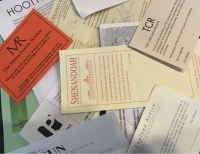
The reality of submitting poetry to literary journals is that there are so many incredible poets doing it, and editors only have so much room in their magazines. All of us are inevitably going to face rejection in the writing world, and if we’re equipped to hit it head-on, we won’t be beaten down when we get that first “thanks but no thanks” letter. And bracing ourselves for rejection, or reframing it as proof of effort, makes us better writers in the long run.
Magazines typically accept less than 1% of the submissions they receive. In Submittable (as of March 2026), my rate of acceptance versus rejections is 174/1801, making my acceptance rate about 10%. I find that knowing this motivates me to submit more—for about every 10 pieces I send in, one will probably be accepted.
Editors are looking at thousands of submissions and can’t always provide feedback or respond personally to submissions. You’ll often see editors acknowledge this in a rejection letter. But if you volunteer to work on a literary magazine (which I highly recommend), you’ll quickly come to understand their perspective. I have read for a few magazines and contests, and when I have, I notice how quickly overwhelmed I can become. It doesn't take long for me to engage or disengage with a poem. Patterns begin to appear:
- Careless errors
- Misnaming the editor or reader
- Not following the submission guidelines
- Stylistic or aesthetic differences (readers are subjective with subjective tastes! And that's OK, but this is why magazines tell you to read before you submit; you may quickly realize just how much they vary in aesthetic interests.)
Understanding these patterns can help improve the likelihood of your work not being rejected.
To read the full article on poetry.arizona.edu, click here
 Want to be a writer? This bleak but buoyant guide says to get used to rejection
 Rude rejection letters could cost you the next JK Rowling or George Orwell, publishers warned
 My writing competition success - An interview with writer, Jerry Ryan
 Tilting At Windmills: Becoming (and Staying) A Writer
 Jack Kerouac’s Guide To Writing Spontaneous Prose
 Why Aren’t You Selling—Enough?
 Why writing a book through letters is beautiful and wild
 What went wrong with the Writer's Market and the Writers' & Artists' Yearbook
 Top tips for young writers – from past winners of the young writer award
 11 authors' strategies for overcoming writer's block
 From writer to published author in 7 simple steps
 4 Actionable Ways to Overcome Writer's Block
 How to Start a Blog: The Only Guide You’ll Ever Need
 When does a writer become a professional?
 Why Do We Fixate on Writer's Block?
 Major UK and US Christian publishers unite in landmark deal
 New Literary Agent Listing: Olivia Emerick
 New Publisher Listing: RBmedia & Recorded Books
 The Ugly Review Opens Submissions for Issue II, Themed “Metamorphosis” | Submit by September 15, 2026
 HarperCollins Launches Manga Imprint
 The Vanishing Male Novelist
 Author invitation scams: How writers can spot fake offers
 New Publisher Listing: Level Up Publishing
 New Magazine Listing: The Haiku Shack Magazine
 New Literary Agent Listing: Stephanie Kim
 New Magazine Listing: Fictive Dream
 New Literary Agency Listing: Selby Howard
 New Literary Agency Listing: Renegade Literary
 New Publisher Listing: Weatherglass Books