


Why AI can’t take over creative writing
theconversation.com – Wednesday April 2, 2025

In 1948, the founder of information theory, Claude Shannon, proposed modelling language in terms of the probability of the next word in a sentence given the previous words. These types of probabilistic language models were largely derided, most famously by linguist Noam Chomsky: “The notion of ‘probability of a sentence’ is an entirely useless one.”
In 2022, 74 years after Shannon’s proposal, ChatGPT appeared, which caught the attention of the public, with some even suggesting it was a gateway to super-human intelligence. Going from Shannon’s proposal to ChatGPT took so long because the amount of data and computing time used was unimaginable even a few years before.
ChatGPT is a large language model (LLM) learned from a huge corpus of text from the internet. It predicts the probability of the next word given the context: a prompt and the previously generated words.
ChatGPT uses this model to generate language by choosing the next word according to the probabilistic prediction. Think about drawing words from a hat, where the words predicted to have a higher probability have more copies in the hat. ChatGPT produces text that seems intelligent.
There is a lot of controversy about how these tools can help or hinder learning and practising creative writing. As a professor of computer science who has authored hundreds of works on artificial intelligence (AI), including AI textbooks that cover the social impact of large language models, I think understanding how the models work can help writers and educators consider the limitations and potential uses of AI for what might be called “creative” writing.
To read the full article on theconversation.com, click here
 How to win a creative writing competition - top tips
 10 Struggles All Creative Writing Majors Understand
 Creative Writing Prompts to Get Your Brain in Gear
 Creative Writing Tips from Harvard’s Faculty
 5 Tips for Submitting Creative Writing
 Does the feedback in creative writing workshops make for better writing?
 Creative writing: stretching your imaginative powers
 ChatGPT for Creative Writing: Unleashing Your Imagination in 2024
 Travel, photography and music didn’t stop for these creative writing students
 Can creative writing be taught? Irish authors give their answers
 5 Writing Tips From Creative Powerhouse Tavi Gevinson
 Unwritten — The crisis in creative writing
 Five Writers on How Writing with Creative Constraints Unlocked Their Projects
 Get Creative: On writing a TV show - where do ideas come from?
 8 Short Story Writing Tips from a Dean of Creative Writing
 My Writing Education: A Time Line
 Book proposal writing made easy
 Major UK and US Christian publishers unite in landmark deal
 New Literary Agent Listing: Olivia Emerick
 New Publisher Listing: RBmedia & Recorded Books
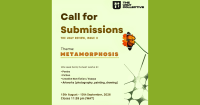 The Ugly Review Opens Submissions for Issue II, Themed “Metamorphosis” | Submit by September 15, 2026
 HarperCollins Launches Manga Imprint
 The Vanishing Male Novelist
 Author invitation scams: How writers can spot fake offers
 New Publisher Listing: Level Up Publishing
 New Magazine Listing: The Haiku Shack Magazine
 New Literary Agent Listing: Stephanie Kim
 New Magazine Listing: Fictive Dream
 New Literary Agency Listing: Selby Howard
 New Literary Agency Listing: Renegade Literary
 New Publisher Listing: Weatherglass Books