


Suspense (A state or condition of mental uncertainty or excitement…)

By G. Miki Hayden
Instructor at Writer's Digest University online and private writing coach
firstwriter.com – Thursday October 31, 2024
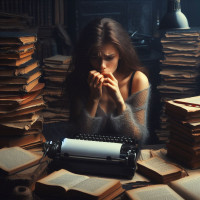
Suspense, as a noun, may sound vague, but as an artful expression in film, on stage, or in novels, suspense is a fairly specific ingredient. Suspense can dominate the genre being presented throughout, or suspense can come to the fore for a scene or a moment at the height of the story, and then resolve. Suspense can be sprinkled in like a condiment, or it can relentlessly keep an audience on the edge of their seats for the entire piece.
No matter how suspense is used, in a mystery, ghost or horror story, in an adventure, or as part of a futuristic end-of-the-world drama, this chilling emotion will pay off its creator well, in dollars and in fame. However, real suspense can be hard to produce.
On stage or in film, suspense can be urged along by music, spooky shadows on the set, or an actor’s makeup; yet on the page, suspense can only be produced by… words. But ,as we writers all must know, the word is mightier than any other means of affecting human emotion. And thus words will certainly do.
So, how do we keep the reader in a state of mental uncertainty or excitement? By sleight of hand, of course, by suggestion, by both the usual means and the unusual.
First the Must-Know
The usual starts, as we undertand, with hooking the reader. And the hook with the must-know starts with the protagonist. All authors, first of all, have to make their readers care. The authors (you, me, and all the authors we two are acquainted with), firstly, have to care ourselves. Who is the protagonist? Someone not without flaws, perhaps, flaws such as the ones we humans all believe we have or haven’t yet noticed. We’re too thin, too chubby, too talkative, too needy, or we’re young and nervous, uncared for, or we never meet anyone’s high expectations. The reader can identify and/or feel sympathy. This serves the ground level of nearly every novel written. Now we can just-about start.
Above and beyond our initial attachment to the star of our show, we need the quandry. What’s the problem? Well, we can jump right in with a dead body, or we can start with showing an enormous oval disk of a spaceship hovering over the Sonoran Desert.
Strangely though, the very initial page or two before the introduction of the threat may show a quite placid setting. The family comes out of the ice cream shop with their cones. The children are teasing one another. The sun is warming them. Their neigbors may even say hello. The setting is small-town friendly or big-town promising of importance. All is well.
Suspense Begins
Okay, here comes the threat, developing. Oddities start to appear from the point of view of the protaonist (or everyone all over town). Emotionally, the characters feel that something is off. As writers we can now throw in alarming sights, sounds, and smells, as perceived by the scenes’ point of view character. We scribes can also throw in the protag’s physical reactions; the hair on the back of her neck stands up. Chills run up and down her spine. Soon, at a frightening sound, her muscles tighten and her stomach churns.
The signs being reacted to can be subtle, and the physical distress deveops slowly. Or the symptoms of an altered world rush in all at once and the physical indications of upset come on altogeether, so quickly that they can’t even be noticed simultaineously… The ambiance has shifted, either step by step, or immediately, without a pause.
The main character comes to conclusions as to what might be happening, and the reader starts to worry—if, hopefully, we’ve thrown in enough clues. Throw in those clues! The protagonist changes his/her mind as to what’s going on. Oh, yes, he saw something last week. Or he had a dream and is reminded now of that. Lots of possibilities here. This feels surreal; the character’s friend echoes the feeling of dread. His/her eyes are wide. The spaceship appears overhead or their boat’s emergency whistle begins to blow. The friends grip one anothers’ hands.
Play It for All It’s Worth
As writers, we want to amp up the fear, the mental uncertaainty, the feeling of being completely off balance. Maybe the frriends are in a situation in which they have to pretend not to be agitated. No one else is reacting. And then, maybe they are shown to have been wrong. The bellowing wasn’t a lion, but only a cow in the field. Or a cat jumps down from the bookshelf, not a burglar from upstaurs. The fear of the moment simply resolves. Or it doesn’t resolve because this novel is meant to be suspense through and through.
Pacing can include a false resolution, and then the fear can rise again, with another resolution, and now maybe the normalcy isn’t really restored. Shock, and a sense of danger, return at an even greater height. Death may be in the air, or some spiritual wickdness. The world of reality collapses or the brown shirts march in. (We all are writing something different.) The blow-off of suspense only comes after the feeling of desperation rises to the ultimate… Mind racing, the hero(ine) finally deals with the horror, terror, or depth of doubt as to the reliability of his/her world…
And all this is accomplished with words, simply words, words thaat create emorions of tension and actual physicaal tension in the reader. Amp up the situation and the words, whatever your genre is.
Keep in mind the payoff for you as the writer. A monetary advance, perhaps, and later on, royalties. Good reviews, should you be so lucky, and the chance to write and publish another spellbinder. That’s exactly what you want.
About the Author
G. Miki Hayden is a short story Edgar winner. She teaches a mystery writing and a thriller writing and other writing classes at Writer's Digest online university. The third edition of her Writing the Mystery is available through Amazon and other good bookshops. She is also the author of The Naked Writer, a comprehensive, easy-to-read style and composition guide for all levels of writers.
Miki's most recent novel out is Respiration, the third book in her Rebirth Series. The New York Times gave her Pacific Empire a rave and listed it on that year's Summer Reading List. Miki is a short story Edgar winner for "The Maids," about the poisoning of French slave holders in Haiti.
"Holder, Oklahoma Senior Police Officer Aaron Clement is out for justice above all, even if he irritates the local hierarchy. Hayden in Dry Bones gives us nothing-barred investigation and plenty of nitty-gritty police procedure—which makes for a real page turner." — Marianna Ramondetta, author of The Barber from Palermo
 Lisa Gardner: 10 Lessons I Learned in 30 Years of Suspense Writing
 How Annette Lyon Went From Writing "Sweet Romance" to Suspense
 The State of the Crime Novel, Part 1: Writing Life
 George Saunders on Overcoming Uncertainty in Writing
 The Heartbeat of Suspense: Mastering Pacing in Thriller Writing
 Simon Linacre assesses the state of predatory publishing, 15 years since the term was first coined
 How I got published - An interview with author, Kent Richardson
 Eight reasons that even a good book is rejected by publishers
 What's next for kids' books
 Science Reveals the Advantage Writers Have Over the Rest of Us
 Promotional tips
 What's in a name? Giving birth to your characters
 firstwriter.com subscriber wins Ruth Rendell Short Story Competition
 How I got a literary agent - An interview with author David C. Burton
 A matter of perspective
 New Publisher Listing: Fidelis Books
 UK publishers unite behind major campaign championing print
 New Literary Agency Listing: Blueprint Literary
 JK Rowling’s agent launches a new chapter for muted writers
 Brockhall author calls on local writers to get in touch after launching literary agency
 New Publisher Listing: KiN-TXT
 Maidstone LitFest 2026: Sian Williams, Helen McGinn, Adele Parks plus children’s authors Onjali Q. Raúf and Harriet Muncaster
 Publishing industry lays down AI rules to counter 'click-to-publish' books
 Obituary: Edite Kroll
 New Literary Agent Listing: Ellen Scott
 Quest is a highly designed sci-fi and fantasy magazine built for web fiction
 New Publisher Listing: Iron Stream
 Profile Books completes sale of 2000AD publisher Rebellion’s SFF and horror imprint, Solaris