

Is Your Covid-19 Novel Going to Be THE One?

By G. Miki Hayden
Instructor at Writer's Digest University online and private writing coach
firstwriter.com – Sunday March 29, 2020
“I have no idea what's awaiting me, or what will happen when this all ends. For the moment I know this: there are sick people and they need curing.”― Albert Camus, The Plague
One of the best-known and most well-respected written works in the world is Camus’ novel The Plague. Although the story reads as if Camus personally went through a pestilence, he actually had “only” researched the many plagues that had come before to write his book.
I’ve been laboring away per usual, editing this and that and giving student feedback—and one impression struck me hard: We’re all quite immersed in the pandemic of our times, too engrossed perhaps to pay attention to anything else in the literary arena.
But that’s not true entirely, because we become so overwhelmed by all the statistics of the sick and the dead and the rumors about what’s coming next that we turn to old movies and old novels.
I’m watching Downsizing (based on a novel) about a community of people transformed into five-inch humans to save space and resources and for the citizens to live luxuriously on quite small budgets. I think Camus would like the film. I’m also reading an old Margaret Truman mystery that starts with a murder at one of the Smithsonian museums.
So what’s the truth? What can we look forward to in publishing once this deadly outbreak runs its course—presuming (and I do presume), it comes to an end at some not-too-too-distant point in the future?
Will authors be selling what they’re working on now, books about terror in Omaha, stories of ghosts encountered in Thailand, tales of excursions into out-of-body zones? Or will the novels or autobiographies of tomorrow recount the writers’ imagined or real experiences in the covid-19 urban ER hells.
Should I convince you to shift from the destination you’ve (for the last 20 years) imagined would one day wind up in print, to arrive at a landscape of pathogens, tragic lack of medical miracles, and human tear-jerk sacrifice amid much suffering?
I have no intention of doing that, my friends, because like Camus’ protagonist, Dr. Rieux, I don’t know where anything is going to end, including, in this case, in publishing.
You will find a lot of plague books out there—a lot: https://www.goodreads.com/list/tag/plague —and certainly movies: https://www.thewrap.com/virus-outbreak-movies-coronavirus-hackers-seventh-seal-contagion/ . (My very, very favorite pandemic movie is 12 Monkeys.)
So, will more books and movies focusing on the coronavirus need to now emerge?
Well, perhaps. Maybe the work that will grab the reviews has to be about the virus of our own times—such a shocker and unique to us. Definitely sooner or later those books will be published.
Or something else. I just a few months ago edited a science fiction novel in which people from another world destroyed our own with a virulent disease; and I’ve just this week been coaching a writer inspired by her own immune-system dysfunction who’s producing a novel about a future US. In her brave new world, people can’t touch one another because of a circulating virus (imagine that).
Do we want to read any of this fiction featuring pathogens or will we return to depicting the more placid times we yearn for—or the always popular evil of the Nazis rounding up the designated enemies of their day?
I do know that after the end of the Vietnam War, agents and editors shunned novels of that painful conflict, quite unlike the sought-after spate of battle fiction produced immediately after the Second World War. Will a decade or more need to go by following the current destruction of our way of life to write about it? Or will we seek to understand by reading various true as well as fictionalized accounts?
I can’t say. But I will say that we have to consider the question. And probably think about the timing of submissions while agents, editors, and the rest of us are so single-mindedly preoccupied.
I live now in a somewhat eerie Manhattan, home to the publishing industry of the US, and I wonder if authors’ reps are able to read anyone’s novel right this moment or predict (as I cannot) what will sell after this (in our contemporary human view) earthshaking storm.
“Stay safe” as we say for “farewell” nowadays.
About the Author
G. Miki Hayden is a short story Edgar winner. She teaches a mystery writing and a thriller writing and other writing classes at Writer's Digest online university. The third edition of her Writing the Mystery is available through Amazon and other good bookshops. She is also the author of The Naked Writer, a comprehensive, easy-to-read style and composition guide for all levels of writers.
Miki's most recent novel out is Respiration, the third book in her Rebirth Series. The New York Times gave her Pacific Empire a rave and listed it on that year's Summer Reading List. Miki is a short story Edgar winner for "The Maids," about the poisoning of French slave holders in Haiti.
"Holder, Oklahoma Senior Police Officer Aaron Clement is out for justice above all, even if he irritates the local hierarchy. Hayden in Dry Bones gives us nothing-barred investigation and plenty of nitty-gritty police procedure—which makes for a real page turner." — Marianna Ramondetta, author of The Barber from Palermo
 Please Don’t Criticize Me For Writing Pandemic Stories
 Zoom Book Tours: 5 Authors on Publishing in a Pandemic
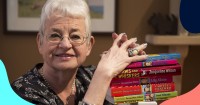 Jacqueline Wilson's guide to getting started writing children's books
 How the subscription newsletter service Substack is changing the writing game
 A Conversation About Music, Memory, and the Topographies of Writing
 "The power of the internet:" How a Chicago writer founded an international literary magazine from her bedroom
 A manifesto for self-publishing authors
 What we learned about... non-fiction writing
 Bill Clegg on Novel Writing, Agenting, and Obsessing Over Sufjan Stevens
 50 Shades of self-publishers: Fame and fortune through publishing yourself online
 Science Reveals the Advantage Writers Have Over the Rest of Us
 Making a living from writing, writing from making a living
 ePublish and Be Damned!
 A Book Well Worth the Wait
 Revealed: Why the Dragon Tattoo girl is really a man (...and why Stieg Larsson wrote off Inspector Morse)
 Top Tips for "Aspiring" Writers
 Major UK and US Christian publishers unite in landmark deal
 New Literary Agent Listing: Olivia Emerick
 New Publisher Listing: RBmedia & Recorded Books
 The Ugly Review Opens Submissions for Issue II, Themed “Metamorphosis” | Submit by September 15, 2026
 HarperCollins Launches Manga Imprint
 The Vanishing Male Novelist
 Author invitation scams: How writers can spot fake offers
 New Publisher Listing: Level Up Publishing
 New Magazine Listing: The Haiku Shack Magazine
 New Literary Agent Listing: Stephanie Kim
 New Magazine Listing: Fictive Dream
 New Literary Agency Listing: Selby Howard
 New Literary Agency Listing: Renegade Literary
 New Publisher Listing: Weatherglass Books