



Want to Write a Book This Year? These Tools Can Help
wired.com – Monday January 18, 2021
2020 WAS NOT the year I wrote my first book—but it was the year I started thinking about it. And in typical freelance writer fashion, I decided to take advantage of my position and get some advice on how to go about it from people much more accomplished than me under the guise of researching this article. Here’s what I managed to learn.
A Way to Take Notes
Apparently books don’t spring fully formed from the ether. You kind of have to work on them, brainstorming different ideas, doing research, and taking notes before you can really get started. News to me, but oh well.
Chris Bailey, author of The Productivity Project and Hyperfocus, and all-around productivity guru, is obsessive about taking notes for his books. He has legal pads stashed around his home, carries a small notepad when he walks around town, and even has a waterproof notepad in his shower. If he can’t commit his thoughts to paper, he uses Simplenote.
Epic fantasy writer Brian McClellan, author of The Powder Mage series, is a little less over-the-top about note-taking, but he also prefers the paper approach and carries a notepad with him—or at least tries to. Whenever he leaves it in his car, he “whips out” his smartphone and uses whatever notes app came preinstalled.
Both writers stressed that what tool you use for taking notes doesn’t matter as much as the act of doing it. Notes can be anything from a cool word or an idea for a magic system to transcribed conversations or annotated historical documents. But, whatever form they take, they’re likely to be the base of your book.
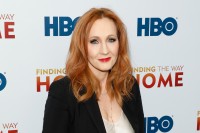
JK Rowling’s drama with the man who discovered her is one of many rows writers have had with their agents
inews.co.uk – Wednesday January 13, 2021
When authors become successful, they usually spend a good deal of their launch-party speech thanking their literary agent for believing in them when they were starting out and for finding them a publisher, and listing them high on their novel’s page of acknowledgments.
The agent’s role as a writer’s champion and negotiator can often result in close relationships that last years – but also intense disputes when an author moves on.

How to start writing in 2021 – tips from those who do it themselves
metro.co.uk – Thursday January 7, 2021
So, you want to start writing in 2021? Perhaps it’s always been your dream to write a novel and leave a permanent literary mark on the world? Or maybe you’re simply looking for a new hobby to try in 2021 and this January lockdown seems like an ideal time to start. You might have been putting it off for a while because you’re simply clueless on how to go about writing a novel, non-fiction or short stories – or it could be the idea of starting that you’re finding overwhelming. Whatever your situation, there are some simple tips to keep in mind to get you on your way. We’ve asked those who have written their own books – both fiction and non-fiction – to give shed light on how to get started and the important things to bear in mind. Here’s what three authors had to say…

How I write: Ben Sanders says mornings are a slog but by midday he finds some rhythm
stuff.co.nz – Wednesday January 6, 2021
Auckland-based Ben Sanders, author of American Blood and his latest The Devils You Know, shares his writing experiences.
What's your writing routine?
Writing time is nine to five, Wednesday to Friday. I always begin with a walk or some kind of exercise for about an hour. It’s like panning for gold in your brain: the stuff usable for fiction gets sifted out from the other leaden junk, and usually by the time I sit down to write I have a couple of little nuggets. Mornings are a slog: all backspace. But by midday I’ll find some rhythm.
And where do you write?
We have a home office, heavily fortified against procrastination.
Can you share a piece of good advice you've received about writing?

‘This is the year I’ll write my novel’: new year’s resolutions and the creative mind
irishtimes.com – Wednesday January 6, 2021
New years presents a fresh slate. The distractions of Christmas have passed, and the promise of longer days lies ahead. It won’t be long before we awake to sunlight creeping in under the curtains.
We set our New Year’s resolutions: we’ll write that novel, we’ll get numerous stories or poems submitted, or we’ll do that creative writing course. We make action lists. We set daily, weekly and monthly targets. We plan to give up each of our distractions, be they television, alcohol or social media. This year, we say to ourselves, writing will be the central focus of our lives.
The problem is, of course, that these promising goals become burdensome. Inevitably, life gets in the way and we get distracted. We miss the targets. Some months later, when we read over our beautiful list of resolutions, it no longer fills us with joy. Instead it has transformed into an emotional “stick” with which we hit ourselves.

Zoom Book Tours: 5 Authors on Publishing in a Pandemic
wired.com – Friday January 1, 2021
WRITING A BOOK is a lonely pursuit, one that can take years of solitary work. Selling a book is another story. Authors give talks in cramped storefronts, schmooze at luncheons, and learn to casually discuss their belabored creative project as commercial content. The publicity circuit can be dispiriting, sleazy, and exhausting. It can also be exhilarating, liberating, and fun—a chance for people who spend a lot of time alone with their thoughts to feel like someone’s heard them. This year, releasing a book into the world became another task largely undertaken solo, at home, staring at a screen. The Covid-19 pandemic forced the publishing industry to reimagine its process for convincing people to buy its latest offerings. Even the industry’s fanciest nights, like the National Book Awards gala, took place as digital events, with participants glammed up and sitting at home.
WIRED asked the writers behind five of our favorite 2020 tomes to tell us what it was like to release a book during quarantine. Here’s what they said.

Will the PRH–S&S Combination Be Too Big?
publishersweekly.com – Sunday December 13, 2020
It seemed impossible that the acquisition of Simon & Schuster by Penguin Random House the day before Thanksgiving could be overshadowed by a bigger industry event, but that is what happened when book publishing’s long-running trade show and convention, most recently known as BookExpo, was canceled. As the buzz about the end of BookExpo has cooled down, industry members continue to digest the news of PRH’s pending purchase of S&S, the nation’s largest and third-largest trade book publishers, respectively.
When the acquisition was announced, the Authors Guild, the American Booksellers Association, and the Association of American Literary Agents (formerly the AAR) all issued statements that were critical of the deal. While each organization had a particular take, all shared one thing in common: they were concerned about the increasing consolidation within trade publishing.

Sign on the Dotted Line
By G. Miki Hayden
Instructor at Writer's Digest University online and private writing coach
firstwriter.com – Saturday December 12, 2020
I just sign blank contracts for books and whatever strikes me as a good idea is what I write about.
~ Roger Zelazny
Contracts seem daunting because the language they are written in is arcane and the contract terms are ones you’ll have to live with, probably a while beyond the life of the book. In this case, fear is a good thing. We should regard the contract with a certain amount of trepidation and not simply sign because we’re drooling with eagerness to be published.

At the start of this year, I could barely sell my writing. These 10 online classes, books, and podcasts helped me get published in The New York Times and land 2 literary agents.
businessinsider.com – Thursday December 10, 2020
At the beginning of 2020, I was half a year out of college and already burned out. I was rejected from dozens of writing jobs, barely published anywhere, and unclear as to what editors were looking for. As a first-generation immigrant, I wasn't sure I could navigate the hurdles of the American publishing world, and I wondered whether writing was a viable career choice at all.
10 months later, I've written for major news outlets including The New York Times and The Washington Post, and have even been signed on to write a book with two literary agencies: Folio in the US and Peony in the UK and Asia.

Éilís Ní Dhuibhne: The writer as an older human being
rte.ie – Friday December 4, 2020
I am a short story writer. I write in many other genres - novels, children's books, plays, non-fiction - but my favourite literary form is the short story. Why? I think it is partly a lazy reason. When I started writing, and publishing, way back in the 1970s, short stories were what I wrote. And although I moved on to novels in due course, I became more and more interested in finding ways to create short stories. I like writing them because they can be written quickly - the first draft can be scribbled down within a day or two. Even if the rewriting takes weeks, the heart of the story is pinned down fast.
That means I can catch the idea, the mood, the feel, of whatever inspiration is concerned and preserve it, before it flies away. A character in an Alice Munro story, Family Furnishings, compares writing to grabbing something out of the air. It’s like that with a short story. It’s like catching a leaf as it falls from a tree, putting it between the pages of a book, then examining it, reading it, finding out what it has to tell you. That may be a lot more than you thought when it came floating down, red or gold or russet, in the autumn air. But no matter how much you develop it, it will still be that leaf that you caught at a certain moment in time.
A novel is quite different.
Get the free newsletter | Submit a news item or article | Get Writers' News for your website