


Elisa Gabbert on Writing and Capturing Beginner’s Luck
lithub.com – Saturday September 3, 2022

For a period in the late 2010s, I had the good fortune of belonging to a regular poker game. Whenever someone new would join us, confessing they didn’t really know how to play, my friend Mike and I would tell them, “That means you’re going to win.” And they always did.
Beginner’s luck is real. Poker always depends on luck, but there’s something else, beneath the luck, that feeds the luck, a root system. Beginners aren’t afraid. They have no performance anxiety, because they have nothing to live up to. They don’t know the other players’ habits, so they have no distracting expectations. And they’re not afraid of their own cards, whether they’re especially good or bad, because they don’t know how good or bad their cards are; they have no internalized sense of the odds. They’re unafraid out of ignorance—you might say, unafraid for the wrong reasons—but fearlessness is still an advantage, and it’s a skill you have to relearn. Most players, after their beginner’s luck runs out, stay mediocre because they never do.
People say “Trust the process,” but I’ve found there’s a danger in trusting my writing process too much. Once a process becomes fully routinized, I’m not learning anything. I know I can write a short literary essay—what a friend of mine calls an “I noticed a thing” essay—of a thousand or so words. I wrote a book of those. I know I can write a research-based essay of about four thousand words, generally in three sections—almost three subsequent essays that become a super-essay. I wrote a book of those too. I know there’s a certain amount of material, mostly books and other writing, I can consume to have enough interesting thoughts to build an essay around. I didn’t always know that—I had to try and succeed many times in a row first. (The only measure of success: I liked the effect.)
To read the full article on lithub.com, click here
 Writing contest etiquette
 My writing competition success - An interview with writer, Jerry Ryan
 Sharing the writing experience... online
 3 Simple Tips on Writing the First 5 Pages of Your Sci-Fi/Fantasy Novel
 Chris Parker on writing women narrators and seeing the world from their eyes
 What we learned about... non-fiction writing
 How Mindfulness Can Transform Your Writing Life
 Pete Kalu’s top tips for writing non-cliched multicultural characters
 What I learned from writing over 800,000 words in two years
 What Has Surprised You About The Writing Life? Intriguing Answers From Acclaimed Authors
 What Writing His First Novel Taught Author Ted Bell About Writing His Ninth Novel
 Writing books is not a sane way to make a living
 My Writing Education: A Time Line
 5 Truths to Contemplate Before You Start Writing Your Book
 Major UK and US Christian publishers unite in landmark deal
 New Literary Agent Listing: Olivia Emerick
 New Publisher Listing: RBmedia & Recorded Books
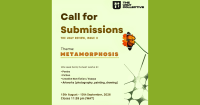 The Ugly Review Opens Submissions for Issue II, Themed “Metamorphosis” | Submit by September 15, 2026
 HarperCollins Launches Manga Imprint
 The Vanishing Male Novelist
 Author invitation scams: How writers can spot fake offers
 New Publisher Listing: Level Up Publishing
 New Magazine Listing: The Haiku Shack Magazine
 New Literary Agent Listing: Stephanie Kim
 New Magazine Listing: Fictive Dream
 New Literary Agency Listing: Selby Howard
 New Literary Agency Listing: Renegade Literary
 New Publisher Listing: Weatherglass Books