

New Publisher Listing: Post Hill Press
firstwriter.com – Thursday August 6, 2026
Publishes fiction and nonfiction with a focus on timely subjects shaped by current events and consumer trends. Reviews manuscripts across a wide range of commercial categories and considers projects with strong platforms, market awareness, and clear audience appeal. Handles translation and foreign distribution rights for many titles and supports media, publicity, and bulk book orders.

The Next Brilliant Career: Netflix Launches Nationwide Search for Australia's Next Great Screenwriter
about.netflix.com – Wednesday August 5, 2026
To celebrate the upcoming release of My Brilliant Career and the legacy of pioneering author Miles Franklin, Netflix ANZ, in partnership with the Australian Writers' Guild and Australia's eight State and Territory Screen Agencies, is today launching 'The Next Brilliant Career'.
The initiative invites emerging Australian writers who identify as women or non-binary to submit original, authentically-Australian scripted concepts for the chance to receive invaluable feedback directly from Netflix in developing their story for screen.
Following application and eligibility check via the state Screen Agencies dedicated online portals, an independent Australian Writers' Guild panel will shortlist applications. One finalist from each state and territory will then be invited to pitch their concept live at Netflix ANZ headquarters in Sydney in October, and will receive direct feedback from Netflix in developing their story for screen.
David Baldacci in Conversation at Theakston’s Old Peculier Crime Writing Festival
on-magazine.co.uk – Sunday August 2, 2026
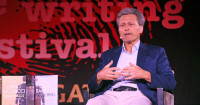
He’s the superstar author with a movie star’s megawatt smile, a former lawyer whose novels have been translated into 45 different languages, selling around 130 million copies of them have been sold around the world.
Having had such success, coupled with his slick look, you might expect David Baldacci to be an over-confident, brash individual, but not a bit of it. Instead, he exudes old world charm and humility and, 30 years on from the publication of his first book, he remains as thrilled as ever by the writing process.
As a result, he was as pleased as punch to receive the Outstanding Contribution to Crime Fiction award at Harrogate’s Theakstons Old Peculier Crime Writing Festival on Thursday evening.
“It means everything,” he claims. “When I say that British crime writing is the gold standard, I really mean that. And being rewarded by your peers is an amazing thing. They know how the sausages are made and that they’re not always pretty!
“I’m just thrilled that we have 20,000 people attending a writing festival somewhere on the planet. That’s incredible. I’m going to go home and tell everyone about it.”
It’s not his first visit to the event – that came in 2011, but it was a whole different ballgame back then: “There were no tents, that I can tell you. There were still thousands of people, but nothing like this.”

$2m crime novel deal collapses amid questions over AI use
theguardian.com – Sunday August 2, 2026
Agents withdraw Jerry Falade’s hotly anticipated debut after saying they can no longer authenticate ‘how the manuscript evolved’
A high-profile publishing deal for a debut crime novel has collapsed after doubts emerged over whether artificial intelligence played a role in writing it.
The hotly anticipated manuscript Call Me, I’ll Hide the Body, by Jerry Falade, was withdrawn from sale by its agent despite reportedly receiving an offer for more than $2m (£1.5m) from Minotaur, owned by Macmillan US, as part of a 14-way auction. The plan was to publish it in 2028.
An email sent to publishers by Falade’s agents and seen by the Guardian said: “Jerry Falade produced an incredible manuscript that dazzled us and the top publishing professionals around the world. Unfortunately, we are no longer able to authenticate how the manuscript fully evolved from origin to completion.”
It continued: “During the submission process we vetted the manuscript with Jerry for AI and felt trusting in his reassurance that it was written without utilising AI as a resource in the writing or editorial process. We can no longer substantiate that, and we are withdrawing the book.”

Nero New Writers Prize launched
irishtimes.com – Friday July 31, 2026
The search for the best unpublished writers in Ireland and Britain has begun with the launch of the 2026 Nero New Writers Prize in association with Brunel University of London.
Started in 2025 to celebrate the best unpublished writers, the prize aims to discover the writing stars of the future and support their development. Entrants are asked to submit a previously unpublished short story (a piece of fiction or narrative non-fiction) of up to 5,000 words. It can be written for children or for adult audiences and should be a self-contained piece of work.
The winner of the Nero New Writers Prize will receive a cash prize of £3,000, alongside a scholarship to study for an MA in Creative Writing at Brunel, an introductory meeting with a literary agent and more great prizes.
The prize will be judged by Paul Murray, bestselling author and winner of the 2023 Nero Gold Prize, Irish Times literary critic and novelist, Helen Cullen, and Booker Prize winner Bernardine Evaristo. A new award dedicated solely to Brunel students has also been announced.
Submissions are now open and will close on September 11th. For full details and an entry form visit nerobookawards.com.

The publishing world has rolled out the red carpet for one type of hatred
jewishnews.co.uk – Thursday July 30, 2026
While Jews - both Israelis and those in the diaspora - are shunned, authors whose virulent bigotry is unvarnished are feted
It was 2.45am when I saw the tweet. I was blearily making my way home from the public shelter after Iran’s latest barrage during the twelve-day war when I read the words: “You spend years thinking you needed therapy but, as it turns out, what you really needed was to watch Tel Aviv burn.”
Not much shocks me anymore, but this was a tweet from Susan Abulhawa, author of Mornings in Jenin, a mainstream author whose work a client of mine had acquired for publication in a European country just two weeks earlier. I am a literary scout, originally from London, based in Tel Aviv for the past eight years, and I advise clients in fifteen countries of the most exciting forthcoming books to acquire for translation.
I immediately attached a screenshot and emailed it to the client with the subject line “Hate Speech”, expecting a horrified, or at the very least mortified, response, and assuming the contract would be swiftly cancelled. This kind of behaviour is not tolerated in the genteel world of publishing.
Instead, I was told that the tweet had either been deleted or must have been fake, that the client did not regret acquiring the book, and that while they were sorry for what I was experiencing in Israel, Netanyahu was to blame and it would be better for me to leave the country as soon as possible.
This from a client of twenty years, once among my most Israel-friendly publishers, from a country my ancestors had fled generations earlier, now telling me where I should go.
It should not really have shocked me that Abulhawa’s tweets are hateful and antisemitic; a quick glance at the rest of her X account confirms that her tweets would not look out of place in Mein Kampf.
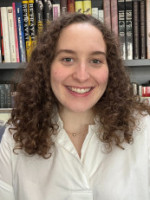
New Literary Agent Listing: Gracie Freeman Lifschutz
firstwriter.com – Thursday July 30, 2026
Handles grounded genre fiction, upmarket romance, psychological thrillers, folk horror, book club fiction, and narrative nonfiction exploring culture and social issues. Seeks inventive storytelling and underrepresented voices across young adult and adult categories, with an interest in strong prose and work examining human connection.
50 Word Fiction competition: write a story about sailing
scottishbooktrust.com – Wednesday July 29, 2026
Closing date: Tuesday 25 August 2026 at 11.55pm
Each month, we'll provide a prompt to get you started, but where the story goes from there is entirely up to you.
The 50 Word Fiction competition includes four categories: adult writers, all-age Gaelic writers, young writers aged 5–11 and young writers aged 12–18. The entries will be judged by a panel and the four winning stories will be published on our website roughly two weeks after the closing date.
A prize will be awarded to a writer in each category, should they be located in the UK, and we're very happy to offer a certificate (printed or digital, depending on your preference) as well as the below:

More Typos, Fewer Em Dashes: Writers Are Creating an Anti-AI ‘Literary Counterculture’
wired.com – Wednesday July 29, 2026
Novelists, journalists, and power LinkedIn posters are embracing first-person narratives and idiosyncrasies to avoid being mistaken for chatbots.
Last year, when the novelist Laura Brooke Robson began writing Love Is an Algorithm—a love story between the cofounder of an AI dating app and a musician trying to survive in the age of large language models—she took extra care not to sound like AI herself.
She wrote sentences she doubts she would have attempted before the advent of LLMs, avoiding what she calls “wishy-washy metaphors,” and took “a more winding path to avoid an em dash or a tripartite list.”
Since the widespread adoption of LLMs, Robson says her writing has fundamentally changed for the better, becoming a deliberate inverse of what she sees as AI’s default lack of style.
“I find myself writing less mechanically,” she says. “I have this urge to make little mistakes, like winks to the reader, to show that there’s a human behind the words. Like: What if I just invented a phrase? What if I did something unexpected with my punctuation?”
Robson is part of a larger cohort of writers who are practicing what could be called an anti-AI writing style. Across journalism, criticism, creative writing, and especially among compulsive LinkedIn posters, writers are converging on a set of choices that implicitly resist the trappings of AI-generated prose.
The style mostly takes shape through negation, often of the obvious AI tells, like lists of three, passive voice, not x but y, and em dashes. But it also prizes idiosyncrasy as its overriding principle, tapping into specific first-person anecdotes and eccentric similes that demonstrate the necessary drudgery of writing.
Agent Business Models May Be Shifting: What I Fear Will Happen
janefriedman.com – Wednesday July 29, 2026
However you measure it, I find more literary agents operating today than in decades prior. The Guide to Literary Agents directory, published since 1995, started with about 400 listings. The most recent edition, released in 2021, had about 1,000. According to my own reporting, the number of new agents announced per year in 2023, 2024, and 2025 was at least double the number announced in 2022. If you look at the number of contacts in Publishers Marketplace that carry the agent label, there are more than 3,000, although not all of them have reported deals. The number of Publishers Marketplace editors? About 3,800.
What’s driving the increase? It’s probably some combination of the following: Anyone can and does call themselves an agent, more people are agenting as a side gig, and consolidation among major and mid-size publishers has led some industry professionals to take up agenting. For career agents who’ve been in the business for the last couple decades or more, this is probably not a welcome development. It increases competition and creates more submissions for editors to sift through; for years now, agents and authors alike have complained of increased editorial response times. Some part of that is due to increased workloads for editors, but reportedly they’re also getting more material to consider. Longtime agent Kristin Nelson cited this as one reason agenting is harder today, and the situation is not improving.
The surest sign the profession is under pressure: changes at the Association of American Literary Agents. In 2022, the AALA loosened membership requirements. Prior to that year, membership required selling at least 10 books in an 18-month period. Now, anyone working in the field of author care at a literary agency can join. This isn’t in and of itself a bad thing—the organization is moving toward a more equitable and inclusive membership. But it definitely attracts more members unlikely to make a living by selling books.
Get the free newsletter | Submit a news item or article | Get Writers' News for your website