


It's Time to Start Romanticizing Your Rewrite Process
nofilmschool.com – Thursday September 3, 2026
For many people’s scripts, the rewriting process can feel like Hell on Earth. Writer John Vorhaus recently sat down with Film Courage to talk about why he actually likes the rewriting process more than the initial draft.
Let’s talk about the tricks he does to feel this way, and a couple I’ve got up my sleeve as well.
Speedrun Your First Draft
This was actually something that took me a long time to get used to doing. I had heard this piece of advice a lot when I was writing my very first scripts, and despite all of the heroes of mine I was hearing say it, I couldn’t bring myself to do it. I was always an edit-as-I-go writer. It made me feel better about my work in the moment, but by the time I was actually done with a draft, my “final edits” from months ago were outdated already, and I had to start over anyway. This is super duper draining, and you should avoid doing it as much as possible.
No matter what, the first draft that you finish won’t be your last, so try your absolute hardest to just vomit all of your thoughts onto the page just to get something done with a through line. If there are any editors out there, think of it like an assembly cut for a film. Everything is on the table, and all you have to do now is cut it down and make it pretty.

New Literary Agent Listing: Olivia Emerick
firstwriter.com – Thursday September 3, 2026
Handles commercial fiction for young adult and adult audiences, seeking manuscripts in romance, fantasy, mythology, dark academia, dystopian, horror, and thriller. Looks for human stories shaped by literary and theatrical experience, with an interest in advancing authors’ careers while supporting artistic vision.
A Beginner’s Guide to Arts Council Ireland and Words Ireland Funding for Authors
breakingac.com – Monday August 31, 2026
Breaking into the writing world is hard enough without worrying about how to pay your bills while you finish a manuscript. The good news for anyone based in Ireland is that there’s real, structured financial support available; you just need to know where to look. Two names come up again and again in this space: Arts Council Ireland and Words Ireland. Together, they form the backbone of financial and developmental support for writers, and understanding how they work is the first step toward building a sustainable writing career.
This guide walks you through both organisations, the funding options they offer, and how they connect to the wider landscape of book publishers Ireland relies on to bring new voices into print.
Why Funding Matters for Emerging Authors
Writing a book takes time often years. Most authors can’t simply quit their day job and write full-time without some form of financial cushion. That’s where public funding bodies step in. Arts Council Ireland exists precisely to fill this gap, offering grants, bursaries, and awards that let writers dedicate real time to their craft instead of squeezing it into evenings and weekends. A well-funded writer is also a more attractive prospect for book publishers Ireland has to offer, since a completed, well-developed manuscript is far easier to place than a half-finished draft.
The Desert Masterpiece: Why ‘Dune’ Is the Novel That Changed Sci-Fi Forever
parade.com – Monday August 31, 2026
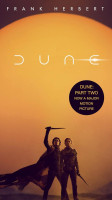
Dune‘s place in literary history has been debated, but it is generally regarded as one of the first major science fiction epics. As reported by The Guardian, prior to Dune’s release in 1965, the sci-fi genre was mostly comprised of short stories, and Dune is anything but short. Perhaps as a result of its length, the novel is also credited as being the first sci-fi novel to do such extensive world-building and bring in more literary themes, such as social hierarchies, war and religion.
It’s not surprising, then, that Dune won the first-ever Nebula Award for Best Novel in 1965. It also won the Hugo Award in 1966 for Best Novel, which recognizes the best of science fiction (it tied with the book …And Call Me Conrad by Roger Zelazny).
The book is also frequently compared to Lord of the Rings because of its scope and detail. In fact, per The Guardian, when it was first published in 1965, the book featured this quote from science fiction writer Arthur C. Clarke: “I know nothing comparable to it except The Lord of the Rings.”
How to make a bestseller: insiders reveal the tricks of the book trade
theguardian.com – Saturday August 29, 2026
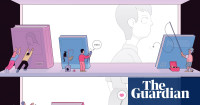
Think about the last book you bought. How did you choose it? Was it from a recommendation, a review, a TikTok video? Did the cover grab you, were you swayed by the quotes on the front, or did you just happen to spot it on an appealing table as you walked into the shop? Did you think about all the nudges that led you to that decision – by the publisher, the bookseller or that person you follow on Insta?
The reality is that our reading choices are directed and massaged at every turn. “It’s all about the art of persuasion,” says Philip Gwyn Jones, who was a publisher for more than 30 years and is now a literary agent. And who are the persuaders? They’re the booksellers, the supermarket stock buyers, the publishing houses and their ranks of marketers and publicists. And, more recently, persuasion often comes from BookTokers and online influencers, social media videos, podcasts and Instagram posts. How is all this changing publishing?
We all judge books to some extent by their covers, but did you know how much thought goes into finding just the right cover, colour, font and design? These covers are focus-grouped, shown to supermarket buyers and often changed at their behest, according to Jamie Keenan, one of Britain’s leading book designers. “That happens quite a lot,” he says. “If Tesco with commercial books, or Waterstones with literary stuff, don’t like it, they’ve got a tremendous amount of clout.” (Waterstones and Tesco declined to speak to me for this piece.)

New Publisher Listing: RBmedia & Recorded Books
firstwriter.com – Friday August 28, 2026
Publishes audiobooks across a catalog exceeding one hundred thousand titles, including award winners and bestsellers. Releases thousands of new audiobooks each year and distributes them through a global digital retail and library network reaching listeners on major audio platforms.
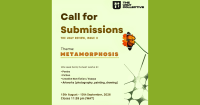
The Ugly Review Opens Submissions for Issue II, Themed “Metamorphosis” | Submit by September 15, 2026
brittlepaper.com – Thursday August 27, 2026
The Ugly Collective has opened its call for submissions for the second issue of The Ugly Review, themed “Metamorphosis.” The editors are seeking fiction, nonfiction, poetry, and photography/art that explores transformation in all its diverse, weird, beautiful, violent, and quiet forms.
The theme spans four broad directions: physical transformation tied to the body, illness, migration, gender, or aging; inner transformation rooted in grief, love, faith, or unlearning; social and environmental transformation touching cities, ecosystems, technology, and revolution; and magical or speculative transformation drawing on myth, portals, and the uncanny. The editors are especially interested in voices from Africa and the diaspora, and work that engages language, culture, and spirituality in new ways.
New Literary Agent Listing: Amber Garvey
firstwriter.com – Wednesday August 26, 2026
Handles romance for new adult and adult readers, with an interest in Irish writers across genres. Seeks manuscripts built around chemistry, tension and strong emotional pull, including both classic tropes and inventive approaches. Open to genre-blending as long as a romantic relationship remains central. Handles nonfiction relating to relationships, pop culture and true crime. Not seeking romantasy, high fantasy, or work set during war or involving the military.

HarperCollins Launches Manga Imprint
publishersweekly.com – Tuesday August 25, 2026
Amid a momentous week for American manga publishers, which included both the American Manga Awards and annual AnimeNYC convention, HarperCollins announced the launch of a new manga imprint, Kazé.
The publisher is rolling out the imprint in partnership with the existing Kazé publishers in France and Germany, which distribute manga for the European market and were acquired by HarperCollins last year. Kazé US will build on that brand for American readers of all ages.
In the announcement, HarperCollins called Kazé “a collaborative, creator-focused imprint dedicated to publishing the latest and most exciting manga, manhwa, and manhua for English-language readers,” meaning it will publish Korean and Chinese comics in addition to Japanese.
The imprint will officially launch in fall 2027 under the leadership of HarperAlley and Kazé publisher Andrew Arnold. HarperAlley launched in 2020 with a focus on graphic novels for children, before expanding into adult graphic novels, manga, and manhwa in 2024.

The Vanishing Male Novelist
mindingthecampus.org – Tuesday August 25, 2026
Here’s an interesting question: how many white American men born after 1984 have had a literary piece published in the New Yorker? The answer is zero. How did we get here, and who let this happen?
Every literary generation used to produce its Roth, Updike, Bellow, Wolfe, McCarthy, or Franzen. Today’s literary establishment shows no interest in producing young men of comparable prominence, especially if they’re straight and white. This is not a new or underdiagnosed problem; in fact, it appears to be a point of pride for the new generation of literary critics and publishers alike. Penguin Random House has no problem publishing its demographics yearly and celebrating the slow but consistent decline in white editorial staff.
Acclaimed novelist Joyce Carol Oates had no issue tweeting that “a friend who is a literary agent told me that he cannot even get editors to read first novels by young white male writers, no matter how good; they are just not interested.” And, without a hint of irony, followed up that statement with “this is heartbreaking for writers who may, in fact, be brilliant, & critical of their own ‘privilege.’” Although she is willing to recognize that young white men may be talented and barred from literary opportunities, she cannot help but equalize the statement with ludicrous notions of “privilege” where there is anything but.
Get the free newsletter | Submit a news item or article | Get Writers' News for your website