



In Conversation With Literary Agent Renée Zuckerbrot: An Insider’s Perspective on the Industry
pen.org – Wednesday June 10, 2026
The Pulitzer Prize. The Booker Prize. The National Book Award. The MacArthur Fellowship. The Dublin Literary Award. The PEN/Jean Stein Book Award. The New York Public Library Young Lions Award. The Thurber Prize for American Humor. The Shirley Jackson Award. These are just some of the awards that authors represented by Renée Zuckerbrot, an agent at Massie McQuilkin & Altman, have been nominated for or won.
But literary prowess aside, the authors have little in common: Zuckerbrot represents writers at all stages of their careers, from debut to well-established, as well as those working in a wide array of genres, including commercial and literary fiction as well as nonfiction.
In conversation with Abhigna Mooraka, coordinator for membership and national engagement, for this Member Spotlight, Zuckerbrot discusses what draws her to a manuscript, the effects of the industry’s financial challenges on agents and editors today, and the joy of literary community.

One Way to Tell If a Publisher Actually Has Distribution
janefriedman.com – Wednesday June 10, 2026
If you spend enough time talking to publishers, you will hear the same phrase repeated again and again: “We have distribution.” Sometimes that statement is accurate. More often, it is used loosely enough that it becomes difficult for authors to evaluate what it really means.
The challenge is that distribution has become one of the least clearly defined terms in publishing. When authors rely on the term alone, rather than understanding the underlying systems, they often make decisions based on potentially misleading language instead of reality. In practice, distribution requires infrastructure.
A more useful approach, then, is to ask a different question: What systems are actually supporting the book once it is in the market, and will you have visibility into them?

What’s in a Book’s Name? One Writer’s Journey to Finding the Perfect Title
lithub.com – Tuesday June 9, 2026
For me, coming up with titles is always a team effort. Titling my first book, a quirky history of people who look for the Garden of Eden on Earth, had me stumped, until my friend the writer Josh Garrett-Davis suggested “Paradise Lust.” True, there were other books by that title, but you can’t copyright a title, and besides, no one was likely to confuse my book with softcore romantasy set in Thailand. Paradise Lust (Grove Press, 2011) said a lot about the attitude the book took towards its history: cheeky, but also accurate—the book was literally about people “lusting” after paradise. So when it came time to title my second book, a one-volume history of religion in the United States from “first contact” through the Trump era which Grove had commissioned in 2016, I knew I would need some help—I just had no idea how much.
For nine years, the book lived in my head and my computer as “God and Country.” I thought the title did the same thing as Paradise Lust had: cheekily twisted a commonly known phrase while retaining its accuracy. Sure, I always got puzzled looks when I told anybody I was writing something called “God and Country”—one friend indignantly told me that phrase was the motto of both the Marines and Yale—but I was in denial.
In mid-June 2024, my editor gently broke it to me that “God and Country” would not fly; it was far too common a phrase in the titles of other books about religion, making mine impossible to distinguish with a quick web search; a death knell for booksellers and marketers. Still: I loved my title and had no idea what could replace it. Thus ensued a monthlong title quest. It took place in an email thread with my agent and two Grove editors; in an epic Facebook thread with 80 of my oldest friends; across all the evening conversations on my weeklong family vacation.
New Literary Agent Listing: René J. Kooiker
firstwriter.com – Tuesday June 9, 2026
Handles high‑concept or speculative upmarket fiction, literary debuts, friend groups and family sagas, grounded love stories and romcoms, psychological thrillers, crime and noir, and elevated horror. Seeks fiction with strong book‑to‑screen potential. In nonfiction, considers untold or marginalized histories, research‑driven narrative, incisive or humorous essay collections, and cultural criticism for a broad audience. Actively building a list across both fiction and nonfiction.
Script Essentials 2026 Summary Notes - Session 3: Story and Structure with Simon Nelson
bbc.co.uk – Monday June 8, 2026
Our third session in our 2026 Script Essentials webinar series was hosted by Simon Nelson (Development Executive, BBC Writers) who broke down the importance of structure, as well as how to use structure to improve your TV writing.
You can watch the full recording of our session on the Script Essentials page, accessible by clicking this link here. Or, you can read the summary notes below to get some key takeaways from Simon's session!
What is the purpose of TV Drama Structure
This session began by reframing what structure means for early TV writers, within a UK drama context. Structure is not a set of rigid rules or a formula designed to make scripts feel generic. Instead, it is best understood as the craft of managing the audience’s attention and emotional engagement over time.
Viewers do not consciously track acts, beats, or turning points, but they instinctively feel when a story is carrying them forward or when it has stalled. Effective structure ensures that an episode feels purposeful from beginning to end, even when the storytelling is quiet, character-led, or emotionally restrained. In UK television drama, where subtlety and realism are often prized, structure operates beneath the surface, shaping the experience without drawing attention to itself.
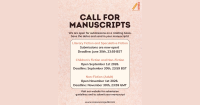
Cassava Republic Press Is Now Accepting Manuscript Submissions for Literary Fiction and Speculative Fiction
brittlepaper.com – Monday June 8, 2026
Cassava Republic Press has announced its 2026 manuscript submission windows, inviting writers to submit works across fiction and nonfiction categories on a rotating basis throughout the year. The first window, for Literary Fiction and Speculative Fiction, is open now, with a deadline of June 30, 2026, at 23:59 BST. Two further windows follow later in the year.
Cassava Republic wants work in its best possible shape before submission. Writers should send a 500-word summary of the book alongside the first three chapters of the manuscript, submitted as a Word attachment. The file should be named in the following format: date of submission (dd.mm.yy), first name, surname, book title — for example, Cassava Submission: Yinka Allen, To Play With Fire. The author’s name should appear only on the title page and nowhere else in the manuscript.

AI and the Future of Writing
yalereview.org – Monday June 8, 2026
A roundtable of authors discuss the ramifications for art—and life.
ON APRIL 8, at Yale University, Ayad Akhtar, Daniel Kehlmann and Meghan O’Rourke, three writers at the vanguard of creative engagement with AI, gathered with James Surowiecki, a journalist and senior editor at The Yale Review, to talk about AI and the future of the humanities. The following conversation ranged across the social ramifications of the LLM era, from changes in our cognition to shifting notions about the nature of language itself. The transcript has been edited and condensed for clarity and concision.
JAMES SUROWIECKI I want to start with a really big question, but Meghan suggested that might not be the best way in. So I’ll start by easing in. Can you describe your relationship to AI at the moment?
MEGHAN O’ROURKE That is not a small question.
DANIEL KEHLMANN It’s a great question, and it’s very hard to answer. It’s not a stable relationship, because I’m still in the process of finding out what AI is and what it can do. It can be extremely helpful and utterly amazing. And, at the same time, most of us will agree that it is very dangerous. It’s very hard to have a stable inner relationship to something like that.
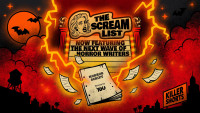
Killer Shorts Horror Writing Competition Open NOW With New Category for Feature Screenplays!
bloody-disgusting.com – Sunday June 7, 2026
The annual genre competition dedicated to finding and launching the next generation of horror writing talent, this year’s Killer Shorts is now officially open for entries!
Founded in 2019, Killer Shorts has established itself as a premier industry launchpad. The competition connects screenwriters and prose authors directly with the executives, managers, and producers who actively greenlight and option dark genre cinema.
But this year’s competition isn’t only about killer horror shorts…
For this brand new season, Killer Shorts is expanding its categories to include feature-length screenplays alongside its traditional short script, one-page script, and short story divisions.
Wiley Buys Emerald Publishing
mrweb.com – Sunday June 7, 2026
In New Jersey, research publisher Wiley has acquired Emerald Publishing from Cambridge Information Group (CIG) in an all-cash transaction valued at £337 million. The buy strengthens Wiley's offer in the social sciences - especially economics, business and finance.
Wiley, established in 1807, is today positioned as 'a global leader in research, publishing and knowledge solutions... dedicated to the creation and application of knowledge'. It operates AI-powered platforms which it says 'transform how knowledge is discovered, accessed, and applied.'
Emerald was founded in 1967 and is headquartered in the UK. The 'scholarly' publisher boasts nearly 500 journal brands, 8,000 book titles, and an extensive archive of case studies and backfile content worldwide. Wiley's positions in accounting, management, strategy, education, engineering, information and knowledge management, operations, public policy and environmental management will all be boosted by the deal, and will deepen its proprietary content offer for AI and data analytics. Following the buy Wiley's journal portfolio will rise to c.2,500 titles.
"The power of the internet:" How a Chicago writer founded an international literary magazine from her bedroom
cbsnews.com – Friday June 5, 2026
Saber-toothed tigers have been extinct for millennia, but for one Chicago writer, the name is alive with meaning.
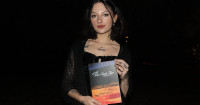
Sabr Tooth Tiger Magazine is a new Chicago-based publication with, as founder Madeline Blair describes it, "claws, teeth, and heart."
The name has a dual meaning. "The Arabic word 'sabr' means steadfastness, resilience, and patience," Blair said, which she learned as she began to explore Islam.
The 2023 University of Illinois creative writing graduate wanted the name to carry the magazine's mission.
"Saber-toothed tigers used to be a huge pinnacle of strength and ferocity, so I want that to exhibit our strength in writing," she said.
But strength and resilience aren't just themes in her magazine. They're a part of her own life. Blair had lived with long COVID for nearly a year after her first infection in 2022.
She described "strange" health issues: lung problems, blood vessel complications, "bruising so severe my arm would turn purple after blood draws," Blair said. "Doctors noted hazy opacities on my lungs, but couldn't fully explain."
Get the free newsletter | Submit a news item or article | Get Writers' News for your website