



Trey Parker and Matt Stone’s Surprise NYU Class Contains Some Great Writing Advice
cracked.com – Tuesday August 27, 2024
Trey Parker and Matt Stone’s names have been bouncing around social media a lot lately — and not just because South Park warned everybody about that whole “Disney being pure evil” business. Multiple X/Twitter accounts have been generating thousands of likes with an old clip of the duo sharing the “greatest lesson in storytelling ever.”
Back in 2011, the duo were guest lecturers in Professor Ken Liotti’s “Story-Telling Strategies” class at NYU’s Tisch School of the Arts. Why? Well, it was all part of the show Stand In, which aired on mtvU, the MTV-owned channel for college students.
Each episode of Stand In found real, totally unsuspecting students being taught lessons by celebrity guests, such as Cameron Diaz, Seth MacFarlane and even Larry David, presumably because UCLA has an “Advanced Misanthropy” course. More regrettably, Ye guested in one episode, back when he was known as Kanye West. The episode isn’t online, so it’s unclear whether or not he spent the whole show force-feeding sushi to the students.
Parker and Stone’s surprise lesson was full of great advice, as the widely-shared clip illustrates. Specifically, Parker elucidated the need to provide motivation behind the events of a narrative, explaining that, when writing out the beats of a story outline, “If the words ‘and then’ belong between those beats, you’re fucked, basically. You’ve got something pretty boring. What should happen between every beat that you’ve written, is either the word ‘therefore’ or ‘but.’”

Jade Kavanagh and Rebeka Finch step up at Darley Anderson
thebookseller.com – Tuesday August 27, 2024
Jade Kavanagh and Rebeka Finch have been promoted at Darley Anderson Agency & Associates, expanding the agency’s space for romance, fantasy, crime and horror.
Both are stepping up from associate to literary agent. Kavanagh joined the agency in early 2020 from Caroline Sheldon Literary Agency as assistant to Camilla Bolton before quickly taking the step up to agenting. She signed on her first author, Holly Craig, who became an e-book bestselling writer. Kavanagh is building her list of crime, horror and suspense authors.
Finch joined DA in 2019 as assistant to Darley Anderson, supporting him across his list of brand authors. Now Finch is leading the agency’s growth in the romance and adult fantasy space, with a roster of new authors publishing in the coming months.

Think your book is done? Think again
niemanstoryboard.org – Friday August 23, 2024
As a first-time author, I’ve spent the past four years writing and reporting my debut nonfiction book, “SLIP: Life in the Middle of Eating Disorder Recovery.” It’s been such a long labor of love that some acquaintances have asked: “Wait, is this your second book, or are you still working on your first one?”
I understand why they ask; most people don’t know all that goes into landing a nonfiction book deal with a Big Five publisher. Sometimes, I give them the abbreviated version of how the process works, with the caveat that it plays out a bit differently for everyone. Here’s a quick overview of how it worked for me, followed by a special focus on what still needs to happen after you send in a complete manuscript:
Maybe you decide to self-publish. If not, you need to query literary agents, whose job is to sell your book to a publisher. If you’re lucky enough to sign with an agent and you haven’t already written a proposal, you write one with help from your agent. These are lengthy documents; mine was 85 pages. Your agent shops that proposal to various publishers — a submission process that can take weeks, months, sometimes years. Amid the rejections, you hope for a yes.
After a tremendous amount of work, I got my own yes from a Simon & Schuster imprint in December 2022. By that point, I had been working on “SLIP” for about two years, exploring ways to convey the nuances of eating disorder recovery through a mix of personal narrative, research and cutting-edge science. Once I signed my contract, I had 18 months to complete my reporting and writing.
I finished my manuscript in early June, but the work is far from done. I spent the summer in back-and-forths with my editor to fine-tune the final draft. Being at this stage feels like completing the last few miles of an ultra-marathon: It’s both exhausting and energizing; it requires the humility to accept most edits and the confidence to speak up when you disagree with others; it demands time, undivided attention and an openness to change — all in service of making your book as good as it can be before it goes out into the world.
Along the way, I’ve kept note of some related takeaways that have helped me through this last editing stage.

From bestselling novels to unpublished manuscripts, what is the secret to literary success?
news.northeastern.edu – Thursday August 22, 2024
You might think releasing 20 books — including four American Girl books — carries some weight in the publishing world. Yet, Kathryn Reiss still has four books, including a thriller for adults, in her repertoire that remain unpublished.
Reiss, an associate teaching professor in creative writing at Northeastern University’s Oakland campus, has made her name writing suspense novels for kids and teens; she published her first novel, “Time Windows,” in 1991 after writing it while on a Fulbright Scholarship in Germany. But she’s bumped up against a wall when trying to branch outside her niche.
“(Publishers) have to think they can market it,” Reiss said. “So if I want to do an adult book, or if I want to do some literary fiction that’s not a typical Kathryn Reiss suspense novel … they go ‘Well, how will we market that?’ You almost get stuck.”
Creative writing is an art, but writers face the same problem many artists do: how they can create something they like that people will also want to buy. Like any other business, book publishers want to sell a good product that they can easily market, Reiss said. But this makes it hard for writers to break out of their shell, if they can even break into the industry at all.
“For a new writer, you have to prove to them you have a very marketable book,” Reiss said. “What people don’t understand is once you’ve had a book published, it doesn’t mean you’re a shoo-in for your next book. It means your publisher will look at your next book.
“You have a one-up on someone who hasn’t published anything, but it isn’t a given. They have to think they can market it. … Publishers are really about making money. They care about their readers, but they want to sell books at the end of the day. That’s what they’re in the business to do.”

Writing Fantasy course launched taught by author Lucy Holland
scifinow.co.uk – Monday August 19, 2024
Calling all aspiring fantasy authors! Curtis Brown Creative (CBC) has opened its new online Writing Fantasy course for applications. Across nine weeks, fifteen students will learn from tutor Lucy Holland (pictured above) during lively Zoom teaching sessions, workshops and one-to-one tutorials.
“I’m thrilled to be working with Curtis Brown Creative to take writers deeper into the core elements of the genre,” said Lucy Holland. “We’ll be looking at worldbuilding on a character level, as well as ways in which fantasy can challenge us to write outside our direct experience. I’m also excited to cover popular subgenres like myth retellings & romantasy, and how to harness tropes to tell a compelling story.”
Students will also attend a special Zoom masterclass with Eliza Chan, author of the number one Sunday Times bestseller Fathomfolk, and her C&W literary agent Alexander Cochran.
New Literary Agent Listing: Salma Begum
firstwriter.com – Monday August 19, 2024
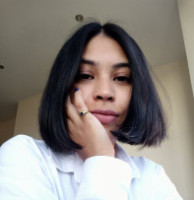
Seeking confident, immersive, ambitious, narrative-driven writing. She works under the tenet that quality need not be to the sacrifice of commercial success. Her submission wishlist includes a sweeping love story set against a gritty urban backdrop; ingenious tales of time travel; and a masterfully crafted multi-generational epic. In non-fiction, she is looking for subject experts, journalists and memoirists who appreciate long-form literature and can breathe life into an idea, an event, a memory. Her non-fiction wishlist includes interrogations of social media use and its sometimes-devastating consequences as explored in the Netflix docudrama The Social Dilemma; captivating music writing such as Grime Kids by DJ Target and On Michael Jackson by Margo Jefferson; and ground-shifting journalism like Empire of Pain by Patrick Radden Keefe. She has published the work of a number of prize-winning poets. As an agent, her preference is for the colloquial, rhythmic, or playful, written with the ambition of forming a cohesive collection. She is keen to work with spoken word poets who are looking to bring their work to the page.
Booker Prize-winning authors head to book festival
bbc.co.uk – Thursday August 15, 2024
Booker Prize-winning authors, local writers and international best-sellers are all on the line-up of a city's literary festival.
Durham Book Festival is set to return between 10 and 13 October with a host of famous names including Helen Fielding, Jodi Picoult and Rebecca F. Kuang, the author of Yellowface.
A series of workshops for aspiring writers will also be held across the weekend.
Elizabeth Scott, from Durham County Council, said the annual event underpinned the city's "commitment to writers, readers and audiences".
One of the festival's headline authors is Durham's own Pat Barker, who will be giving a dramatic reading of her new novel, The Voyage Home.
In 1995, Barker won the Booker Prize for her novel The Ghost Road. Her 1983 book Union Street also won the Fawcett Society's prize for fiction.
Rebecca Wilkie, Durham Book Festival director at New Writing North, said the event builds on a "remarkable legacy".

How to get published: Finding a literary agent for your novel
standard.co.uk – Thursday August 15, 2024
As an aspiring author, the journey to getting your book into print can seem like a daunting maze. But what if you had an insider's guide to navigating the publishing world and capturing the attention of a top-tier literary agent?
This unique masterclass with leading agent Juliet Mushens will demystify the process and reveal what it takes to make your submission stand out from the slush pile.
What will you learn?
In his comprehensive masterclass, you'll gain invaluable insights into how the publishing industry works and the role of a literary agent, including:
-
Expert tips on editing your novel to make it submission-ready
-
How to research and identify the best agents for your work
-
What agents look for in submissions, from manuscripts to cover letters
-
Crafting a killer pitch and blurb that hooks agents from the first line
-
Practical pitching exercises, with opportunities for feedback
HarperCollins audio sales up 18%, overall sales up 6%
booksandpublishing.com.au – Tuesday August 13, 2024
HarperCollins parent company News Corp has announced its fourth quarter and annual results.
The company reported that its book publishing division saw sales rise 6% for the 2024 fiscal year to US$2.09 billion (A$3.18b), while EBITDA (earnings before interest, taxes, depreciation, and amortisation) rose 61%, to US$269 million ($A409.48m). ‘The publisher had a particular strong fourth quarter, with sales soaring 15% and earnings skyrocketing 256%, marking [its] best fourth quarter since 2018,’ reported Publishers Weekly (PW).

How I wrote a book in 15 minutes a day
fastcompany.com – Monday August 12, 2024
The first time I tried to write a novel I was 23. I had all the time in the world. I was a full-time graduate student. I lived alone, I had no children, and it took me three years to finish a draft.
Five years later, I tried again. I was working full-time as a reporter and I lived with my boyfriend, but we had no kids. This time, it took me five years.
All that time, my technique, if you could call it that, was the same: set up my laptop at a coffee shop or a library or at my desk at home, and “write.” But, as New York Times best-selling author Meghan O’Rourke recently tweeted: “It’s really important to have at least three hours to write every day so you can spend the first two hours squirming and checking the internet and daydreaming before getting down to it.”
Touché. I thought I needed hours with nothing to do but write. But even with all those hours, I didn’t produce much. So I started applying for retreats and residencies, thinking maybe I needed long stretches—days, weeks—to do nothing but write.
I wrote three novels that way. Fits of progress followed by long lulls of nothing. And then I had a child.
Suddenly, there were no long stretches.
Get the free newsletter | Submit a news item or article | Get Writers' News for your website