

Penguin to sue OpenAI over ChatGPT version of German children’s book
theguardian.com – Tuesday March 31, 2026
Publisher alleges AI research company’s chatbot violated its copyright over Coconut the Little Dragon series
Penguin Random House has filed a lawsuit against OpenAI, alleging its chatbot ChatGPT violated copyright by mimicking and reproducing the content of a popular series of German children’s books.
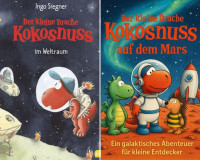
The lawsuit, which was filed on Friday with a Munich court against OpenAI’s Ireland-based European subsidiary, states Penguin Random House’s legal team had prompted ChatGPT to write a story in the vein of Penguin author and illustrator Ingo Siegner’s Coconut the Little Dragon series.
In response to the prompt “Can you write a children’s book in which Coconut the Dragon is on Mars”, the chatbot generated text and images the publishing group said were “virtually indistinguishable from the original”.
As well as generating the text of a story, the AI-powered chatbot created a cover featuring Siegner’s orange dragon and two sidekicks, as well as a blurb for the back cover and instructions for how to submit the manuscript to a self-publishing platform.

New Literary Agent Listing: Gwen Beal
firstwriter.com – Monday March 30, 2026
Represents fiction across ages and genres, including picture books, middle grade, young adult, and adult. Seeks picture books ranging from literary to commercial, with a particular interest in author illustrators. Looks for middle grade with adventure and memorable friendships, young adult with slow‑burn romance, accessible worldbuilding, and inventive twists, and adult projects with commercial appeal, strong genre elements, imaginative hooks, and compelling romance. Handles a broad list spanning fantasy, contemporary work, graphic novels, and projects for children and adults, with an emphasis on distinctive storytelling and highly engaging voices.

‘Soon publishers won’t stand a chance’: literary world in struggle to detect AI-written books
theguardian.com – Sunday March 29, 2026
US release of horror novel Shy Girl cancelled and UK book discontinued after suspected AI use, as publishers feel ‘cold shiver’
Recently, the literary agent Kate Nash started noticing that the submission letters she was receiving from authors were becoming more thorough – albeit also more formulaic.
“I took it as a rise in diligence,” she said. “I thought it was a good thing.”
But then she had what she described as her eureka moment: the letter with the AI prompt right at the top. “It read: ‘Rewrite my query letter for Kate Nash including a comp to a writer she represents,’” she said.
Once Nash had seen the prompt, she “couldn’t unsee AI-assisted or AI-written queries again”.

New Literary Agent Listing: Eleanor Lawlor
firstwriter.com – Wednesday March 25, 2026
Publishes commercial women’s fiction, book club fiction and narrative nonfiction, as well as picture books, middle grade, young adult and graphic novels. Actively seeks romance, fantasy and YA, including work rooted in contemporary Irish culture or folklore, atmospheric thrillers and murder mysteries, horror with natural‑world themes, high‑stakes fantasy with complex characters, and anything magical from cosy witches to vampires, werewolves, ghosts, gods and demons. Open to submissions featuring compelling villains and strong central hooks.
A Guide for Aspiring Authors
universityobserver.ie – Tuesday March 24, 2026
In order to be a writer, one must form a writing habit. Pick a dedicated time in your schedule where you write. It does not matter how long you write for or what time you select. The key is consistency. Building this habit requires you to take yourself, and your writing seriously.
I recently attended an event at Chapter’s Bookstore, hosted by the Romantic Novels Association, a professional body dedicated to raising the prestige of romantic fiction. At the event, the association’s chair and director, Seána Talbot, spoke about the importance of respecting your desire to write as much as your other commitments.
For students, this might look like setting deadlines for your writing goals just as you would with your assignments, or informing your roommates that you need some quiet time in the same way you do when you study.
Build a community:
It can be much easier to motivate yourself to do something when you belong to a group with the same interests or goals. If you are not in a literature or creative writing degree, this can be harder to find as a student. That said writing groups you can join as a student still exist.
UCD Lit Soc hosts regular writing sessions where students from all courses can come together to write and share their work with others. Volunteering with organisations such as Fighting Words also gives access to events with other writing and literature enthusiasts. This is a great way to meet people with the same interests and sometimes network with others from the industry.

£10.5M investment to establish North East Centre for Writing and Publishing
placenortheast.co.uk – Tuesday March 24, 2026
Building on one of the North East Combined Authority’s key areas of investment for the region, it is teaming up with Northumbria University to establish the creative hub in Newcastle.
The centre, a partnership with the charity New Writing North, has already received £5m from the government’s Cultural Development Fund and £1m from Newcastle City Council.
Now, Northumbria University has committed £2.5m, with a further £2m to come from NECA, set for approval later this month, taking total funding to £10.5m.
The intended location is the grade-two listed Old Post Office on St Nicholas Street, subject to approval. The building underwent a £5.8m renovation in 2016 and was used as offices until it was put on the market by NBS in July last year.
Can anyone get a book deal? What it takes to be a novelist in 2026
eu.usatoday.com – Sunday March 22, 2026
Consolidation, fewer imprints and editorial bottlenecks are reshaping how fiction book deals are acquired and developed in today’s publishing market.
“From Pitch to Publication” is a series taking readers behind the curtain of modern publishing as a business.
I’m so accustomed to rejection that I brace myself for every email – even before opening. Even when good news may be waiting after that click.
Writers, and all creatives to an extent, have to get accustomed to “no.”
About 81% of Americans feel that they have a book in them, according to an often cited survey reported in The New York Times (from the early 2000s). Many aspire to write and publish a book in their lifetime, but only a small fraction see their work formally acquired and announced each year. A little over 2,000 fiction writers announced deals in 2025 on Publishers Marketplace.
What's it like to write a bestseller? We followed Lucy Score for a year to find out
This year, one of those deals announced is mine: My debut young adult novel, “How to Kill a Chupacabras," was acquired by independent publisher Tiny Ghost Press. I almost dismissed the email confirming the offer as another rejection.
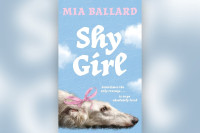
Horror novel reportedly pulled from publication after suspected use of AI during writing process
independent.co.uk – Saturday March 21, 2026
One of the largest book publishers in the U.S. has pulled an upcoming horror novel on Thursday after widespread accusations that the author used artificial intelligence to write it.
Hachette Book Group was approached by apparent evidence, collated by The New York Times, that the novel “Shy Girl” by Mia Ballard appeared to be AI-generated. A day later, the company said it was removing the book from publication and from Amazon as well as Hachette’s websites.
The publisher said that Orbit Books, one of its publishing divisions, decided not to publish “Shy Girl” after reviewing the text, adding that the book will be discontinued in the UK, where it was published last fall and has sold around 1,800 print copies, according to NielsenIQ BookData.

How to write your first children's book - meet the experts
knutsfordguardian.co.uk – Saturday March 21, 2026
Cheshire has produced generations of award-winning children’s authors, from Lewis Carroll to contemporary luminaries such as Alan Garner. Now, in World Book Day month, we discover what it takes to pen a hit for young readers.
For me, it’s Enid Blyton’s The Magic Faraway Tree. My daughters opt for Dame Lynley Dodd’s unlikely canine hero, Hairy Maclary. Friends and family suggest other titles – Shirley Hughes’ We’re Going on a Bear Hunt, Lauren Child’s Charlie and Lola, Julia Donaldson’s The Gruffalo, Jeff Kinney’s Diary of a Wimpy Kid, JK Rowling’s Harry Potter. They’re all stories that endure – enthralling and inspiring young readers and making indelible marks on fresh imaginations in a way fiction rarely does as we mature.
In Warrington, international best-selling author Curtis Jobling traces his success back to childhood inspirations.

Author, publisher not blood-sucking vampires of unpublished material
businessinsurance.com – Saturday March 21, 2026
In a decision that may unsettle no one more than the nation’s supply of fictional boyfriends, a federal judge has clarified that the brooding, alluring, faintly menacing young man — so often encountered lurking in the corridors of young-adult fantasy — belongs not to any single author, but to the culture at large.
A judge in the Southern District of New York this week issued a ruling that might be described, depending on one’s temperament, as either a victory for creative freedom or a reminder that certain literary archetypes are lurking in the public-domain the same way vampires and werewolves seem to find themselves in the pages of certain types of books, according to Publishers Weekly.
The author Tracy Wolff, whose “Crave” series has populated bestseller lists with vampires, intrigue, and hormonal peril, was found not to have plagiarized anything at all.
Get the free newsletter | Submit a news item or article | Get Writers' News for your website