

How to navigate the closed world of publishing
heraldscotland.com – Sunday January 1, 2023
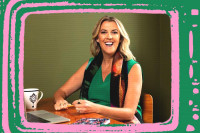
Three hundred million self-published books are sold each year and as with any new booming industry there are people willing to help you navigate the once closed-off world of publishing.
The market is growing, $1.25 billion worth of self-published books are sold each year and the number of self-published books has increased 264% in the last five years.
I began my book writing process 17 months ago. I had no plan or concept of how my memoir would look, let alone the publishing process. I had an inkling that the world of publishing is complex and daunting – only slightly less arduous than the book editing process.
Four myths about writing
irishtimes.com – Saturday December 31, 2022
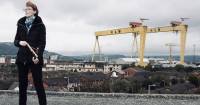
Rosemary Jenkinson challenges four preconceptions about the writing life
Writing is a serious job. Susan Sontag wrote, ‘I always begin with a great sense of dread and trepidation,’ and Nietzsche compared the decision to start writing to ‘leaping into a cold lake,’ but for me it’s like diving into a hot tub with champagne and a bevy of hot studs. I understand that some authors can be crippled by self-expectation, but writing is such a joy I sometimes wake up like a child on Christmas morning longing to unwrap my toys. While I take writing seriously, I can’t, however, take the writing world seriously. Nor should you. Byron hilariously punctured Wordsworth’s pomposity by calling him Turdsworth. Being tongue-in-cheek and laughing at the litterati is great for your mental health. It was Oscar Wilde who recognized the paradox by claiming that, ‘Some things are too important to be taken seriously.’ It’s all to the better if people don’t know whether you’re being serious or not. To quote Wilde again, ‘I usually say what I really think. A great mistake nowadays. It makes one so liable to be misunderstood.’

The best way to polish your writing? Read it aloud.
smileypete.com – Friday December 30, 2022
In 2009, the internet was blessed with a comment on 4chan’s video games board that can only be described as a monument to the importance of reading aloud: “Has anyone really been far even as decided to use even go want to do look more like?” Users shared their confusion across various platforms and eventually made it into a meme.
The advice that one should read their work aloud before sharing it with an audience borders on cliché, but it remains a crucial part of the writing process. Some prefer the authorial voice that echoes in their heads as they silently review their work in dulcet tones to the potentially awkward experience of hearing their voice fill the room and finding it unpracticed and less self-assured. While you may feel a little silly, the wealth of information gleaned from the physical act of reading aloud is worth the embarrassment.

The “Plotter vs. Pantser” Writing Divide Has Been Exaggerated
tor.com – Wednesday December 28, 2022
When it comes to outlining vs. improvising, I’ve found that we all do the same steps in a different order.
Many writing conversations (whether on panels, in blog posts, etc.) discuss a plotter vs. pantser binary, plotters being outliners, authors who plan work thoroughly before beginning, while the pantser, from the expression “fly by the seat of your pants” plunges into writing the beginning without a plan. I myself am certainly the plotter archetype, producing reams of notes, spreadsheets, and outlining a whole series before beginning Chapter 1, but the more I talk with friends who fit the pantser archetype, the clearer it becomes that the two methods are not as different as they’re made to seem. The real difference is not what we do, but what order we do it in, which steps we do before, which during, and which after drafting the text.
Literary Agents
By Lakshmi Raj Sharma
Novelist and Professor of English
firstwriter.com – Wednesday December 28, 2022
Literary agents and their meticulous work fascinate me. I presume several other authors feel the same about them. Perhaps agents are equally immersed in and captivated by the publishing process. Theirs is most definitely a labor of love. Agents have to be fervent about good ideas, unstoppable at the bargaining table, shrewd in judgment and advice, and brilliant at editing. There's no doubt that we authors need literary agents in the contemporary publishing scenario. Without them we are like fishes out of water. They know things that authors do not. They, therefore, bridge the gap between publishers and them, and, in some cases, become protectors. Authors feel insecure in their professional worlds without supportive agents. Of course not all agents are the same. Some who fall into the wrong profession can become the cause of authors dwindling into nothing.
I propose to hold the mirror up to agents and do for them what they have very kindly been doing for authors. Fully realizing the complexity of their job, I will try to suggest how agents might help authors even better. I believe I can do this because the work of literary agents lures me and I read with interest virtually everything related to them. What I say here will include some of the problems faced by authors living in countries like India. Living in such countries and writing to the world at large is no easy task because of confusions that arise because authors and agents belong to different cultures.

Big Names in Little Magazines: On Thomas Pynchon’s Very First Literary Journal Appearance
lithub.com – Thursday December 22, 2022
“Thomas Pynchon is a young writer, just twenty, who has previously published fiction in Epoch. He is a Cornell graduate and now lives in Seattle.”
Writers know that the time between when a piece is accepted by a literary magazine and when it is actually published can be rather protracted—my longest span was three years—and by the time Thomas Pynchon appeared in the Spring 1960 issue of The Kenyon Review, he was a still-young 23. He’d just graduated from Cornell, his time there split by a stint in the Navy. He worked for Boeing in Seattle—writing for Bomarc Service News, an internal newsletter.
Although tasked with writing technical pieces about anti-aircraft missiles, Pynchon was characteristically wry. In “The Mad Hatter and the Mercury Wetted Relays,” Pynchon informs readers that Lewis Carroll’s Mad Hatter had gone mad from “chronic mercurialism” or “hatter’s shakes,” which could affect Boeing workers if certain wire-wrapped glass capsules explode. “When dealing with mercury,” Pynchon warns, “even in small amounts, respect it and play it safe. Don’t become a ‘Mad Hatter,’ you might find it to be much more unpleasant than attending a mad tea party.”
The same jaunty rhythms mark “Entropy,” Pynchon’s story in The Kenyon Review. Although he would later dismiss the piece as an example of “overwriting,” something “too conceptual, too cute and remote,” the story is playfully chaotic—the type of glorious excess for which literary magazines are made.

The World Of Book Publishing Is A Mystery To Many, So We Did Our Best To Show You Behind-The-Scenes
buzzfeed.com – Monday December 19, 2022
Just because an author's name is what's on the front of the book, doesn't mean they're the only one involved!
Do you ever think about how something can go from words on a document to a gorgeous bound book you can hold in your hands?
For books that are traditionally published, this process can take several steps and many different people behind the scenes. So, we wanted to dive in and see what a day in the life might be for folks who are in some of these positions, and luckily, we get to share that with all of you!
Quick reminder, though, that every publisher is different, and every process is different.
Let's imagine this as a journey for our completely and totally made up author Will Shakespeare. Hi, Will! (See below.) In this piece, we'll go through some of the steps you might see in the course of a book's voyage and talk to some epic people who are part of these journeys. Let's get into it.

Writers defect from Society of Authors to rival union after it was engulfed in freedom of speech row over claims it has not properly defended gender-critical authors from being 'cancelled'
dailymail.co.uk – Monday December 19, 2022
Writers reportedly leave the Society of Authors for a rival union after the former was engulfed in a freedom of speech row over claims it has not properly defended gender-critical authors from being 'cancelled'.
As the UK's largest writers' union, the Society of Authors has upset members over claims it did not support figures like JK Rowling who have been accused of 'transphobia'.
Authors who feared the union was 'lost to cancel culture' are already understood to be defecting to the rival Free Speech Union, which promised to 'come to defence of beleaguered authors'.

How To Publish Your First Book and Sell It Online?
chartattack.com – Saturday December 17, 2022
Are you an aspiring author who dreams of seeing their name on the bestseller list? Publishing a book can be an incredibly rewarding experience, but it can also be quite challenging. In this blog post, we will outline a step-by-step guide on how to publish your first book and sell it online. We’ll also discuss some helpful tips and tricks that will make the publishing process easier for you. So, if you’re ready to take your writing career to the next level, keep reading!

He Used AI to Publish a Children’s Book in a Weekend. Artists Are Not Happy About It
time.com – Thursday December 15, 2022
Ammaar Reshi was playing around with ChatGPT, an AI-powered chatbot from OpenAI when he started thinking about the ways artificial intelligence could be used to make a simple children’s book to give to his friends. Just a couple of days later, he published a 12-page picture book, printed it, and started selling it on Amazon without ever picking up a pen and paper.
The feat, which Reshi publicized in a viral Twitter thread, is a testament to the incredible advances in AI-powered tools like ChatGPT—which took the internet by storm two weeks ago with its uncanny ability to mimic human thought and writing. But the book, Alice and Sparkle, also renewed a fierce debate about the ethics of AI-generated art. Many argued that the technology preys on artists and other creatives—using their hard work as source material, while raising the specter of replacing them.
Get the free newsletter | Submit a news item or article | Get Writers' News for your website