



Creative Writing Prompts to Get Your Brain in Gear
rismedia.com – Tuesday December 6, 2022
Writing is an easy way to escape reality and enter into a world of your own. Unfortunately, writer’s block is a nasty beast that loves to rear its ugly head at the most inopportune moments. Inspiration is undoubtedly the most effective weapon against this monster. Explore these five creative writing prompts to get your imagination moving and your pen flying across the paper.

Print on demand pays off
thebookseller.com – Tuesday December 6, 2022
When I founded Mensch Publishing, I determined to use the business to test out different ways of doing things. At an author level my terms involved zero advances, world rights all languages, and a relatively high net receipts royalty. Most of the books I have published are brilliantly supported by the Bloomsbury salesforce worldwide and by using their excellent production and rights departments.
But I wanted to try an experiment using print-on-demand technology for an out-and-out trade book with the author’s and agent’s permission. The book in question is Philip Norman’s wonderful memoir of Fleet Street high jinks and catastrophes, We Danced on Our Desks, which we are publishing in original paperback and e-book on 12th December.

AI Reveals the Most Human Parts of Writing
wired.com – Friday December 2, 2022
A WOMAN HAS been working on her book, a young adult fantasy novel, for hours. At some point, she gets the familiar itch to check her email: She can’t think of what to write next. She stares at the screen. She’s lost her words. She could bang her head against the wall, or maybe turn to a favorite book for inspiration, or lose her momentum to distraction. But instead she turns to an AI writing tool, which takes in her chapter so far and spits out some potential next paragraphs. These paragraphs are never quite what she wants, though they sometimes contain beautiful sentences or fascinating directions. (Once it suggested a character sings a song, and also generated the lyrics of the song.) Even when these paragraphs fail, they make her interested in the story again. She’s curious about this computer-generated text, and it reignites her interest in her own writing.

So You Want to Start Reading (or Writing) Fanfic
gizmodo.com – Wednesday November 23, 2022
Buckle up babes, we’re all in tonight. In a ridiculous moment of hubris a few weeks ago, I posted on Twitter that I was debating between writing fanfic and doing work while on a plane home from a work trip. My editor saw it, and now, wouldn’t you know it, I’m doing a whole slideshow to introduce you to fanfiction, fanfic, or just fic. Life is funny. (I posted that fic I wrote on the plane last week, btw, I’m very pleased. You will never find it.)
Let me take you on a journey through fanfiction—the history, the drama, the good, the bad, the ugly. All of it deserves its moment in the sun. Or on your screens. We’ll figure it out together.
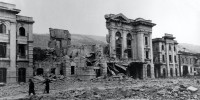
What's the Key to Writing Realistic Historical Fiction?
crimereads.com – Tuesday November 22, 2022
William Christie says it's all about timelines, a sense of place, and including the right details.
I’m not a historian, just a novelist who happens to be a history fanatic. So when I write a spy novel set during World War II, fake history is unacceptable. Even though my protagonist Alexsi and the situations he finds himself in may be fictional, the story has to be set within the context of real locations, real historical characters portrayed accurately, and an actual historical timeline.
As a history fanatic I feel obligated to offer my readers history that they may not necessarily be familiar with. My previous novel, A Single Spy, was set among the German exile colonies of Azerbaijan, Stalin’s Russia, Nazi Germany, Iran, and a German plot to assassinate Roosevelt, Churchill, and Stalin at the Teheran Conference in 1943.
Readers clearly appreciated it, so obviously for The Double Agent I couldn’t take the easy way out. Alexsi, who is interested only in personal survival, not ideology, had to make his way out of Iran after betraying both the Germans and the Russians, and being left disappointed in his offer of service to the British.
Of course his journey could not be carefree. Alexsi would have to be dragged to London, think he was safe, then targeted by the Russians and their traitors in British Intelligence. He had to get out of London in order to survive, but the only way he could do that was to offer to spy again. It’s 1944. Where?

Tilting At Windmills: Becoming (and Staying) A Writer
evesun.com – Sunday November 20, 2022
I recently finished writing a novel. It is an arson mystery called DOE EYES, and I like it a lot. After dotting the last “i” and scribbling THE END on the final page, the next item on my agenda was to send out query letters. For those not in the know, a “query letter” is a missive that provides an author’s credentials; a plot synopsis; a list of potential markets; a projected audience; the word count, etc., to literary agents who list themselves as “Open to Inquiries.”
This procedure is pretty much the same as it was about a million years ago, when I was trying to sell my first mystery, JULIAN SOLO. My quest then was painful, fatiguing, and frustrating (rejection is no fun). Eventually, however, it was rewarding, as my book was accepted by RLR Associates Literary Agency, with whom I remained until they closed up shop. JULIAN SOLO was also nominated for an Edgar Award by the Mystery Writers of American, and it set the stage for my happy marriage to RLR for over twenty years.
Now, however, I am back to square one ... trying to find a literary agent in a shrinking publishing market, where there are less publishers, less bookstores, more competition, and less books.

10 Tips for Publishing Your First Book
theamericanreporter.com – Monday November 14, 2022
Are you thinking about publishing your first book? If so, you’re in good company!
Every year, thousands of people make the decision to become authors. Publishing a book can be a great way to share your ideas with the world and build your brand. However, it’s not always easy to know where to start. That’s why we’ve put together this list of 10 tips for publishing your first book.

Writing Grief in Fiction is a Work of Love
lithub.com – Friday November 11, 2022
On a weekday morning in February, age twelve, I was shunted from the warm ignorance of sleep and propelled into a world where my Uncle Theo no longer existed. My mother’s keening was the thing that woke me; a sound I had never before heard or simply neglected to remember before that time. A sound that, from that moment, became part of everything I would associate with mourning; with grief.
The memory I have is of standing at the foot of my parents’ bed, barefoot and frightened, watching my father do his best to console my mother. I was invisible and I think even then, as a child, I understood something new and terrible: grief is the same colour as madness. It moulds us in ways we did not think we could bend. It is not neat and its messiness can be alarming. Following the death of my Uncle Theo, there were other losses, each one a simultaneously unique yet familiar blow to our collective gut.

How to navigate the writer-editor relationship
artshub.co.uk – Monday November 7, 2022
Consider: you’ve just had your first or latest book accepted by a publishing house (congratulations!) and you’ve been assigned an editor to finesse the manuscript into publishable form. Or you’re a newbie editor who’s at the start of your career and wanting to know how to navigate the potentially tricky conversations with writers who are understandably a little protective about their words.
ArtsHub has gathered voices on both sides of the publication divide to offer some tips on how to successfully manage the writer-editor relationship.

Lee Child and Andrew Child on Discipline, Dread, and Writing Late at Night
crimereads.com – Wednesday October 26, 2022
Lee and Andrew Child’s new book, No Plan B, was released earlier today, so we asked them a few questions about writing routine, advice, and influence.
What time of day do you write (and why)?
Lee Child: I’m ruled by my biological clock, which mandates one unshakeable conclusion: nothing of value is ever achieved in the morning. Typically I get up late and spend a couple of hours moving from a comatose state into something resembling human life. Then I’ll start work about 1 or 2 in the afternoon. I have learned to sense the point when quality starts to diminish, which is usually about 6 hours later, so I’ll stop then. Often I get a second energy peak around midnight, so I’ll do another couple of hours before bed, especially in the later stages when the story is really rolling. Usually a book takes between 80 and 90 working days, spread out over about 7 months.
Andrew Child: My favorite time to write is at night. I like it best when darkness falls and the world shrinks down to the size of the pool of light that spills from my laptop screen. That just leaves me alone with the story I’m telling, nothing to distract, nothing to interfere.
Get the free newsletter | Submit a news item or article | Get Writers' News for your website