



These Are the Mistakes New Writers Tend to Make
nofilmschool.com – Tuesday September 8, 2026
Screenwriter Corey Mandell recently sat down for a conversation at Film Courage, where he talked about the mistakes that he most consistently sees new writers make. It’s a fascinating conversation with a lot of great points.
Let’s talk about a few of them, and also one or two of my own points that I’ll try to articulate as well as him.
Writing Without Individuality
This is a great one, but it’s also a tough pill for writers to swallow depending on when in their journey they first hear it. You can be the most talented writer in the world. A master of structure, character growth, naturalistic dialogue, building of suspense, the whole nine yards. However, what separates the good scripts like these from the great ones is the sense that the writer is writing a story in a way that only they could do. We’ve always heard that writing needs to feel personal to you. That’s absolutely true, and you’d be surprised how much heavy lifting this does when it comes to someone wanting to get to know you and to get familiar with your work.
Writing Only With the Intent to Sell
This one kind of goes hand in hand with writing with individuality. A lot of really great writers will start to seek out what’s trending, or what’s selling like hot cakes right now as a way to get their foot in the door. It may seem like a smart advance on the “one for them, one for me” sort of mentality that many artists have adopted over their career.
The secret trap that this creates is sometimes the loss of that individuality we already talked about. The relationship that a writer has with reps, or producers, or anyone that can make their career happen in the industry depends so heavily on timing. You could have the most sellable script in the world, but if the timing isn’t right, you’re still going to get passed on. This is why it’s still important to remain true to your own interests while working. Even if it’s the most unsellable script known to man, if it’s something truly substantive that the right people read, the more interested they will be in your future career, and being proactive about following up with you if the time is right for something else.

It's Time to Start Romanticizing Your Rewrite Process
nofilmschool.com – Thursday September 3, 2026
For many people’s scripts, the rewriting process can feel like Hell on Earth. Writer John Vorhaus recently sat down with Film Courage to talk about why he actually likes the rewriting process more than the initial draft.
Let’s talk about the tricks he does to feel this way, and a couple I’ve got up my sleeve as well.
Speedrun Your First Draft
This was actually something that took me a long time to get used to doing. I had heard this piece of advice a lot when I was writing my very first scripts, and despite all of the heroes of mine I was hearing say it, I couldn’t bring myself to do it. I was always an edit-as-I-go writer. It made me feel better about my work in the moment, but by the time I was actually done with a draft, my “final edits” from months ago were outdated already, and I had to start over anyway. This is super duper draining, and you should avoid doing it as much as possible.
No matter what, the first draft that you finish won’t be your last, so try your absolute hardest to just vomit all of your thoughts onto the page just to get something done with a through line. If there are any editors out there, think of it like an assembly cut for a film. Everything is on the table, and all you have to do now is cut it down and make it pretty.
A Beginner’s Guide to Arts Council Ireland and Words Ireland Funding for Authors
breakingac.com – Monday August 31, 2026
Breaking into the writing world is hard enough without worrying about how to pay your bills while you finish a manuscript. The good news for anyone based in Ireland is that there’s real, structured financial support available; you just need to know where to look. Two names come up again and again in this space: Arts Council Ireland and Words Ireland. Together, they form the backbone of financial and developmental support for writers, and understanding how they work is the first step toward building a sustainable writing career.
This guide walks you through both organisations, the funding options they offer, and how they connect to the wider landscape of book publishers Ireland relies on to bring new voices into print.
Why Funding Matters for Emerging Authors
Writing a book takes time often years. Most authors can’t simply quit their day job and write full-time without some form of financial cushion. That’s where public funding bodies step in. Arts Council Ireland exists precisely to fill this gap, offering grants, bursaries, and awards that let writers dedicate real time to their craft instead of squeezing it into evenings and weekends. A well-funded writer is also a more attractive prospect for book publishers Ireland has to offer, since a completed, well-developed manuscript is far easier to place than a half-finished draft.
The Desert Masterpiece: Why ‘Dune’ Is the Novel That Changed Sci-Fi Forever
parade.com – Monday August 31, 2026
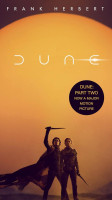
Dune‘s place in literary history has been debated, but it is generally regarded as one of the first major science fiction epics. As reported by The Guardian, prior to Dune’s release in 1965, the sci-fi genre was mostly comprised of short stories, and Dune is anything but short. Perhaps as a result of its length, the novel is also credited as being the first sci-fi novel to do such extensive world-building and bring in more literary themes, such as social hierarchies, war and religion.
It’s not surprising, then, that Dune won the first-ever Nebula Award for Best Novel in 1965. It also won the Hugo Award in 1966 for Best Novel, which recognizes the best of science fiction (it tied with the book …And Call Me Conrad by Roger Zelazny).
The book is also frequently compared to Lord of the Rings because of its scope and detail. In fact, per The Guardian, when it was first published in 1965, the book featured this quote from science fiction writer Arthur C. Clarke: “I know nothing comparable to it except The Lord of the Rings.”

How to make a bestseller: insiders reveal the tricks of the book trade
theguardian.com – Saturday August 29, 2026
Think about the last book you bought. How did you choose it? Was it from a recommendation, a review, a TikTok video? Did the cover grab you, were you swayed by the quotes on the front, or did you just happen to spot it on an appealing table as you walked into the shop? Did you think about all the nudges that led you to that decision – by the publisher, the bookseller or that person you follow on Insta?
The reality is that our reading choices are directed and massaged at every turn. “It’s all about the art of persuasion,” says Philip Gwyn Jones, who was a publisher for more than 30 years and is now a literary agent. And who are the persuaders? They’re the booksellers, the supermarket stock buyers, the publishing houses and their ranks of marketers and publicists. And, more recently, persuasion often comes from BookTokers and online influencers, social media videos, podcasts and Instagram posts. How is all this changing publishing?
We all judge books to some extent by their covers, but did you know how much thought goes into finding just the right cover, colour, font and design? These covers are focus-grouped, shown to supermarket buyers and often changed at their behest, according to Jamie Keenan, one of Britain’s leading book designers. “That happens quite a lot,” he says. “If Tesco with commercial books, or Waterstones with literary stuff, don’t like it, they’ve got a tremendous amount of clout.” (Waterstones and Tesco declined to speak to me for this piece.)

When and How to Nudge Agents
janefriedman.com – Tuesday August 25, 2026
If you haven’t heard back from an agent and you’re starting to wonder if you ever will, you might consider sending the agent a nudge. These are short inquiries asking for confirmation that your query was received and if a reply was sent.
Before you nudge, first determine if it’s an appropriate time to do so. Start with the agent’s reply rate on QueryTracker (refer to the online tutorial at QueryTracker for details). If their reply rate is very low (20% or less), that means they rarely reply and there is probably no point in nudging. They probably abide by the implied rejection policy.
Check the comments on the agent’s QueryTracker profile to see if anyone else is also waiting, and what happened if any of them nudged. If others are nudging and not getting replies to their nudges, then you should move on to the next agent.
Only nudge if other people are receiving replies. But before you do, make sure enough time has elapsed. You certainly don’t want to nudge too soon and frustrate the agent.
To determine the appropriate amount of time to wait before nudging, check the agent’s website to see if they state a projected reply time. Then check the agent’s typical reply time on QueryTracker. Take whichever is longest and add two weeks to it. Only after that time has elapsed should you consider nudging. If you want to be extra sure, give it a few more weeks still. Agents are often several weeks behind on getting through their queries.
Get the free newsletter | Submit a news item or article | Get Writers' News for your website