



On Writing A Mystery That Defies Rationality
crimereads.com – Tuesday January 10, 2023
When I started writing my debut novel, Liar, Dreamer, Thief, I knew two things. First, I wanted a mystery to form the novel’s core. Second, it was important to me that at least some of the main revelations—which, in a mystery, often form touchstones for the character’s internal journey—not be entirely rational.
The urge for this probably came from not being able to relate to the average mystery protagonist: an intellectually brilliant, cool cucumber whose only weakness usually takes one of two forms: a chemical addiction, like House and his pain pills, or a personality too abrasive to form close relationships (save whoever the Watson stand-in is). Either way, a sleuth’s fatal flaws (I mean flaws as written, because both of these issues can actually destroy you as a human being) can’t impair their ability to make rational deductions, because in the mystery novel, reason—of both the deductive and inductive varieties—is king.
And while I’m sure there are real people out there who embody these traits, with my protagonist, I wanted to dig my teeth into someone messy, someone whose logic was flawed and whose emotional world was more important than their intellectual one. I also wanted a plot in which the engine forward sometimes escaped rational explanation—and where the who, what, and how were only part of the reader’s experience.

AI is the end of writing
spectator.co.uk – Tuesday January 10, 2023
The computers will soon be here to do it better
Unless you’ve been living under a snowdrift – with no mobile signal – for the past six months, you’ll have heard of the kerfuffle surrounding the new generations of artificial intelligence. Especially a voluble, dutiful, inexhaustible chatbot called ChatGPT, which has gone from zero users to several million in the two wild weeks since its inception.
Speculation about ChatGPT ranges from the curious, to the gloomy, to the seriously angry. Some have said it is the death of Google, because it is so good at providing answers to queries – from instant recipes comprising all the ingredients you have in your fridge right now (this is brilliant) to the definition of quantum physics in French (or Latin, or Armenian, or Punjabi, or – one memorable day for me – Sumerian).
Others go further and say ChatGPT and its inevitably smarter successors spell the instant death of traditional education. How can you send students home with essay assignments when, between puffs of quasi-legal weed, they can tell their laptop: ‘Hey, ChatGPT, write a good 1,000-word A-level essay comparing the themes of Fleabag and Macbeth’ – and two seconds later, voila? Teachers and lecturers, like a thousand other white-collar professions, are about to be impacted, in bewildering ways, by the thinking machines.
That’s Not Typing, It’s Writing: How T. S. Eliot Wrote “The Waste Land”
lithub.com – Monday January 9, 2023
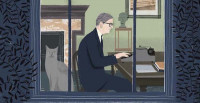
When an interviewer said in 1959 that he’d heard that TS Eliot composed on the typewriter, he received a qualified reply. “Partly on the typewriter,” Eliot responded, and offered an insight into his recent play, The Elder Statesman, saying that it was initially produced in pencil on paper, before he transferred it to the machine. “In typing myself I make alterations,” he said, “very considerable ones.”
The early poems of the Prufrock years were mostly begun in manuscript and occasionally transferred to typescript (Conrad Aiken possessed a sheet produced by Eliot in splendid purple italic on a Blickensderfer). But for the poems of the “French” style—the Hogarth, Ovid and Knopf editions—and for the period of The Waste Land—a run of five years and perhaps sixteen poems—Eliot appears to have altered his approach.
In August 1916, he told Aiken that he was composing on the typewriter and enjoying lucidity and compression as a result. Most likely, he was thinking of his prose when he wrote this, but it may not be a coincidence that from that moment no draft manuscripts at all survive until the pages of The Waste Land in 1921. Some papers may have been written and destroyed in the act of transfer onto the machine, a moment which, to Eliot, marked the end of their practical value; but the condition of some initial typescripts—many in states of reasonably heavy revision—suggests that at this time Eliot was making his first drafts directly onto the typewriter.
How to navigate the closed world of publishing
heraldscotland.com – Sunday January 1, 2023
Three hundred million self-published books are sold each year and as with any new booming industry there are people willing to help you navigate the once closed-off world of publishing.
The market is growing, $1.25 billion worth of self-published books are sold each year and the number of self-published books has increased 264% in the last five years.
I began my book writing process 17 months ago. I had no plan or concept of how my memoir would look, let alone the publishing process. I had an inkling that the world of publishing is complex and daunting – only slightly less arduous than the book editing process.

Are you bored yet? Maybe it is time to write that great novel – here are some tips to get going
theguardian.com – Sunday January 1, 2023
Creative writing is generally an activity best conducted alone. So, if the festivities are getting on top of you, this could be the ideal time to squirrel yourself away with a notebook. Tell your partner, guests or children that this really is the ideal moment for you to kick off the novel or short story you have been planning in your head for years. Arm yourself with a cup of tea or a mug of mulled wine. Find a quiet room. Close the door. Breathe.
Now, open your notebook or turn on your computer. Do not stare too long at the blank page or screen in front of your or it will become a vortex that threatens to swallow you whole. You are not going to allow this to happen. Instead, you are going to forget about whatever it is you might think you are going to write – a series of beautifully pared-back, emotionally raw stories reminiscent of Raymond Carver, perhaps; or a historical magnum opus to fill the gap left by the much-missed Hilary Mantel – and you are going to do one of the following:

Four myths about writing
irishtimes.com – Saturday December 31, 2022
Rosemary Jenkinson challenges four preconceptions about the writing life
Writing is a serious job. Susan Sontag wrote, ‘I always begin with a great sense of dread and trepidation,’ and Nietzsche compared the decision to start writing to ‘leaping into a cold lake,’ but for me it’s like diving into a hot tub with champagne and a bevy of hot studs. I understand that some authors can be crippled by self-expectation, but writing is such a joy I sometimes wake up like a child on Christmas morning longing to unwrap my toys. While I take writing seriously, I can’t, however, take the writing world seriously. Nor should you. Byron hilariously punctured Wordsworth’s pomposity by calling him Turdsworth. Being tongue-in-cheek and laughing at the litterati is great for your mental health. It was Oscar Wilde who recognized the paradox by claiming that, ‘Some things are too important to be taken seriously.’ It’s all to the better if people don’t know whether you’re being serious or not. To quote Wilde again, ‘I usually say what I really think. A great mistake nowadays. It makes one so liable to be misunderstood.’

7 Platforms and Communities Web3 Writers Should Know
coindesk.com – Friday December 30, 2022
Web3 is opening up a world of possibilities for storytellers, from literary NFTs to blockchain-based publishing platforms and even writer-focused DAOs.
Most people associate non-fungible tokens (NFTs) with digital art and collectibles, but a growing number of writers and poets are also carving out a space for literary NFTs on the blockchain.
It’s fitting, really: Writers were the ones who conceptualized what the metaverse could look like in the early 20th century. The first descriptions of virtual reality in literature are often attributed to the science fiction writer Stanley G. Weinbaum, who wrote the 1935 short story, "Pygmalion's Spectacles." The term “metaverse” was first coined by author Neal Stephenson in his 1992 novel "Snow Crash" (he’s now working on his own metaverse-first blockchain, Lamina1), and Ernest Cline pushed the concept forward in his book "Ready Player One."
It is writers who create new realities – first with their ideas and then through precise articulation. Today, the blockchain serves as an advanced publishing medium that has inspired emerging authors and poets to connect with niche audiences of internet collectors and futurists.

The best way to polish your writing? Read it aloud.
smileypete.com – Friday December 30, 2022
In 2009, the internet was blessed with a comment on 4chan’s video games board that can only be described as a monument to the importance of reading aloud: “Has anyone really been far even as decided to use even go want to do look more like?” Users shared their confusion across various platforms and eventually made it into a meme.
The advice that one should read their work aloud before sharing it with an audience borders on cliché, but it remains a crucial part of the writing process. Some prefer the authorial voice that echoes in their heads as they silently review their work in dulcet tones to the potentially awkward experience of hearing their voice fill the room and finding it unpracticed and less self-assured. While you may feel a little silly, the wealth of information gleaned from the physical act of reading aloud is worth the embarrassment.

How Self-Published Writers Can Become A Bestseller
forbes.com – Friday December 30, 2022
Landing on a bestseller list from media giants like The Wall Street Journal or USA Today can alter the course of a writer’s life. It’s an “I’ve arrived” moment—the same sort of head-turning community recognition a young athlete gets when they have their first big game. It will, of course, help your book gain momentum and spark even more sales. But it can also potentially open doors for you, such as more press, more speaking engagements and higher-paying clients and gigs.
Hitting either of these bestseller lists is a lot to attempt for the self-published writer, but it’s possible. Here’s my road map to making it happen.
Why Writing a Timeless Story Is Impossible
nofilmschool.com – Friday December 30, 2022
Screenwriting is a daunting process that can fill you with so much doubt. While you might know how to hit the story beats, create a beautiful outline, and follow the rules of screenwriting to a T, there is always a feeling lingering in the back of your mind that you have to write a timeless story.
But what makes a story timeless? How do we know what will and won’t stand the test of time?
I recently rewatched films from my childhood that I loved that didn’t stand the test of time, but I can watch films from the 1940s that send a chill down my back because of how relevant that is to current society. What may be successful today might not exist in the zeitgeist of cinema in 10 years, no matter how badly you want it to, and vice versa.
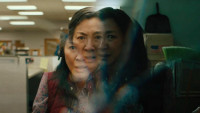
This is a realization that came to many of the writers who were invited to the Hollywood Reporter’s 2022 Writers Roundtable. Filmmakers and writers Jordan Peele, Rian Johnson, Chinonye Chukwu, Tony Kushner, Martin McDonagh, and Daniel Kwan sat together to discuss all things screenwriting. During that conversation, Johnson and Kwan broke down why it is impossible to write a timeless story.
Get the free newsletter | Submit a news item or article | Get Writers' News for your website