



High points and pitfalls of writing in different genres, by Gail Aldwin
femalefirst.co.uk – Wednesday August 11, 2021
It’s considered good advice for authors to aim for success in one genre of writing and stick to it. There are few literary agents who seek to represent authors working across genres and publishers prefer to nurture writers in one area. This supports the development of a brand that makes it easier to promote and market a succession of publications and helps to generate a substantial readership. For many emerging writers there’s satisfaction in finding a niche but this approach doesn’t suit everyone. To invest all my creative energy into one area is a huge commitment, and it might mean overlooking other projects that bring their own rewards.
When I started as a writer, my ambition was to have The String Games published – a novel about the legacy of a missing child. It took five years to reach my goal and during that time, I enjoyed success with short fiction when Paisley Shirt a collection of flash fiction was published and thanks to a competition win, adversaries/comrades a poetry pamphlet found a home. As it took such a long time to develop my novel, it seemed sensible to work on short-term projects alongside it. This helped to build the creative stamina to bring my novel to completion. It’s great to have enjoyed success in other areas of writing but there are challenges in writing across genres which I’ll share:

The future of trade magazine publishers
themediaonline.co.za – Wednesday August 11, 2021
For over 20 years, Mike Leahy, founder and MD of Media Manager, has tracked trade publications.
“There has been a drop in the number of titles from a high of 775 in 2008 to 395 in 2020, and numbers continue to plummet. Covid-19 on its own did not change the landscape, it’s a case of compressing the events of the past five years into one,” he says.
Consistent increases in print costs, the collapse of the post office, declining ad spend, technology plus constantly shifting reader behaviour, all played their role.
The Hurdles of Finding an Agent
publishersweekly.com – Sunday August 8, 2021
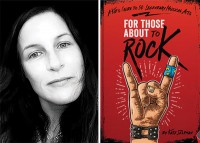
As a first-time author lacking the platform I knew agents wanted, I decided to self-publish my first book—and it was a success. For my second book, I wanted to go the traditional route and find an agent. However, there was one thing I wasn’t sure about: Could I frame the success of my first book as an element of my platform? Or should I refrain from telling agents that there’d been a first book at all?
I started writing For Those About to Rock, a middle grade rock ‘n’ roll book, four years ago. My nine-year-old son and I shared a love of music, and I tried to find him a children’s book about musicians, but came up short. I decided I’d write my own: it would be like Good Night Stories for Rebel Girls—which features profiles of groundbreaking women written in a kid-friendly style—but about rock musicians. I made a list of 50 seminal bands and musicians across several decades and genres, including Aretha Franklin, Led Zeppelin, BjÖrk, Jimi Hendrix, Beyoncé, the Cure, and Run DMC.

My editor says I have a compelling story, it’s just badly served by my writing
irishtimes.com – Saturday August 7, 2021
For the past six weeks or so I haven’t written a word. Not one. No sweet lines of inspiration have hovered delightfully above my head, beckoning. In short, the creative part of my brain shut down. Why? Because I’ve recently discovered my novel-writing skills are practically nonexistent. I’m rubbish at grammar and punctuation, my dialogue skills are defunct, and I tell too much without showing enough.
I just assumed after reading and writing a lot over the past 10 years that my novel-writing skills would undoubtedly improve. But having recently received feedback from a retired editor who worked for several big publishers, I discovered that although I do have a compelling story, it’s being badly served by the writing. If I can improve my grammar, punctuation and the other aspects mentioned above, I should, in the words of the editor, “lift the story to a higher level”.

Personal Rejections for Famous Short Stories
bookriot.com – Wednesday August 4, 2021
Every (traditionally) published author has had their work rejected along the way. A common piece of advice most writers come across is to break in with short stories, as many well-known authors have done. Once upon a time, magazines were also the way many novels were published — one chapter at a time — and they’re still popular for shorter fiction. Over the years many enterprising writers have, by choice or by necessity, founded their own magazines, such as the many literary magazines of the Harlem Renaissance. Many famous authors have published short fiction either before they publish novels, or concurrently. Shirley Jackson’s first novel was fairly well-received, but her story “The Lottery” made a big splash when it was published in The New Yorker, and likely found many readers who had been unaware of her book; perhaps they were quicker to buy her next novel.

‘I Don’t Believe In Writer’s Block’: Scott Alexander Hess On Writing Fiction
news.stlpublicradio.org – Thursday July 29, 2021
Ten years ago, Scott Alexander Hess published his first novel — and in the decade since, he’s published six more, if you count his two new novellas just out from Rebel Satori Press. That’s on top of a busy schedule as a fiction writing instructor at Gotham Writers Workshop and work as a consultant helping others with novels of their own.
The key, he said, is to write. Even when it doesn’t seem very good. That’s one reason he says flatly, “I don’t believe in writer’s block.”
The St. Louis native explained his philosophy on Wednesday’s St. Louis on the Air.

What's in a Blurb?: The History of Book Blurbing
bookriot.com – Wednesday July 28, 2021
It’s cliche, but books are judged by their covers. For one thing, often the cover lets the reader know what kind of book they are buying. White woman in a gown or a shirtless muscle-bound man: romance. Bright cartoon picture superimposed with san serif: young adult. Dark with silhouetted figure in the mist: mystery. Dripping font titles: probably horror. So, let’s say you’re a genre reader, have found your section in the bookstore, and are trying to find something new. The next thing to examine are the blurbs. If Neil Gaiman stans see he’s read and endorsed a book, they will be more likely to give it a try. Haruki Murakami says this book is a must read? Then read you must.

How Not To Approach A Literary Agent!
keepthefaith.co.uk – Saturday July 24, 2021
Recently I was invited to an online literary agents meeting. Other than talking about news within the publishing industry, it was mentioned a few times how the way authors are approaching agents for representation has changed. It is now becoming too informal, as well as unprofessional. Not only that but also, when an author gets turned down, the emails can get abusive. Some writers believe it is OK to informally approach an agent; in their minds, without them, agents wouldn’t be in business!
Yes, authors play a big part in an agent’s success, but this does not mean we should be approached in a manner that, at times, can be unpleasant, because there are still many serious creative writers who are seeking agents.
Here are some tips on how not to approach a literary agent, taken from some emails that not only I have received, but colleagues too. As a disclaimer, no names were mentioned, nor was the whole email quoted – just the part we were unhappy with.
Festival of Words guests talk fantasy writing, defining genre during panel
moosejawtoday.com – Sunday July 18, 2021
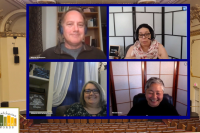
A selection of fantasy authors joined together to talk about how they approach writing a genre that includes anything the imagination can create, during the ongoing Saskatchewan Festival of Words.
The panel was pre-recorded, as part of a small series of sessions from the Festival of Words available for attendees to watch anytime.
Moderated by crime writer Wayne Arthurson — who said he was an avid fantasy reader excited to join the discussion — authors Melanie McFarlane, C.L. Polk and Hiromi Goto sat down to talk about the details of creating fantasy fiction.
Get the free newsletter | Submit a news item or article | Get Writers' News for your website