



How I write: Ben Sanders says mornings are a slog but by midday he finds some rhythm
stuff.co.nz – Wednesday January 6, 2021
Auckland-based Ben Sanders, author of American Blood and his latest The Devils You Know, shares his writing experiences.
What's your writing routine?
Writing time is nine to five, Wednesday to Friday. I always begin with a walk or some kind of exercise for about an hour. It’s like panning for gold in your brain: the stuff usable for fiction gets sifted out from the other leaden junk, and usually by the time I sit down to write I have a couple of little nuggets. Mornings are a slog: all backspace. But by midday I’ll find some rhythm.
And where do you write?
We have a home office, heavily fortified against procrastination.
Can you share a piece of good advice you've received about writing?

‘This is the year I’ll write my novel’: new year’s resolutions and the creative mind
irishtimes.com – Wednesday January 6, 2021
New years presents a fresh slate. The distractions of Christmas have passed, and the promise of longer days lies ahead. It won’t be long before we awake to sunlight creeping in under the curtains.
We set our New Year’s resolutions: we’ll write that novel, we’ll get numerous stories or poems submitted, or we’ll do that creative writing course. We make action lists. We set daily, weekly and monthly targets. We plan to give up each of our distractions, be they television, alcohol or social media. This year, we say to ourselves, writing will be the central focus of our lives.
The problem is, of course, that these promising goals become burdensome. Inevitably, life gets in the way and we get distracted. We miss the targets. Some months later, when we read over our beautiful list of resolutions, it no longer fills us with joy. Instead it has transformed into an emotional “stick” with which we hit ourselves.

Zoom Book Tours: 5 Authors on Publishing in a Pandemic
wired.com – Friday January 1, 2021
WRITING A BOOK is a lonely pursuit, one that can take years of solitary work. Selling a book is another story. Authors give talks in cramped storefronts, schmooze at luncheons, and learn to casually discuss their belabored creative project as commercial content. The publicity circuit can be dispiriting, sleazy, and exhausting. It can also be exhilarating, liberating, and fun—a chance for people who spend a lot of time alone with their thoughts to feel like someone’s heard them. This year, releasing a book into the world became another task largely undertaken solo, at home, staring at a screen. The Covid-19 pandemic forced the publishing industry to reimagine its process for convincing people to buy its latest offerings. Even the industry’s fanciest nights, like the National Book Awards gala, took place as digital events, with participants glammed up and sitting at home.
WIRED asked the writers behind five of our favorite 2020 tomes to tell us what it was like to release a book during quarantine. Here’s what they said.
Why this forgotten punctuation mark should be revived
fastcompany.com – Thursday December 24, 2020
The first writing systems were continuous streams of type. Punctuation did not appear until the third century BC, when Greek librarian Aristophanes introduced the period to signal pauses while reading aloud. In the eighth century, English scholar Alcuin of York introduced the question mark to signal uncertainty. In the 14th century, Florentine leader Coluccio Salutati introduced the exclamation mark to signal intensity. Since then, punctuation has played a larger role than we ever could have thought—we have chosen one of these three marks to end every sentence since.
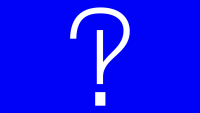
Jump forward to 1962, when New York ad executive Martin Speckter spotted a new typographic trend. Ads were asking excited, exclamatory questions, using “?!” to end the sentences. The cumbersome pairing and wasted space irritated him.
As the editor of the magazine Type Talks, he was in a position to suggest a solution. He wrote an article proposing a new end mark: the interrobang. Its name combined interro for interrogate and bang—printers’ slang for the exclamation mark. Its design combined the question mark and exclamation mark.
Get the free newsletter | Submit a news item or article | Get Writers' News for your website