



Seven ways to start and keep your writing going
blog.oup.com – Friday November 13, 2015
Beginnings are tough. But if we’d only get started, our marks and words on the page can bootstrap our next moves. Marks and words on the page feed what in neuroscience is called our brain’s “perception-action” cycle. Through this biologically fundamental mechanism, we repeatedly act on the world, and then look to see what our actions have wrought in the world. The world talks back to us, telling us how close we are, or how far we are, from what we’d hoped to achieve (our goals).

Can an App Really Cure Writer's Block?
bloomberg.com – Thursday November 12, 2015
When you're writing in a "flow state," words and sentences tumble out effortlessly. New tech is trying to help you achieve that.

Freelance Writing Made Easy. Easier, Anyway
news.butler.edu – Thursday November 12, 2015
As far back as high school, Zachary Petit ’06 had wanted to write for magazines. But he didn’t know how to get started. He looked for an instructional book—a simple A-to-Z primer on how to do it—and found nothing.

Why Writers Run
theatlantic.com – Wednesday November 11, 2015
From Homer’s The Iliad to A.E. Housman’s poem about an athlete dying young, there’s no shortage of literary depictions of running. “Move, as the limbs / of a runner do,” writes W.H. Auden. “In orbit go / Round an endless track.” There’s also a long tradition of writers leaving their pens or screens behind to stride along roads, tracks, and trails. Jonathan Swift, according to Samuel Johnson, would “run half a mile up and down a hill every two hours” during his 20s. Louisa May Alcott ran since her youth: “I always thought I must have been a deer or a horse in some former state,” she wrote in her journal, “because it was such a joy to run.” Despite this correlation, The New Yorker’s Kathryn Schulz recently lamented how few books capture the mindset of the runner in descriptive terms, citing Thomas Gardner’s new collection of essays Poverty Creek Journal as the best exception.
University of Utah offers year-long novel-writing course
college.usatoday.com – Tuesday November 10, 2015
Professors demand a lot and, when it comes to writing assignments, putting words to paper can feel like you’ve been asked to write a novel.
Actually, for some students at the University of Utah, that’s exactly what they’re tasked to do.

9 ways to trick yourself into writing a novel
mashable.com – Monday November 9, 2015
November is National Novel Writing Month (NaNoWriMo, for short). This is the year you complete the book of your dreams.
Sometimes all you need is a little motivation. Trick yourself into completing your novel this month by trying one (or all) of the strategies below.

11 authors' strategies for overcoming writer's block
mashable.com – Monday November 9, 2015
Writer's block — an author's worst nightmare.
The dreaded lack of creative ideas and inability to produce new work has writers across the world trembling in fear.
Famed novelists F. Scott Fitzgerald and Ray Bradbury are just two of many creative minds that have suffered from this incorrigible mental block. And let's face it, if a writer tells you its never happened to them, they're probably lying.
Mashable compiled the strategies different authors use to overcome writer's block, which should come in handy since it's National Novel Writing Month.

The Writing Teacher’s Hypocrisy
clapway.com – Monday November 9, 2015
The hardest thing about teaching people how to write is teaching them to make mistakes, to not be afraid, and to write what they want to write. Most of my students were more concerned with the product than the process, which is what kills good writing. How can someone produce a good piece of writing if s/he is counting how many points I will take off for each grammatical error? How can an essay be enticing if the author’s main concern is where their thesis statement belongs, or that there are only two body paragraphs in the essay instead of three? How can a teacher teach someone to write if they are expected to count the grammatical errors, or evaluate the formulaic essay? That is one reason I stopped teaching. I was a hypocrite! Writers become writers when they take risks when they learn how to enter the zone, when they make a million mistakes, delete drafts, and revisit a piece over and over again. How could I not teach that? I was not an effective teacher because I couldn’t teach my students that their process of writing was valuable. Standardized education teaches students to earn a grade in the same way that they will earn a salary someday.

Writers on the pain of hindsight in publishing: 'It's like a bad breakup – you have to move on'
theguardian.com – Monday November 9, 2015
How do you let go of a book you’ve written? Viv Groskop, Sathnam Sanghera and others offer their advice for bouncing back from the post-publication blues.
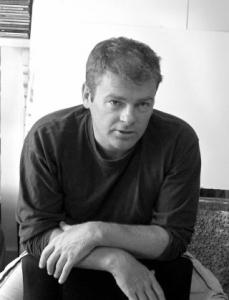
This Week in Fiction: Mark Haddon on Writing Stories as Complex as the Real World
newyorker.com – Monday November 9, 2015
Your story in this week’s issue, “The Weir,” is set in Oxford, alongside the Thames, near Wytham Woods. Why did you choose to stage such a sad event—an attempted suicide—in this bucolic terrain?
Get the free newsletter | Submit a news item or article | Get Writers' News for your website