


Why trauma writers lie to us – The market wants uncomplicated stories
unherd.com – Tuesday October 14, 2025
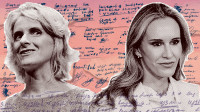
As a longtime teacher of memoir writing who closely observes trends in the genre, I’ve recently been thinking of an episode involving a student I worked with in the late 2010s. “F.” had studied with me over several years. At one point, she took a long absence, confiding in me that she’d unearthed some childhood trauma and was taking the time to address it. Eventually, she sent me an essay she’d written during her leave. In it, F. described herself as a child in the care of indifferent adults who had been coerced into sexual acts with persons known to her. The essay contained disturbing details, cutting dialogue, and careful scene work. Overall, it was gripping, horrific — a good story, in narrative terms.
But I didn’t believe it at all. At most, I’d give it a 2% chance of being true.
I didn’t believe this student’s story was true because I’d read it before. A year or two earlier, a student in a workshop — a class in which F. was also enrolled — had written a nearly identical account of her own childhood assault. Her story was profoundly disturbing, a difficult story to get out of my mind. I wasn’t surprised it had affected F. in that way, too. But this was bizarre: F. had coopted her classmate’s story, one she knew I’d read, and claimed it as her own.
To read the full article on unherd.com, click here
 What went wrong with the Writer's Market and the Writers' & Artists' Yearbook
 Short-story writers are infinitely more creative than novelists
 Please Don’t Criticize Me For Writing Pandemic Stories
 Personal Rejections for Famous Short Stories
 Writers and Liars: On Fact, Fiction, and Truth
 Three Short Story Writers On Publishing and Crafting Their Debut Collections
 How We Find and Develop Writers
 Wattpad to Bestseller: Can Fanfiction Writers Really Go Mainstream?
 Looking to Write for a Fathers Magazine? Here’s Why The Good Men Project Is the Modern Home for Fatherhood Stories
 Science Reveals the Advantage Writers Have Over the Rest of Us
 Top Tips for "Aspiring" Writers
 A manifesto for all writers
 Simple record-keeping and tax deductions for writers
 Sarah Waters, Ross Raisin, Adam Foulds, Andrew Cowan, Helen Simpson share writing tips, favourite books by young writers
 Writers can reach multitudes
 The mistakes writers make
 New Literary Agent Listing: Jenny Lewis
 New Publisher Listing: Fidelis Books
 UK publishers unite behind major campaign championing print
 New Literary Agency Listing: Blueprint Literary
 JK Rowling’s agent launches a new chapter for muted writers
 Brockhall author calls on local writers to get in touch after launching literary agency
 New Publisher Listing: KiN-TXT
 Maidstone LitFest 2026: Sian Williams, Helen McGinn, Adele Parks plus children’s authors Onjali Q. Raúf and Harriet Muncaster
 Publishing industry lays down AI rules to counter 'click-to-publish' books
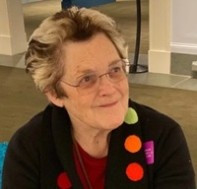 Obituary: Edite Kroll
 New Literary Agent Listing: Ellen Scott
 Quest is a highly designed sci-fi and fantasy magazine built for web fiction
 New Publisher Listing: Iron Stream