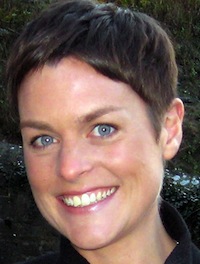
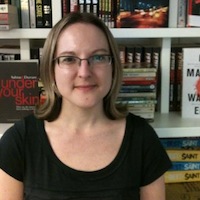
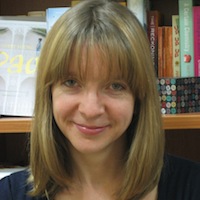
Erin Bower, from Columbia,
South Carolina, was announced as the winner of the competition for her poem "Deconstruction and Not So Second Chances", and wins £500 (around $750).
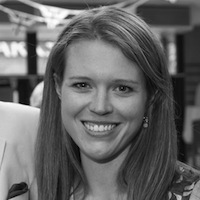
Rebecca Blease,
of Nottingham, wins £100 for submitting the best entry from the
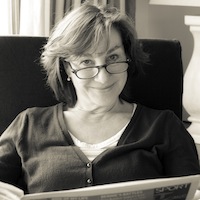
United Kingdom with the poem "Reprise", and Ute Carson of
Austin, Texes, wins $150 for entering the best runner-up
poem from the United States, "A Tangled Nest of Moments". The winning
poems can be read online at https://www.firstwriter.com/competitions/poetry_competition/previous_winners/11thpoetry.shtml.
All the winners will also be
published in a future issue of firstwriter.magazine, and
receive vouchers worth £24 / $36 – as will the ten Special
Commendations:
Diane Buller, United States,
"Credo";
Nicollette Bevan,
Australia, "Fidelity";
Matthew Hayden, United
Kingdom, "Helpline Chemise";
Medina Tadele, United States,
"Mother's Hands";
Jess Prather, United States,
"Selkie";
Arthur Beckner, United States,
"This Poem is for you, My Sweet";
Jonathan Payne, United
Kingdom, "A Night on the Drink ";
Moira Ashley, United
Kingdom, "Fish out of Water";
Aloysius Graham, South
Africa, "When the men walk, they walk all the
same";
Sara Ridgley, United
Kingdom, "Dad".
firstwriter.magazine
Issue 22: Crystal Clear The latest issue of firstwriter.magazine has also
just been released, featuring quality fiction and poetry
submitted from around the world, plus your first chance to see
not just the winning story from our Eighth International Short
Story Contest, but also all ten Special Commendations. To
view the magazine click
here. To enter your work in our Ninth International
Short Story Contestclick
here.
If you submitted
work for issue 22 you can check to see if your work
has been included by viewing the magazine online (click
here). If your work has not been included then,
unfortunately, on this occasion
your submission has not been successful. We'd love to see more
of your work, though, and are now accepting submissions
for issue 24 of the magazine. We accept poems up to
30 lines and short stories up to 3,000 words. You can
submit your work for consideration online at https://www.firstwriter.com/Magazine/submit.shtml
How I
got a literary agent An
interview with author,Charles Heaton Allen
Charles Heaton Allen
recently acquired a literary agent using firstwriter.com's
database
of literary agents. We asked him about his writing,
and how he found success.
fw:Thank you for
taking the time to talk to us, Charles, and
congratulations on having found an agent! Tell us a little
about the book you placed with them.
CHA: The book which attracted the agent's attention is titled
Johnny June's "Stuff".
fw:What made you
start writing it?
CHA: An elderly friend asked me to look at his notebook of 55
"episodes" of events he lived as a part of a crime ring in Little Rock, Arkansas in the late 1970s and early 1980s. He said, "I think most of my fellow 'bad guys' are either deceased or too old to 'do much about it'. I think this stuff could make a pretty good novel and/or movie, Mr Allen. Will you write it?"
fw:Wow! How did
you go about turning all that material into a novel?
CHA: I read his 55
"episodes" for about three months, but couldn't think of a plotline which could weave at least many of his episodes into a novel. Finally an idea came to my mind and I was able to write the novel in about five months.
fw:Did you have
experience of writing novels already?
CHA: This is my 19th book (10th novel).
Ace Rivals – a WWII/Korean Conflict air combat novel
– won an award from the Austin (Texas) Writers' League. It was published by a semi-vanity publisher.
Buggy, Spanky, & Beef Stories –
four lads have nine adventures in western Texas. Whooboy! Was published by a semi-vanity publisher.
Snow Stackers –
a Christian oriented sci-fi novel –
was published by an electronic venue out of New Zealand. Seperately
Together – a Civil War trilogy of three novels
– is presently being published in print and audio forms by a semi-vanity publisher. I have yet to
receive a royalty check for any of them. The only money I get is from my own signings I've held
locally... and that would be about 2,000 books sold over a span of 17 years. That is why I searched for a professional agent.
fw: You didn't
want to go down the vanity or semi-vanity path again,
then?
CHA: I sought a professional agent for
Johnny June's "Stuff" because I won't contract with any type vanity publisher again and because I think that novel is of enough quality that an agent should be able to gain a contract for it.
fw:Did
your publishing history have any bearing on your agent
signing you, do you think?
CHA: It was not important to this agent. He was interested in
Johnny June's "Stuff"... but is now interested in representing some of my other unpublished
works, as well.
fw:What method
did you use to find your agent?
CHA: I found him via
firstwriter.com. That's the only place I tried to find one. I was rejected by at least twenty others before this gentleman responded
favourably. I was rejected by many more than that regarding my previous 18 books before sending the first query about
Johnny June's "Stuff".
fw:What were the features of firstwriter.comthat you found particularly helpful?
CHA: I'm glad that a contacted agency is
coloured over (shaded) after I contact them. This saves time and
repetition, of course. To have an agency's complete website available is also great!
fw:Once you'd
identified agencies to approach, what form did that
approach take?
CHA: I simply wrote a short query via
email describing Johnny June's "Stuff". firstwriter.com
allowed me to find the agency's email address and even lets searching writers know if an agency won't accept an
email. I ignore those agencies.
fw:You say you
were rejected by about twenty agencies before you were
accepted. Did it take a long time to work through all
those rejections?
CHA: I'd say I waited at least two weeks before deciding they weren't interested. Some let me know that fact quite
soon... and nicely. The agent I signed with responded within six hours of me hitting
"send" on my computer to him.
fw:And which agency was it that signed you in
the end?
CHA: He's interested in the novel's concept and in our first telephone
conversation... which is how he contacted me... we
"hit it off" very well on a personal basis. He's originally from Mississippi, so a story based in Arkansas seems to interest him. Mostly, he likes the story itself, though.
fw:So what's it like having an agent?
CHA: It's merely
emails back and forth and a couple of phone chats. Many of the
emails are of "personal things" as we get to know one another. He's in California, so I don't know if I'll ever actually meet him.
fw:Do you have
any tips for other writers trying to get published?
CHA: I suggest they write at least three books and vanity publish at least one of them. That way they will actually
believe they really are a writer! I think an author has to have pages in a binding of his own work to hold and read again and again to keep motivated and confident.
fw:What are
your plans for the future?
CHA: I'm trying to write
Hiding Johnny June. It's slow going at this time, but I'm hopeful.
This agent has represented me only a short time. Nothing has happened, so far. Maybe it never will, but I feel better knowing my agent is trying and has confidence in my work(s). That fact motivates me, of course.
fw: Thanks again
for taking the time to talk to us, Charles, and the best
of luck with all your future endeavours!
The Writing Platform, a website and program of live events dedicated to
arming writers with digital knowledge, will launch in February 2013.
It will be funded by the National Lottery and Arts Council England.
The free online resource will offer all writers and poets (whether published
not yet published or self published) best practice information about writing
in a digital age.
To inform the launch writers are being asked to fill out
this survey: http://bit.ly/Rd8sKX
in order to establish how The Writing
Platform can best serve the writing community. Responses are being sought before
the end of January.
Submissions are now open for the first
Fire Hazard anthology, "Underground".
To mark the 150th anniversary of the opening of the world's first underground railway in London in 1863,
Fire Hazard is compiling a print anthology of poetry dealing with experiences of underground railways and their impact (for better and worse) on the communities they serve around the world.
Themes could include (but are by no means limited to):
Construction of underground railways
History of the lines and the stations
The above-ground communities the underground serves
The experience of commuting / travelling underground
The art of the underground
People experienced on the underground
Subterranean geographies / cities
Mapping the underground
If you would like your work to be considered for this anthology, please send up to four poems and a brief biographical note to us at firehazardpoetry@gmail.com with the word "underground" in the subject title. The deadline for submissions in March 31st, 2013. All included poets will receive an electronic copy of the anthology, hardcopies of which will be available for purchase in early summer.
By
George! A special ticket to write
After the sell-out success of the 2012 Ticket to Write Beatles-themed
final on new writing, the organisers are preparing a second exciting
festival for 2013.
To mark the 70th anniversary of the birth of George Harrison, four out of
the eight plays chosen for 2013 will have a George theme: Entries can be
about his work, his music, his life – any legitimate story about this
beloved member of the Fab Four.
“Often dubbed the gentle Beatle, George's nature gave him a special place in
the hearts of The Fans,” said Jamie Gaskin, Festival Director.
“It's an anniversary we, and I am sure many others round the world, will be
marking with a sense of affection.” he added.
The other four plays, as 2012, can feature any aspect of The Beatles: Their
lives, music, work. They can include some, all or none of the group.
All plays submitted must be about 15 minutes long and have a maximum of four
characters. The closing date for all entries is Friday April 5, 2013.
Once again the staging will be in the hands of Formby-based director and
actor, Michelle Taylor, who trained at Middlesex University. Her
directorial credits include: ‘Swim’ (The Actors Studio, winner of "Best
play" Write Now Festival 2012),
“We are beefing up the chances to win this year: Instead of a final with
three plays battling it out for the prize money all EIGHT plays staged will
have a chance to win £150.
“The eight will be fully rehearsed and produced, unlike 2012 when there was
a script-in-hand semi-final. We are planning to run the 2013 event over two
consecutive nights.” Jamie explained.
A suitable judge will assess both nights and like 2012 the audience will
count towards the final outcome.
It is planned to stage the plays in Liverpool in July.
Because of the great interest from abroad (about a quarter of the 2012
entries were from other countries) at least ONE non-UK entry will be among
the eight chosen for staging.
The initial selection will be carried out by an independent assessor with no
details of the author on the script being judged.
“From competitors' remarks we noted that they were keen to get feedback on
their work so we are giving a short, but structured, analysis to all
entrants.
To achieve this extra benefit we are increasing the entry fee from £10 to
£15,” said Jamie.
Festival organisers are currently exploring several possible Liverpool
venues to stage the event.
“This is a a wonderful way for playwrights to have fun by writing about the
lives and work of Liverpool's favourite sons. Plus a chance to see their
work staged by a professional team for no additional cost than the £15 entry
fee.
All production and publicity costs are provided by The Ticket to Write
Management. What an opportunity!” said Jamie.
Just a reminder that Maddie Wilson from Surrey won a £150 prize for her play
“Maxwell Must Go Free”, in last year’s festival.
“Ticket To Write was a great opportunity to write about something I loved,
and for anybody with a good idea to actually have it realised on stage.
There's so much to say about the Beatles that I'm sure the competition can
run and run!” said Maddie.
For full details about the Festival and How to Enter visit
www.acedrama.co.uk
New
magazine for writers
The Writer's Monthly
Review is a monthly magazine (print and
online) where creative writers of every genre can come together and learn,
hone their crafts and interact with others who share their passion of
writing. Each issue includes updated information on any and every
aspect of writing, market listings and updates on contests and workshops all
over the world.
The Writer's Monthly Review will be printed on the twenty-fifth of each
month and mailed out hot off the press.
Each monthly issue contains articles on writing and submitting, other news
and a writing contest every month for subscribers. The winner will
receive honourable mention and be printed in an upcoming edition of the
magazine in addition to a monetary prize.
One benefit of being a subscriber is that if you have a question about any
aspect of writing and you need help, all you have to do is send in an email
and one of their writers will answer your question as best they can within 24
hours of your email.
You can subscribe one of three ways:
1) Send check or money order to: THE WRITER'S MONTHLY REVIEW
MARCELLA SIMMONS, PUBLISHER/EDITOR, 106 FLETCHER DR, LOGANSPORT LA 71049 USA
$35 (12 Issues); Canada or other countries $40
$4.50 per copy; Canada or other countries $6.00
For the details of over 1,600 other magazines, click
here
What
fiction editors want
Each year, the Andrew Lownie Literary Agency surveys a wide range of leading
publishers and editors to find out what kinds of books they are hoping to
acquire in the coming year. This year, for the first time, the agency has
invited firstwriter.com to reproduce their
findings.
Here's what
twenty-three of the UK’s leading fiction
editors are looking to
commission in 2013:
Sarah Adams, Publishing Director, Transworld
I publish fiction, mainly crime/thrillers, and I thrive
on discovering new talent. My list ranges from ‘up and
comers’ Belinda Bauer, S. J. Bolton & Wiley Cash,
to brand names Mo Hayder and Tess Gerritsen. I am
excited by genre-busting authors such as Kate Atkinson,
Rosamund Lupton and S J Watson.
Forgive the clichés, but I’m looking for
compelling storytelling, quality writing and a killer
concept that taps into our everyday fears. For me to
publish a book passionately, I want it to give me
palpitations because I haven’t read anything like it
before, or because it is twisting the genre, bringing a
unique voice to the table, taking me into a world not so
different from my own and terrifying me.
If this is a series, give me characters I’ll yearn
to meet again. It helps if an author is prepared to work
hard to establish themselves and compete with the
heavyweights in a very crowded area of the market. It is
also important to know what ideas new authors have
beyond their first book.
Katherine Armstrong, Editor (Crime), Faber
and Faber
The e-book explosion over the past couple of years
has been particularly good for genre fiction, especially
crime and thrillers, and I don’t see this appetite
abating any time soon. My first acquisition as a
Commissioning Editor, Chris Ewan’s wonderful Safe
House, has been incredibly successful on e-book, as has
Julia Heaberlin’s debut Playing Dead. For an editor
the e-book age heralds a different way to think about
the written word and how it’s read by people,
especially a more technologically adept new generation.
I specialize in crime and thriller fiction and I am
always on the lookout for books that have strong central
characters, good writing but, above all, a narrative
that hooks me in and keeps my interest right to the end.
If it’s a ‘whodunit’ then nothing annoys me more
than guessing the killer by chapter five (my record is
by chapter four!). I always like reading manuscripts
that offer a different take on the genre: something
that, while it might have been done before, delivers in
a surprisingly different way.
Emma Buckley, Editor, Random House
I am a fiction editor at Transworld lucky enough to
publish across a range of genres, which is perfect for
me as my tastes are quite eclectic. I currently have
several women’s fiction, historical and crime novels
on my list and am always on the lookout for the next
book I can’t put down, or that I’m still thinking
about days after finishing, or which I find myself
re-reading paragraphs of because it’s so beautifully
written.
The fiction that appeals to me tends to be
character-led with a strong voice and a compelling
central hook. In terms of women’s fiction, I love
novels that are well-written but deal with fairly
substantial or gritty themes – stories that can
combine a huge emotional punch with commercial appeal. I
love historical fiction with a really strong, appealing
protagonist who can convincingly take the reader with
them on their adventures in another period. And I love a
good mystery – crime novels that race along, twist and
turn and keep you up at night.
Regardless of genre, I am ultimately looking for
unforgettable books that demand to be talked about, that
you feel a need to share and pass on to others as soon
as you’ve finished them.
Rosie de Courcy, Senior Editor, Head of Zeus
My brief at Head of Zeus is to commission series
fiction, mainly concentrating on novels for the
women’s market (historical, period, or contemporary)
but not exclusively. At any one time I aim to have three
or four ideas in my shopping basket, for which I shall
be seeking authors. This is not to suggest that I would
be asking them to write to a prohibitively tight or
prescriptive brief, but rather that these ideas should
provide a springboard. In return for commissioning
fiction from a synopsis and two or three chapters, we
would look to buy world rights. My love is first and
foremost for good stories with great characters, but the
range is also quite wide, from the very mass market to
fiction which would be eligible for the Costa and
formerly Orange Prizes.
As we head into 2013 I think it is quite exciting to
watch the way the market is evolving. Yes, there are
various issues we all have to confront, but what is
clear is that the desire to find good stories is as
alive and healthy as ever. And that’s what you always
want to find as an editor – a story that completely
consumes you and makes you want to read into the small
hours, whether it be on paper, on a Kindle, on a
smartphone or tablet (or whatever other medium is dreamt
up this year!) It will be interesting to see how long
the 50 Shades phenomenon lasts. And what comes next
after vampires – werewolves, ghosts, zombies…? Also
the increasing e-reader market seems to be breathing new
life into the novella and short story form, as what
might not be cost effective in print form can work and
find an audience electronically. At W&N we are
starting the year off with a bang – the paperback
publication of Gillian Flynn’s brilliant novel Gone
Girl which has already been a phenomenal bestseller in
the US. We have some wonderful debuts coming up over the
year, including The Honey Guide by Richard Crompton, The
Puppet Boy of Warsaw by Eva Weaver, and Children of the
Jacaranda Tree by Sahar Dalijani. All of these take the
reader to a different time and place (Nairobi in the run
up to 2007 elections; the Warsaw ghetto; Post-revolution
Iran) and all three have very unique voices. There is no
formula to what will make a bestseller and often it is
the books that are a bit left-field that reach the
charts, but what I would say is that good storytelling
never goes out of fashion and that the debut novels that
have publishers foaming at the mouth always have a very
individual voice, strong characters and a momentum that
sweeps you up in the plot and doesn’t let go. So
here’s to finding more of that!
Jo Fletcher,
Founder and Publisher, Jo Fletcher Books, an imprint of
Quercus Editions
It’s almost impossible
to say what I’m looking for in 2013, other than ‘I’ll
know it when I see it’ – which is not in the least
bit helpful. The joy of a genre like Fantasy, Science
Fiction and Horror means I can publish pretty well any
type of story, as long as there’s an imaginative
element. That means it either can’t happen (magic,
wizards, vampires and the like – and no, I’m sorry,
but vampires and werewolves and zombies, sexy or scary,
really don’t exist!) or it might happen in the future
but hasn’t yet come to pass. Unless we invent time
travel, and then all bets are off! Still not very
helpful, I know. I’m not really looking for YA –
Quercus Children’s has excellent editors with
excellent taste who cover that area – but then I’m
really looking forward to publishing the second in Tom
Pollock’s The Skyscraper Throne series and
Planesrunner, the first in Ian McDonald’s
worlds-travelling Everness series. I don’t want horror
– but I love Lynda Hilburn’s Vampire Shrink series,
and although short stories don’t selling I’m
following up Stephen Jones’ A Book of Horrors with
Fearie Tales. What I can tell you is that the
storytelling has to be exemplary, like David Hair’s
epic fantasy Scarlet Tides, the world-building has to be
impeccable, as in Aidan Harte’s magnificent The
Warring States, and the characters have to be memorable,
as in Karen Lord’s The Best of All Possible Worlds.
Maybe that helps?
In fact, there you have it: I’m looking for
unputdownable fantasy/SF/horror that I can’t stop
thinking about. It doesn’t necessarily need to push
boundaries – although that’s good too – but it
does need to stay with me long, long after I’ve turned
the last page.
Marcus Gipps, Editor,
Gollancz/Orion Books
As always, as with any editor, what I’m looking for
are books that make me fall in love with them. We get so
many submissions which are nearly there, which are
competent and clever and well-written, but don’t have
the spark that I need to be able to convince my
colleagues, my bosses and our readers that this is
something really worth investing in. I know that’s a
hugely unhelpful thing to say, and what one person loves
another can be left cold by, but there it is. What it
also means, though, is don’t send us books with
hundreds of typos, or with the ‘track changes’
comments left on (this happens far more often than you
would believe, often from very experienced agents), or
saying ‘I know this needs a lot of work, but…’. We
get enough of that from the slush pile. Do be
enthusiastic, please, as much as you like, but don’t
be unrealistic. Times are difficult, publishing is
changing. We all know that, and sometimes our hands are
tied.
More generally (and usefully), Gollancz publishes
Fantasy, Science Fiction, Horror, literary genre, some
paranormal romance/urban fantasy and some YA
crossover-genre stuff. Personally I’m a fan of more
literary stuff, but of course we’re always on the
look-out for commercial mainstream books as well. We
don’t see anything like enough hard SF, and it can
sell really well when it works, so more of that would be
great. The paranormal genre is declining here, although
still strong in America, but we’ll still take it
seriously. It needs to be really good and different,
though. We always like to buy World Rights if we can.
Alison Hennessey, Senior Editor, Harvill
Secker
Like all editors, I’m looking for brilliant writing
and clever plotting, and I’m also looking for
originality and ambition. I specialise in publishing
literary crime, thrillers and mysteries (although
several of the books I’m publishing this year could be
classified as straightforward literary fiction) and
around half of what I publish is in translation. Many of
the books that I’m submitted by agents are perfectly
good, but there’s just nothing that makes them stand
out above the dozens of other submissions I’ve
received that week, nothing that makes me want to stay
up all night reading and then press them into the hands
of my colleagues the next day. I love to see writers who
know that characters don’t need to be instantly
likeable to be interesting, who think of unusual
settings, and the effect this can have on the people who
live there, who understand that the rest of your book
needs to live up to that brilliant beginning or who come
up with an irresistible, original premise.
As with all the best books, you don’t know what you
want to publish until it turns up on your submissions
pile, but I love the bleakness of John le Carré’s
Smiley books, the richness of Sarah Waters’ writing,
the atmosphere of Daphne du Maurier, the pacing of our
very own Stuart Neville and Jo Nesbo, the quality of
Donna Tartt’s prose and the brilliant characterisation
of Gillian Flynn and Patricia Highsmith, so if a
submission arrived that shared any of those qualities, I
would be thrilled! The Scandinavian crime phenomenon has
introduced English language readers to some wonderful
authors, many of whom I’m delighted to publish at
Harvill Secker, and I’m sure there are some other
fascinating locations around the world, including parts
of the British Isles, that would lend themselves to some
equally brilliant stories. I’m not interested in
unremittingly violent crime, or anything that shades
into horror, or in thrillers that are solely about the
pace of the read, but I am interested in why people act
as they do, and the effect this has on the people around
them.
Clare Hey, Senior Commissioning Editor, Simon
& Schuster
I look after a fairly broad list here at S&S, and
commission ‘reading group’ fiction and historical
fiction. In the most general sense I am looking for
great stories well told. On a more specific level, I am
looking for novels with a strong hook – something that
will draw a reader in from a two-sentence pitch, that
has originality both of voice and concept, but that also
has broad appeal. I want to publish the novel that draws
you in and won’t let you go and that compels you to
recommend it to everyone from your granny to your best
friend once you’re finished. I want to publish the
novel that makes you feel changed when you’ve put it
down – either emotionally or from having been
transported to a place you didn’t know before – and
I want to publish the novel that will surprise and move
you. I never know what that novel will be until I’ve
read it, but it will always be a story that I can’t
get out of my head. This year I’d love to find a
magical novel that will make me cry; I want to be taken
out of the ordinary and into the extraordinary.
Laura Macdougall, Assistant Editor, Hodder
& Stoughton
I would love to acquire more debut novels from rising
stars of the future, like the incredible Dear Lucy from
young American writer Julie Sarkissian which we’re
publishing in April. I’m particularly drawn to fiction
that straddles the literary/commercial divide – books
that are brilliantly written, that introduce an
original, distinctive voice, and books that deal with
important ideas and issues. I’m also looking for
historical fiction that immediately engages the reader,
immersing them in another time and place. I hope that
2013 will see the continued success of translated
fiction in the UK and I’m particularly on the lookout
for crime and contemporary fiction that shows the reader
another side of a place they think they already know.
Anne Meadows, Assistant Editor, Granta and
Portobello Books
In 2013, I’ll be looking for the sort of books which
Granta and Portobello have become known for:
high-quality, uncompromising literary fiction from
across the globe; polemical, ground breaking
non-fiction; stories which have to be told, and stories
which are so good in their execution that they have to
be published. We have some wonderful books coming out
this year, including an old-fashioned romance set in
modern day Japan (Hiromi Kawakami’s Strange Weather in
Tokyo, Portobello) and an astral tale of gold-rush New
Zealand (Eleanor Catton’s The Luminaries, Granta). Two
of the many things on my wish-list for 2013 include
brilliant literary fiction from China and a novel by a
British novelist who wants to break new ground. I’d
also be very interested to hear from young academics
with a gift for storytelling who are keen to write for a
wider audience.
Max Porter, Commissioning Editor, Granta
Books & Portobello Books
We are publishing some remarkable debut novels this year
and I’m intrigued to see how retailers respond to new
voices, whether they can discover and support these
titles as well as they need to. For Granta, I am
extremely excited to see how Eleanor Catton’s
staggering second book The Luminaries is received
because it marks a turning point in the way novels are
written. If more fiction by young writers lands on my
desk that is as ambitious as what Eleanor is doing, then
2013 will be very special.
Kate Parkin, Publisher, John Murray
Although the ways in which publishers ensure authors
connect with their audience are being transformed at
unprecedented speed, readers want what they always did:
stories that compel and intrigue and transport. I’m
interested as much as I ever was in finding new voices
and original ways of telling stories, but I’m also
particularly aware of the growing appreciation of the
power of charm. The recent success of books like The 100
Year Old Man Who Climbed Out of the Window shows how
popular ‘quirky’ has become. This month we will
publish Bernardine Bishop’s astonishing Unexpected
Lessons in Love, which is the perfect example of just
how powerful a gentle and charming book can be. It is,
as Margaret Drabble has already commented, a book that
makes the reader feel better for having read it. Who
could ask for more?
We publish a wide range of fiction at John Murray,
including literary fiction, crime and thrillers, both
contemporary and historical. What all our writers have
in common, though, is that they are ‘genre plus’ -
their story-telling, their writing, their use of
historical time and place, all of these mark them out as
something special. In a crowded market, it is going to
be ever harder for new writers to break out and I am
looking to commission just two or three new writers this
year who can offer something distinctive. This will
include a well thought-out approach to social media. In
2013, together with our colleagues at Hodder and
Stoughton, we are launching our own genre communities -
for historical fiction, for crime, for reading group
fiction, for sci-fi and fantasy etc - and we will be
looking for authors who are excited by the idea of
working with us and their readers in this way.
As well as looking for new ways to increase the
readership of our existing authors, I’m very excited
to be publishing two first novels this year: in June
Anne-Marie Casey’s quirky and exceptionally funny An
Englishwoman in New York, which is truly a coming-of-age
novel for grownups and is garnering great advance
praise, and in July Stephen Kiernan’s The Curiosity -
sold outright to the movies - a remarkable novel in
which a man who froze to death in the Arctic a hundred
years ago is revived and must encounter the best - and
worst - of the 21st century. Both these novels epitomize
what we are looking for: strong narrative, good writing,
real charm and a compelling background. In other words,
books that readers will want to talk about and share as
they have always done - however they are reading them.
Gillian Redfearn,
Editorial Director of Gollancz
Gollancz publishes
Science Fiction, Fantasy, Horror, Urban Fantasy and just
a touch of ‘Crossover’ YA (i.e. novels which appeal
to 16+ readers) so I’m always on the lookout for
commercial, fun, well-written and/or challenging novels
in any of those genres. The key to a successful
submission, for me, is always strong and convincing
characters. If I believe their motives and actions, that’s
a bedrock on which the rest of the novel stands –
whether it’s got alternate worlds, magic, daemons,
quests, vampires or is ‘just’ a fantastic story.
After the success of HBO’s
Game of Thrones and Peter Jackson’s The Hobbit I think
we’ll see continued surge of strong fantasy adventures
(although, unless you have an unusually brilliant take
on them, I would steer clear of orcs and goblins). Well
written science fiction is always popular, but I think
there’s a renewed interest in space exploration
following the Mars Rover landing. The fascination with
vampires and werewolves seems to be dying back a little
(although 2013 might be the year horror ‘reclaims’
both creatures and makes them scary again), balancing
that is a growing interest in steampunk and magic;
perhaps we’ll see more of those elements instead. I
think we might see more noir trickling into the Gollancz
genres too.
If there is a trick to
getting it right, beyond having great characters, it’s
writing which is sharply-observed and written with
heart. A unique and exciting idea is always wonderful
– but so is reading a compelling story, beautifully
told.
Mark Richards, Commissioning Editor, Fourth
Estate
I’m looking for what goes under the slightly unhappy
label of ‘literary fiction’. To start with a caveat;
it’s a cliché, but it’s true, that you know, almost
immediately, whether the book you’re reading is for
you – this is such an elemental pull, that it’s
often before you have any real idea what the book’s
going to be about, or even what kind of a book it is.
It’s something to do – no matter the mode of
narration – with a sense of a guiding intelligence
behind the novel. Given this, I’m not sure how useful
it is to say what I’m looking for, but here are two
thoughts I’ve had about what I hope the kind of
writers who already have that guiding intelligence might
be writing:
1) Book with at least some comedy in them. I mean
‘comedy’ in the widest possible sense: it definitely
doesn’t necessarily mean jokes; it may not mean
laughs, or even smiles, but I do think there should
generally be at least an awareness of the potential
comedy of situations, or of characters. One of the
reasons that I think the label ‘literary fiction’ is
unhappy is because it has come to preclude the idea of
that book being in any way funny. This shouldn’t be
the case. Life is funny. Most people genuinely laugh at
least a few times a day. Fiction shouldn’t forget
this.
2) Books that really try to tell us how we’re
living now. Slightly more cautious on this, because
there are many different types of fiction that have no
real engagement with the particular circumstances of our
society at the moment, and nor should they. But I do
think one role that fiction can have – and has had in
the past – is that of holding a mirror up to our
society, and I worry that it’s in danger of ceding
this role to other artforms (notably, in the last
decade, television). More than this, I’d argue that
it’s an important role of fiction, because we can’t
think about trying to change our society before we
understand it. They’re exceptionally difficult to do
well: a novelist needs to be good at handling multiple
plotlines; drawing varied and convincing characters; and
ally a journalist’s desire for facts with a writer’s
sense of empathy – and must do all this without
resorting to caricature or condescension. But in these
times of recession, rampantly increasing inequality and
dwindling sympathy for others, I would love to see a
truly great social novel.
David Shelley, Publisher – Little, Brown
Book Group
I acquire sparingly these days (although it is worth
saying that if I feel something is not right for me
personally, I will always share it with the most
suitable publisher or editor here – we have a range of
imprints that specialise in many different areas: take a
look at our website for more details of these). The
books I published in 2012 included new novels by Mitch
Albom, Mark Billingham, Patricia Cornwell, Dennis Lehane,
Val McDermid and J.K. Rowling. Although I usually tend
to only know what I am looking for at the moment it hits
my desk, I guess my buys can be characterised by the
combination of a very strong central hook, a gripping
narrative, and good writing. I’m excited by new
subjects that have not been tackled before in fiction
and am always on the lookout for something a bit
different and out of the ordinary.
Ruth Tross, Editor, Mulholland Books
I run the Mulholland imprint at Hodder & Stoughton
focusing on suspense fiction – crime, thrillers,
horror, police procedurals, psychological suspense and
more. Within that I am rather keen on books that cross
or combine genres in some way, and several of the books
I work on have historical settings or a tinge of science
fiction. So my tastes are quite broad. Across all the
variations, the simplest way to say what I’m looking
for is that I want to see something different. There are
so many books published every year, both traditionally
and by authors going it alone, that both authors and
editors have to be able to say there is something in
this book you have never seen before. That could be an
element that breathes new life into standard plots, an
unlikely or unusual point of view, a setting outside big
cities or the UK, a twist you can’t see coming, or
something else I don’t know exists yet! Writing,
characterisation and plot are all crucial, obviously,
but I think you need some unique element to combine them
into a compelling whole. I’d also like to publish more
women writers on the Mulholland list, as it’s slightly
unbalanced at the moment. And I keep waiting for a big
modern political/social/conspiracy-ish thriller,
something like State of Play in book form.
Julia Wisdom, Publisher (Crime and
Thrillers), HarperCollins
Crime and Thrillers is a crowded field so what I
primarily look for is an original voice, terrific
plotting ability and some new angle on the various
sub-genres. For 2013 we have two debuts that seem to
encapsulate this: The Shining Girls by Lauren Beukes, a
time-travelling serial-killer thriller which combines
crime and supernatural elements by an author who has won
the Arthur C. Clarke Award; and Cold Killing by Luke
Delaney, an ex-murder squad detective who brings an
unusual level of authenticity and insight to the police
procedural novel. I believe the onward march of the
previously hard-to-sell one-off suspense novel will
continue and we are very keen to acquire a fresh new
voice in this area, plus we are actively looking to
increase the number of tv projects we involve ourselves
in. And historical crime, mash-up fiction, and
psychological thrillers are all areas we’re interested
in expanding. We shall of course be exploring the full
range of publishing possibilities that now presents
itself, from e-only publishing, including
e-serialization, e-stories and interactive ebooks,
through to collectible hardbacks, with beautiful
endpapers and sprayed edges! I believe there are myriad
possibilities going forward and these will open the
doors to our publishing a much wider range of authors.
So bring it on…
Jane Lawson, Editorial Director, Fiction
The great story well told is every publisher’s holy
grail. At Doubleday, the upmarket imprint within a
commercially driven house, we are highly selective in
our commissioning. But once we acquire a book, the novel
in question receives focus from all areas of the
company. Personally, I look for voice, or rather I
listen for voice and then pitch. I feel other core
ingredients in a great novel – story, plot,
characterisation – can be worked on, but the former
comes from within. Our Irish star author, Donal Ryan,
who won the Irish Book Awards overall prize in 2012 is a
case in point. His debut THE SPINNING HEART thrives on
voice, detail, character. I like a story to work on
several levels and to resonate beyond itself. I feel
these are the books that last. Generally, though, at
Doubleday we look for great stories with strong
emotional pull, which the editor can get the whole
company behind and sell in big numbers. Passion brings
success and this begins at inhouse grassroots level. THE
LIGHT BETWEEN OCEANS by M L Stedman is one such example
of great storytelling, with a higher importance, and
with epic emotional heart. It has massive potential in
paperback in April 2013. Rachel Joyce’s THE UNLIKELY
PILGRIMAGE OF HAROLD FRY, the biggest selling hardback
debut of 2012, captures both ends of the market.
Reviewers fell for its forensic sympathy and sweet
understanding of human nature, and retailers backed it
heavily. Looking forward to 2013 and beyond, we have a
stellar year as Kate Atkinson, Curtis Sittenfeld and
Rachel Joyce all have new novels out. For January 2014,
I have just acquired the upmarket commercial debut WAKE
by Anna Hope, an exquisitely told story of three women
in the aftermath of the Great War, which interweaves the
journey of the Unknown Warrior from his exhumation in
the fields of Northern France to burial at Westminster
Abbey. I feel this acquisition epitomises the type of
tiptop quality fiction with great reach and importance
that characterises our list.
Gillian Holmes, Editor, Arrow
What editors want: I would love some really strong
narrative non-fiction with a female bias. Women love
stories of other women overcoming overwhelming odds,
whether it’s domestically or otherwise. In fiction, I
dream of finding a modern-day Thornbirds.
Predictions: Digital self-published books will
continue to grow, and publishers will continue to snap
up the best of them. One of my colleagues at Century
will be publishing one such very soon. Wool, the first
in a self-published dystopian trilogy, is already being
tipped as one of the books of 2013. As a women’s
commercial fiction editor one of the developments that
has interested me is the growth of the New Adult genre.
In the recent past, publishers have found it difficult
to publish for the 16-24 market, but these books have
proved they do want to read, we just didn’t know how
to reach them.
The Books of 2012: Working at Arrow, I have to
mention Fifty Shades. Love them or loathe them, there is
no doubt that these books have had an enormous impact,
not just on publishing, but on popular culture. I
can’t imagine we will see anything quite like it
again.
Helen Garnons-Williams, Editorial Director
for Fiction, Bloomsbury
In 2013, as in every year, I am hoping to find novels
that combine an original and unforgettable voice with
great storytelling. But somehow this year – and
perhaps this is because there has been so much copycat
publishing recently (of erotica on the one hand and
historical fiction on the other in the wake of the
success of 50 Shades and Bring up the Bodies) – it
feels even more important than ever to find something
surprising and trailblazing and to publish authors whose
talent you really believe in. The market for literary
fiction is tough and it does perhaps make it easier to
enter it if you have a novel with a strong,
‘pitchable’ hook. But the novels I really love are
the ones that don’t depend on a gimmick to catch
people’s attention, or rather, they are so well
written and so persuasive in their narrative voices that
the stories they are telling become urgent and important
and compelling – and then hopefully they will become
the books that everyone else tries to copy next year! So
right now we are gearing up to publish a brilliant and
darkly funny novel set in an Irish village, narrated by
the ‘gamal’ (or village idiot); a novel set in 1740s
Harwich that is at once an adventure, a love story and a
search for identity; a tender and powerful novel of
fathers and sons set in the Canadian Rockies, and a
touching story of grief and innocence narrated by a
five-year-old girl in the South of France.
Claire Baldwin, Associate Publisher, Fiction,
Headline Publishing Group
I commission a wide range of commercial to upmarket,
literary fiction and my list mirrors my varied taste.
From rich, absorbing historicals with a darker edge, to
magical, fantasy worlds such as Deborah Harkness’s
very special, bestselling A Discovery of Witches and
Shadow of Night, I am drawn to epic stories, as well as
startling, unique voices. New talent I’m excited about
publishing this year are Barbara Lazar and her sweeping
novel about twelfth-century Japan, The Pillow Book of
the Flower Samurai, as well as Tom Vowler’s debut What
Lies Within, a hard-hitting psychological suspense.
Anton DiSclafani’s The Yonahlossee Riding Camp For
Girls, a stunning novel set in 1930s North Carolina,
will be launched on Headline’s new literary imprint
Tinder Press, and Lyndsay Faye’s next book, Seven For
A Secret, is out later this year, once again brilliantly
recreating the gritty underworld of nineteenth-century
New York in a tale about escaped slaves.
I would love to discover more fiction that has the
stand-out qualities these do. Cross-over novels with
intriguing, thought-provoking hooks, stories with heart,
or that get my heart racing, and books that might have
particular appeal for our international markets. The
landscape of publishing and bookselling will inevitably
keep evolving rapidly in 2013, and it will be about
keeping a fresh and open mind in the way we commission
and publish. The main thing is that exceptional
storytelling continues to thrive, in whatever format it
takes, and I look forward to the surprises that the year
holds.
Sarah Savitt, Editor, Faber
I love unforgettable stories told by singular writers
and this is what I’m always looking for. I find it
harder to describe what I’m looking for in fiction
because more than anything I want to be surprised and to
feel like I’m reading someone completely original.
Fiction writers I love (apart from those I publish, of
course!) include Curtis Sittenfeld, Sarah Waters, Edward
St Aubyn, Alice Munro, Jonathan Franzen, Lorrie Moore
and Junot Díaz, so you could say I’m looking for
great storytelling, exceptional prose and a big
emotional impact. In non-fiction, I had a lot of fun
publishing Running with the Kenyans by
Adharanand Finn last year and would now love to acquire
a great narrative book about doing triathlons. I’m
also committed to provocative, feminist and topical
non-fiction publishing for women and am always excited
to see this kind of submission in my inbox. Finally,
narrative non-fiction which explores society and
politics through individual lives – from Random
Family by Adrian Nicole LeBlanc to Dave Eggers’s Zeitoun
to Barbara Demick’s Nothing to Envy – is
something I read avidly in my spare time and I’d love
to find a book like that for my own list.
About the agency
The Andrew Lownie Literary Agency, founded in 1988,
is one of the United Kingdom's leading boutique literary agencies with some two hundred
authors. It prides itself on its personal attention to its clients and
specialises both in launching new writers and taking established writers to
a new level of recognition. Books represented have included Norma Major's
history of Chequers; the memoirs of Sir John Mills, Alan Whicker, Gloria
Hunniford, David Hasselhoff, Emily Lloyd, Kerry Katona and Patrick MacNee;
the best-selling fostering series by Cathy Glass and Casey Watson; Sam
Faiers’ Living Life the Essex Way; and Daniel Tammet’s international
best-seller Born on a Blue Day.
Resources for
writers at firstwriter.com
Go to firstwriter.com
for the following invaluable resources for writers:
To advertise
on this newsletter for as little as $30 / £20 click
here
About
fwn
fwn
is a no-cost newsletter from firstwriter.com,
providing articles, news, interviews and
other items of interest to writers.
Spelling
conventions
fwn
uses English spelling conventions.
Spellings such as "realise"
"colour", "centre",
"cancelled", etc.
differ from other spelling conventions
but are nonetheless correct.
Get
your work ready for presentation to publishers, agents,
and magazines, with editing, advice, and feedback
from professionals in the publishing industry!
This email has been
compiled by firstwriter.com and is protected by copyright. It may not
be copied, forwarded, or otherwise distributed in whole or in part without
firstwriter.com's
written consent.
While every effort is made to ensure that all
information contained within this newsletter is
accurate, readers are reminded that this information is
provided only as a list of potential leads that
the reader should follow up with his or her own
investigations. Unless otherwise stated, firstwriter.com
is not associated with and does not endorse, recommend,
or provide any assurances relating to any of the organisations, events, persons
or promotions contained within this newsletter, and
cannot be held responsible for any loss incurred due to actions taken in relation to information
provided. Inclusion does not constitute
recommendation.
Please do not reply to
this email. The address from which this has been sent is not capable of
receiving emails and sending an email to it may cause your subscription
to stop. If you have any queries
or require any assistance please contact us by going to https://www.firstwriter.com/contact_us.shtml
 This month,
firstwriter.com
has announced the winner, runners-up, and special commendations
of its
This month,
firstwriter.com
has announced the winner, runners-up, and special commendations
of its 
 Charles Heaton Allen
recently acquired a literary agent using firstwriter.com's
Charles Heaton Allen
recently acquired a literary agent using firstwriter.com's